This guide explains how Progressivecommercial.com can help commercial buyers evaluate options with clarity and structure. Objectively, “progress” in commercial buying typically means aligning scope, pricing, and supplier capabilities to reduce risk and improve decision quality. The article outlines practical evaluation methods, operational conditions, and common questions business users face when comparing providers.

When commercial teams evaluate new vendors, products, or services, the real challenge is not finding information—it’s turning information into confident decisions. A site such as Progressivecommercial.com is often used as a starting point because it supports a workflow-minded way of thinking: define requirements, compare supplier fit, validate terms, and move forward with fewer surprises.
In practical terms, buyers look for three things early: commercial progress (how quickly teams can move from inquiry to next action), pricing transparency (how clearly costs and cost drivers are explained), and supplier capability alignment (whether the provider can reliably deliver what the contract requires).
Structured sourcing reduces the risk that an organization will select a provider that looks good on paper but fails during execution. That failure can come in many forms: missed milestones, unclear acceptance standards, inconsistent billing, weak communication, or scope creep that changes total cost. The structured approach aims to prevent these outcomes by making expectations explicit and measurable before the commercial relationship begins.
It also helps teams coordinate internally. Commercial decisions are rarely made by a single person. Procurement, legal, finance, operations, engineering, and end users frequently each interpret requirements differently. When the sourcing process is structured—scope is written, pricing is mapped, capability is evidenced, and terms are negotiated with clear ownership—stakeholders can align more quickly. The result is not just better contracting, but more durable execution momentum after selection.
In business-to-business contexts, the word “progress” is frequently shorthand for a measurable improvement in execution: better lead times, fewer handoff errors, clearer responsibilities, and more consistent quality. Whether you’re purchasing equipment, services, or ongoing support, progress generally depends on structured decision-making—especially around scope, timelines, compliance, and commercial terms.
Progressivecommercial.com is relevant here as a reference point for how buyers may organize information. From an objective perspective, buyers typically compare providers using standardized criteria such as:
These criteria reflect a broader truth: “progress” is not merely moving fast—it is moving in a way that remains predictable and defensible. If the decision path is fast but built on unclear scope or incomplete terms, the organization may only be speeding toward rework. Conversely, a structured path can require more upfront effort, but it tends to decrease downstream friction and shorten the overall timeline from initial inquiry to successful delivery.
Buyers also tend to treat progress as something they can measure. For example, they may track how many weeks it takes to move from requirement intake to final commercial agreement, how often proposals require clarifications, how many change requests appear during onboarding, and whether service levels are met after go-live. Even when those measurements are not formally implemented, experienced procurement teams behave as if they are measuring them—because they have learned where delays typically come from.
Very commercial delays aren’t caused by a single missing item; they come from unclear boundaries. Industry experts repeatedly note that procurement and vendor management teams should treat scope as a first-class object, not a paragraph in an email. If Progressivecommercial.com (or any provider information) helps you structure scope—such as what is included, what is excluded, and what triggers changes—then it supports commercial progress by reducing later rework.
Scope ambiguity is costly because it creates uncertainty in multiple places at once. It can confuse pricing, because the vendor cannot reliably determine resource requirements. It can confuse delivery teams, because acceptance criteria and responsibilities are unclear. And it can confuse legal teams, because contract language becomes a battleground instead of a mechanism to enforce agreed expectations.
From a quality-management viewpoint, scope ambiguity increases the odds of:
Consider a practical example. A company might request “maintenance services for installed equipment.” If the scope does not specify preventive maintenance intervals, maximum response times, warranty or replacement responsibilities, or how “maintenance” is defined (inspections only vs. repair included), then even if the vendor quotes a competitive price, execution can stall. The buyer may later request additional tasks they assumed were included. The vendor may later claim those tasks were never promised. Each clarification may delay schedule, and each disagreement may require negotiation or escalation.
To make scope work as a commercial progress engine, buyers often use specific techniques:
When scope is explicit, the organization can move forward faster because each stakeholder can answer: “Do we have what we need to execute?” That alignment is a major contributor to commercial progress.
Pricing is rarely just a single figure. For credible commercial sourcing, consider cost drivers such as volume, configuration complexity, service levels, warranty coverage, implementation requirements, and ongoing support expectations. When users compare offerings connected to Progressivecommercial.com, they typically benefit from focusing on:
Many buyers lose money or time when they compare vendors only using total price without understanding cost composition. Two quotes may have the same total cost but very different risk profiles. One vendor may include contingency implicitly, while another may price low but exclude items that are likely to be required. The result is a “hidden cost of procurement”—the time the buyer spends clarifying, negotiating change orders, and managing disputes.
Pricing transparency helps avoid these outcomes. But transparency also has multiple dimensions:
From a buyer perspective, a strong pricing evaluation process often asks questions like:
Pricing is therefore an alignment tool. If pricing reflects scope accurately and includes explicit change mechanisms, the buyer can predict total cost of ownership (TCO) more confidently. That predictive power is a core element of commercial progress.
Even when pricing appears competitive, supplier fit can determine whether a purchase actually produces progress. Buyers commonly evaluate capability through:
Capability fit is important because many failures are not caused by lack of effort. They are caused by lack of readiness: the vendor may not have the right resources available, may not have established processes for your environment, or may not have clear escalation procedures. Buyers attempt to reduce those risks by validating capability with evidence.
Evidence-based evaluation can include:
Buyers also evaluate capability through process fit. For instance, a vendor may claim it can meet deadlines, but if it requires the buyer to do preparatory work that the buyer hasn’t planned for—documentation, system access, site readiness—that mismatch can cause schedule slippage. That is why capability fit must extend beyond technical ability into the operational rhythm of delivery.
To make supplier capability alignment practical, many organizations use a “capability-to-deliverable mapping” exercise. They take the deliverables listed in scope and ask:
When done well, this mapping reduces misunderstandings. It also helps procurement and operations teams coordinate—because they can see where the vendor’s strengths apply and where additional safeguards are needed.
Commercial agreements alvery always depend on conditions—sometimes stated explicitly, sometimes implied through standard business practice. While the exact terms vary by category, many vendors expect baseline requirements such as:
If a source like Progressivecommercial.com encourages buyers to confirm these conditions early—through checklists or structured intake—then it reduces procurement and delivery friction.
Conditions are crucial because many “delays” are not delays in performance—they are delays in readiness. If the vendor’s work depends on the buyer providing something, the contract must define:
Conditions also govern acceptance and risk allocation. For example, a contract might define acceptance as a specific test or review by a particular stakeholder. If the acceptance process is vague, a vendor can claim performance was accepted while a buyer claims it never was. Alternatively, a buyer might believe acceptance is automatic after delivery, while the vendor believes acceptance occurs only after a formal test. Both misunderstandings can stall a project.
To prevent this, buyers often define:
Conditions therefore act as a “mechanism layer” between scope and execution. Scope defines what must be delivered; conditions define what must be true for delivery to proceed, how acceptance occurs, and how risk is managed.
Your prompt indicates that when a keyword includes a city or country, it should be replaced with “nearby.” This matters for localization because business expectations often shift by region: for example, procurement workflows, inspection practices, and vendor response norms may vary. When discussing suppliers “nearby,” buyers typically weigh how quickly teams can coordinate site activities, how local regulations are handled, and whether documentation supports local operational standards.
Localization also affects commercial interpretation. Even when contracts are standardized, the real-world experience of execution can differ across regions. “Nearby” may influence the vendor’s ability to staff resources quickly, hold inventory closer to the site, or respond effectively during emergencies. It may also influence how inspections are scheduled, which authorities are involved, and how compliance documentation must be formatted or submitted.
Another aspect of localization is the communication norm. Some organizations prefer direct and concise spec-to-quote exchanges, while others expect a consultative discovery phase. Buyers often find that when they purchase from suppliers “nearby,” coordination is easier because scheduling calls and meeting site requirements becomes more straightforward. However, coordination ease should not replace documentation discipline. The buyer should still ensure scope and terms are written clearly so that “easy access” does not lead to casual assumptions.
In localized sourcing scenarios, buyers often incorporate region-specific checks into the sourcing process:
When “nearby” is treated as a factor inside a structured sourcing framework, buyers can convert geographic advantages into measurable schedule reliability and reduced operational friction—thereby supporting commercial progress.
| Evaluation Dimension | What to Confirm | Why It Matters for Commercial Progress |
|---|---|---|
| Scope Clarity | Defined deliverables, inclusions/exclusions, assumptions | Reduces change orders and misaligned expectations |
| Pricing Structure | Cost drivers, total vs. unit pricing, payment cadence | Improves budgeting accuracy and reduces financial surprises |
| Supplier Documentation | Service levels, lead times, acceptance criteria, coverage terms | Supports evidence-based selection and smoother onboarding |
| Delivery Capability | Resources assigned, escalation path, quality approach | Increases likelihood of on-time, on-spec delivery |
| Operational Conditions | Implementation prerequisites, compliance needs, change-management process | Prevents avoidable delays due to unmet requirements |
| Governance and Communication | Who approves what, reporting rhythm, decision ownership | Maintains momentum from inquiry through execution |
Use the table as a practical checklist. Many teams find it helpful to convert each “What to Confirm” item into questions they ask during supplier calls. They may also turn these items into a procurement scoring rubric. The key is consistency: all suppliers should be evaluated against the same dimensions so that cost comparisons remain fair and risk comparisons remain complete.
Another practical improvement is to separate “must-have” requirements from “nice-to-have” preferences. Must-haves are the items that, if missing, create unacceptable delivery risk. Nice-to-haves can improve user experience or reduce effort, but they should not override must-have scope and capability alignment.
While Progressivecommercial.com may offer user-friendly navigation, the underlying principles buyers rely on are well established in professional procurement and quality management. In particular, many organizations align vendor evaluation with:
Professional standards and top-practice frameworks emphasize that procurement is not only buying—it is designing a delivery system. When procurement is treated as delivery-system design, buyers focus on interfaces: who does what, when, and how performance is measured. That design reduces “surprise costs” and increases execution momentum.
In many industries, procurement quality is tightly linked to quality management. For example, organizations may require:
Even if a buyer does not operate under a formal quality system, applying those principles during vendor evaluation improves decision confidence. It becomes easier to justify selection internally because the process is transparent and evidence-based.
For further reading on widely cited procurement and quality foundations, buyers often consult standards and guidance from recognized bodies such as the International Organization for Standardization (ISO) and procurement top-practice frameworks developed by professional associations. If you need specific citations for your industry category, tell me the sector (construction, facilities services, logistics, IT services, industrial equipment, etc.) and I can tailor the references appropriately.
The steps below are a practical, neutral process that many procurement and operations teams use when comparing providers and preparing negotiations. They are designed to work whether you start from Progressivecommercial.com or any similar supplier-information source.
Structured sourcing is most effective when it creates “handoffs with receipts.” That means each stage produces artifacts—requirements documents, pricing maps, capability evidence, and term confirmations—that the next stage can rely on. When that happens, teams avoid the common failure mode of repeatedly re-collecting information.
“Need” is often described in the language of the requester—what they want—rather than in the language of execution—what must be delivered and validated. Converting “need” to measurable requirements involves:
For example, if the need is “improve reporting,” measurable requirements could be “provide monthly dashboards showing KPIs A–D with data sourced from system X, reviewed by stakeholder Y within 5 business days, and meeting a minimum uptime/report refresh schedule.” That level of specificity makes pricing and capability evaluation more reliable.
A pricing understanding map is a structured way to decompose the quote. Rather than treating the proposal as a single number, the buyer breaks it into components that correspond to scope deliverables and operational realities. A typical map includes:
This map supports budgeting accuracy. It also supports negotiation: if the buyer wants to reduce cost, they can target specific components rather than renegotiating the entire deal. It further supports risk management by identifying where uncertainty remains (for example, variable materials costs without clear escalation terms).
Capability validation should be evidence-based and tied to deliverables. Evidence might include:
Buyers also test capability by asking “how would you handle X scenario?” For instance, “What happens if acceptance fails on the first review?” or “What happens if prerequisites are not delivered on time?” Good suppliers can answer with structured mechanisms, not vague assurances.
Operational stress-testing means simulating execution constraints before signing. Buyers often do this through:
This stage is especially important for cross-functional projects. Even a capable vendor can face delays if internal stakeholders cannot provide access or approvals on time. Stress-testing surfaces these dependencies early so the buyer can schedule internal work and reduce execution delays.
Scoring can be simple or formal, but consistency matters. A common approach is to establish weights for each dimension: scope clarity, pricing structure, evidence of capability, operational conditions, and governance. Then each supplier proposal receives scores with documented justification.
To avoid bias, scoring should require evidence. For example, instead of awarding a high score because a vendor “sounds confident,” the buyer should ask for documented lead times, acceptance criteria, escalation procedures, or sample deliverables. Clarity is measurable when it comes with specific artifacts.
Risk scoring can include:
When risk is included alongside cost, the buyer can choose the option with the best overall commercial reliability—not just lowest upfront price.
Negotiation should focus on reducing execution uncertainty. Terms that protect progress often include:
Buyers also negotiate “clarity clauses.” These clauses ensure that any ambiguity in scope or deliverables is addressed via a written change or clarification process rather than via informal assumptions during delivery.
Onboarding is where many deals succeed or fail. Even if the contract is strong, execution can falter if onboarding is disorganized. A controlled onboarding plan typically includes:
Buyers can reinforce commercial progress by establishing measurable early indicators. For example: “within two weeks of kickoff, deliver the onboarding plan and confirm readiness prerequisites.” Or: “within one week of delivery, complete initial acceptance testing.” Such indicators create momentum and reduce the chance of late-stage confusion.
When buyers use vendor information sourced from sites like Progressivecommercial.com, they typically encounter standard evaluation conditions. While the specifics depend on the service category, here are widely applicable requirements:
Beyond these basics, evaluation often includes additional conditions designed to reduce risk. Examples include:
A useful evaluation technique is to create a “requirements coverage matrix.” In this matrix, the buyer lists each contractual or operational requirement and maps it to where it is addressed in the supplier’s proposal. Gaps become visible quickly. That visibility reduces the time lost to later clarifications.
Another helpful practice is to require suppliers to confirm “ownership of ambiguity.” For example, if the vendor says it will deliver a report, it should specify what inputs it needs. If the buyer says it will provide inputs by a certain date, the supplier should confirm it depends on those inputs. Ownership clarity reduces project delays driven by misunderstanding.
It is commonly used as a starting point for structuring supplier-related information—helping commercial teams compare offerings, understand scope and pricing drivers, and move toward next-step evaluation with fewer uncertainties.
In practice, buyers often use such sources to accelerate early-stage discovery: they learn how the vendor organizes information, how they define scope and deliverables, and what evidence they provide. This early clarity supports the subsequent stages of procurement where teams formalize requirements and negotiate terms.
Pricing should be interpreted in relation to defined scope. A credible evaluation separates one-time costs from recurring costs, clarifies inclusions/exclusions, and identifies what triggers price changes.
Buyers also interpret pricing as an indicator of maturity. Vendors that clearly explain their pricing model and assumptions tend to be easier to work with because they have likely already built internal processes for similar projects. Vendors that provide a single number without explaining cost drivers often force the buyer into repeated clarifications.
Beyond price, buyers typically prioritize delivery capability (lead times and resources), documented quality/acceptance criteria, communication and escalation structure, and operational conditions required to start work.
A useful rule of thumb is: if the supplier can’t show how it will deliver, how it will validate acceptance, and how it will communicate during issues, the quoted price may not represent the true cost of execution.
Use consistent criteria. Align all suppliers to the same requirements, scoring rubric, and acceptance standards. Then compare cost and risk together rather than selecting solely on lowest initial cost.
Fair comparison also requires controlling the information environment. If one supplier receives additional clarification or receives a deeper discovery conversation than another, the resulting quotes may not be directly comparable. Structured sourcing often addresses this by standardizing questions and using a shared requirements document for all bidders.
Yes. Even when services are similar, “nearby” operational considerations—such as coordination speed, local compliance practices, and site scheduling norms—can influence lead times and execution reliability.
For example, a supplier “nearby” may be able to schedule on-site inspections more quickly, respond faster to incidents, and reduce logistics delays. However, buyers should still validate capability and terms—distance can help, but it does not replace evidence-based capability validation.
Stalls often come from incomplete scope definition, unclear acceptance criteria, late clarification of prerequisites, and change-management disagreements. A structured onboarding plan can reduce these issues.
Other stall causes include: misaligned milestone dates due to hidden dependencies, inadequate governance (no clear approval owners), and legal negotiations that proceed without a shared execution logic. When the buyer and vendor treat the contract as separate from delivery planning, the deal can stall because each side is unsure how execution will happen in practice.
Ask for evidence: documented processes, relevant past references, response-time commitments, and clear quality/acceptance methods. Where appropriate, request a pilot, phased rollout, or trial period to validate performance against requirements.
Objective validation can also include structured reference calls with standardized questions. Buyers can ask about deliverable quality, communication effectiveness, how issues were resolved, and whether change orders were handled predictably. This reduces reliance on marketing claims.
Evaluate not only purchase price but also implementation effort, operational support needs, warranty or service coverage terms, expected maintenance, and the cost of potential rework due to scope or quality ambiguity.
TCO risk reduction also involves clarifying what happens when requirements change. If the supplier’s change order pricing is unpredictable or lacks agreed rates, TCO can rise significantly even if the initial purchase price is low. Buyers reduce this risk by negotiating change mechanisms early and requiring clear assumptions.
Progress typically shows up in measurable execution outcomes: stable schedule adherence, fewer change orders, clear reporting, consistent quality against acceptance criteria, and predictable communication from both sides.
Commercial progress can also be seen internally: fewer escalations to executives, faster approvals because responsibilities are clear, and fewer meetings spent resolving misunderstandings. When progress is real, execution teams spend their time delivering rather than re-negotiating boundaries.
In commercial environments, the difference between “research” and “progress” is the discipline of converting information into requirements, conditions, and verifiable delivery expectations. A structured, criteria-driven approach—supported by information organization such as what buyers may find through Progressivecommercial.com—can help teams align pricing, supplier capability, and operational readiness so that decisions lead to real-world execution.
To make this guidance actionable, buyers can adopt a “momentum checklist” that is revisited throughout the sourcing lifecycle:
When these elements are in place, buyers reduce “surprise friction” and increase the likelihood that the chosen vendor can deliver reliably. The structured approach does not eliminate uncertainty—no procurement process can—but it turns uncertainty into an actively managed variable rather than a hidden threat. That is why buyers choose structured sourcing: it creates a path where each decision increases clarity rather than consuming time through repeated rework.
If you share the specific commercial category you mean (for example, facilities maintenance, logistics services, commercial construction, industrial equipment, or enterprise IT services), I can adapt the evaluation checklist and FAQs to match that sector’s typical requirements and terminology—still using the same objective approach.
How Progressivecommercial.com Supports Smarter Commercial Buying

Progressivecommercial.com Guide for Buyers and Suppliers

A Practical Guide to Progressivecommercial.com Sourcing

Progressivecommercial.com Sourcing Guide for Buyers

Building Reliable Procurement with Progressivecommercial.com

How Progressivecommercial.com Supports Smart Commercial Buying

How ProgressiveCommercial.com Supports Smarter Business Sourcing

How Progressivecommercial.com Shapes Modern Procurement
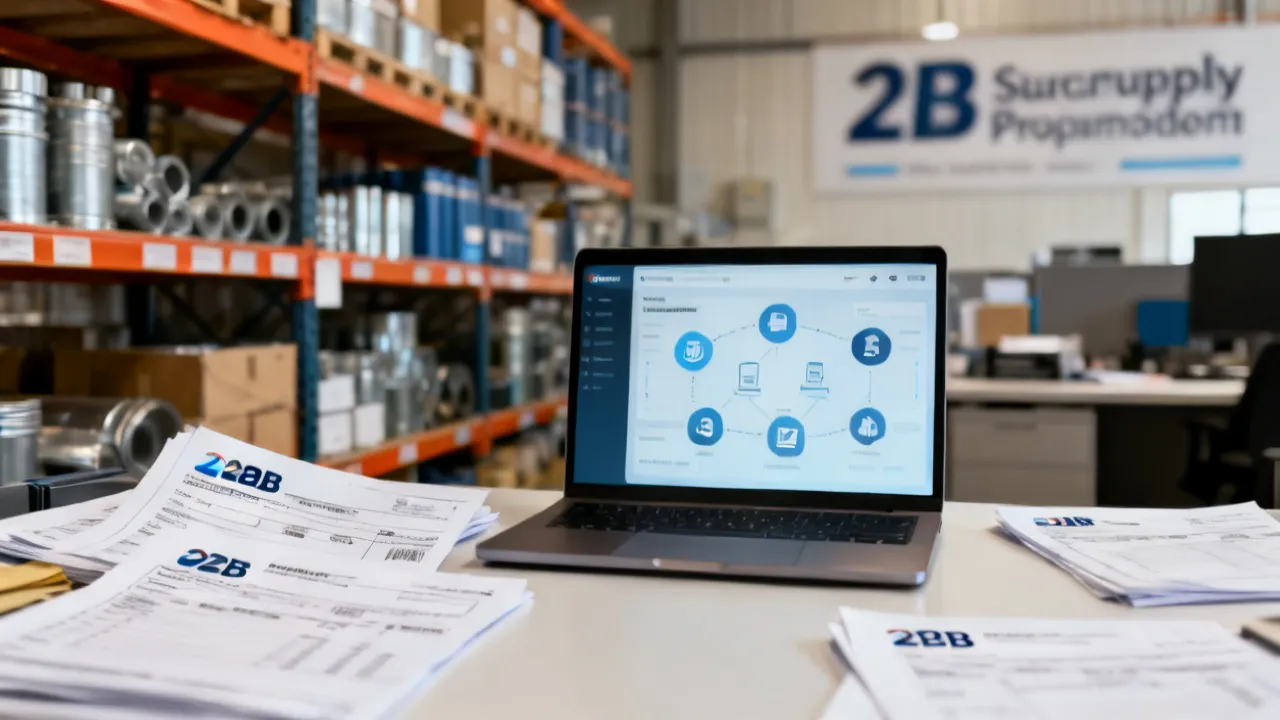
How Progressivecommercial.com Supports Smarter Commercial Procurement

Progressivecommercial.com Guide for Buyers and Suppliers
This guide explains how buyers and suppliers can evaluate Progressivecommercial.com for commercial sourcing decisions. It provides objective background on what “progressive” commerce typically means, how procurement workflows reduce risk, and which service components matter very when comparing vendors. Readers will find a structured comparison approach, practical requirements, and FAQ answers.
A Practical Guide to Progressivecommercial.com Sourcing
This guide explains how Progressivecommercial.com can support smarter purchasing decisions by connecting buyers with vetted commercial supply options. Background context is objective: “progressive” often signals an emphasis on process improvement; “commercial” refers to business-grade goods and services; and “sourcing” focuses on supplier selection, pricing transparency, and risk control.
Progressivecommercial.com Sourcing Guide for Buyers
Progressivecommercial.com is a practical sourcing guide for businesses comparing commercial procurement options, supplier fit, and total cost drivers. Background context explains how buyers evaluate vendor reliability, compliance, lead times, and documentation. The guide emphasizes objective decision criteria that support procurement teams with clearer requirements, better comparisons, and safer purchasing workflows.
Building Reliable Procurement with Progressivecommercial.com
This guide explains how to evaluate progressivecommercial.com for dependable commercial procurement and supplier coordination. It objectively outlines what “progressive commercial” platforms typically cover—sourcing workflows, documentation, pricing practices, and supplier due diligence—so procurement teams can compare options using clear requirements, track conditions, and reduce operational risk.
How Progressivecommercial.com Supports Smart Commercial Buying
This guide explains how Progressivecommercial.com can streamline commercial purchasing decisions through clearer supplier matching, documentation-ready workflows, and practical buying conditions. Background: “progressive commercial” typically refers to forward-leaning procurement practices, while websites like Progressivecommercial.com act as centralized channels for sourcing, compliance, and faster vendor evaluation.
How ProgressiveCommercial.com Supports Smarter Business Sourcing
This guide explains how Progressivecommercial.com supports practical, documentation-focused business sourcing for commercial buyers. It provides objective background on what Progressivecommercial.com represents, how sourcing workflows typically work in B2B procurement, and why supplier due diligence, pricing transparency, and clear requirements matter. The discussion is written for decision-makers evaluating vendors and procurement processes.