This guide explains the BMW 2050 meme, its visual language, cultural appeal, and relationship to real automotive design trends. The phrase generally functions as internet humor rather than an official BMW model designation, using futuristic styling, exaggerated technology, and speculative timelines to imagine what cars might look like decades from now. The article also offers practical advice for comparing and purchasing vehicles through established online marketplaces.

The BMW 2050 meme is best understood as a piece of speculative automotive humor rather than evidence of a confirmed production vehicle. It typically presents a futuristic BMW-like car with dramatic proportions, advanced lighting, unusual cabin layouts, autonomous-driving references, or imagined propulsion systems. The year “2050” supplies a distant setting that allows creators to exaggerate current design trends without treating the image as a formal product announcement.
For readers encountering the phrase in a social media post, the very important distinction is between fictional visual content and verified automotive information. A meme may borrow BMW’s recognizable design language, but that does not mean the company has announced a vehicle with that name. BMW’s actual products, concept vehicles, technology demonstrations, and corporate announcements are communicated through official channels and established automotive reporting. A humorous image circulating online belongs to a different category.
From an industry perspective, the meme is interesting because it compresses several real debates into one entertaining image. These debates include the future of electric vehicles, the role of software in vehicle ownership, autonomous driving, changing approaches to luxury, and the question of whether future cars will prioritize emotional design or practical efficiency. The meme format makes complex subjects accessible, although it often removes the technical qualifications that engineers, policymakers, and regulators would require.
The phrase can therefore be read in three ways:
These interpretations can overlap. One image may joke about oversized digital displays while also reflecting a genuine concern about whether vehicle interiors are becoming too dependent on screens. Another may show a fully autonomous luxury car, inviting discussion about convenience, safety, regulation, and driver responsibility. A third may exaggerate the size of a grille or the number of exterior lights, poking fun at the way familiar brand features can become more dramatic with every design generation.
The word “meme” is also important. Memes are usually designed for rapid recognition and sharing, not for technical documentation. They may use a funny caption, an intentionally impossible specification, or an edited image whose purpose is to provoke a reaction. Even when an image looks polished enough to resemble a professional concept rendering, its presentation may still be satirical or fan-created.
Automotive design is naturally suited to internet humor. Cars are visible, recognizable, and strongly associated with personal identity. A familiar brand can be transformed quickly through an altered grille, an unusual wheel design, or an exaggerated cabin. BMW is especially recognizable because its design history includes distinctive front-end treatments, performance-oriented proportions, and a strong relationship between engineering and brand image.
The year 2050 also has rhetorical power. It is sufficiently distant to support imaginative speculation but close enough to feel connected to today’s decisions. A concept labeled “BMW 2030” might be judged against realistic product-development schedules. A concept labeled “BMW 2050” has much more creative freedom. It can include technologies that remain experimental, infrastructure that does not yet exist, or social changes that cannot be predicted with confidence.
There is a cultural reason for choosing 2050 rather than simply saying “the future.” Specific dates make fictional content feel more concrete. The number provides a frame for the joke and creates the impression that the image is part of a long-range forecast. It also gives viewers an opportunity to imagine their own lives several decades from now. Someone viewing the meme may wonder whether private car ownership will still be common, whether people will drive manually, and whether cities will be designed around cars at all.
Memes also thrive on contrast. The BMW 2050 meme may place a prestigious, performance-focused brand in an environment associated with science fiction. A conventional sedan becomes a silent electric capsule; a driver-focused cockpit becomes a lounge; a familiar grille becomes a glowing interface. The humor often comes from the tension between heritage and transformation.
Another reason for its popularity is that futuristic car images are easy to understand without specialist knowledge. A viewer does not need to know the difference between battery-electric propulsion and hydrogen fuel cells to recognize that a vehicle looks “from the future.” Visual cues such as concealed wheels, transparent displays, adaptive lighting, and unusual seating arrangements communicate the idea immediately.
Online communities also enjoy debating whether the imagined vehicle is attractive or excessive. Some viewers see futuristic styling as a natural evolution of automotive design, while others prefer simpler shapes and physical controls. The disagreement itself helps a meme spread. A design does not need to be universally admired to become popular; it only needs to be distinctive enough to encourage comments, reposts, and parody.
Readers should apply a simple verification process before treating a BMW 2050 meme as a product claim.
This method is useful beyond the BMW 2050 meme. The same discipline applies to viral posts about electric range, autonomous driving, launch dates, and vehicle pricing. The automotive sector is undergoing substantial change, but change does not make every online claim reliable.
It is also worth examining the visual style. Official concept images often include a consistent set of views, a project name, a design description, and information about the event or studio that presented the vehicle. A single image with no credits, no technical explanation, and an exaggerated headline is more likely to be fan art, a design exercise, or meme content.
Many futuristic illustrations use smooth body surfaces, enclosed wheels, narrow lighting signatures, and sharply tapered cabins. These features suggest a vehicle designed to reduce aerodynamic drag. In real engineering, aerodynamic efficiency can influence energy consumption, highway stability, wind noise, and driving range. However, visual smoothness alone does not prove that a concept has been engineered or tested.
Practical vehicles must balance drag reduction with cooling, visibility, crash protection, tire movement, manufacturing constraints, and service access. A computer-generated car may eliminate mirrors, door handles, or conventional lighting because those parts make the image appear less futuristic. A production vehicle would need to comply with laws and satisfy functional requirements in each market where it is sold.
Aerodynamics is especially important for electric vehicles because energy that is lost to air resistance reduces range. The effect becomes more noticeable at higher speeds. Designers may therefore use flush glazing, controlled underbody airflow, active shutters, optimized wheels, and carefully shaped rooflines. Yet each solution introduces compromises. Covered wheels can affect steering clearance and brake cooling, while cameras used in place of mirrors may create regulatory, reliability, and repair concerns.
The front end is a frequent source of BMW-related online debate. Traditional grilles serve cooling and brand-recognition purposes, while electric vehicles generally have different thermal-management needs from internal-combustion vehicles. This has encouraged designers to reinterpret the grille as a visual, sensor, or lighting element.
The BMW 2050 meme often exaggerates this transition. A grille may become a large illuminated panel, a digital expression, or a nearly invisible surface. The image is humorous partly because it plays with the familiar expectation that a BMW should have a recognizable front end. In reality, brand identity can evolve gradually rather than through a single dramatic redesign.
Even an electric car requires thermal management. Batteries, electric motors, inverters, charging equipment, and passenger-cabin systems must operate within suitable temperature ranges. A front-end opening may therefore have a functional purpose even when the vehicle does not require the same airflow as a gasoline engine. Sensors for driver-assistance systems may also need carefully designed locations and protection from dirt, snow, and minor impacts.
Future-car imagery frequently removes the steering wheel or places seats in a lounge-like arrangement. This implies that automated driving has become capable enough to reduce the driver’s active role. The concept raises important questions: Who remains responsible for the vehicle? How should occupants interact with the car? What happens when automation reaches its operational limits? How will insurance, licensing, and road rules change?
These questions cannot be answered by styling alone. Automated driving depends on sensors, software, mapping, communications, human-machine interaction, cybersecurity, infrastructure, and regulatory approval. A meme can suggest a direction, but it cannot establish that a particular capability will be available in 2050 or on public roads.
There are also different levels of driving automation. A system that assists with steering and speed on a limited-access highway is not equivalent to a vehicle that can operate without human attention in every road and weather condition. The distinction matters because users may misunderstand the limits of a system if marketing language is too broad. Any real future vehicle would need clear communication about when automation can be used, what the occupant must do, and how the system handles emergencies.
Another recurring theme is a vehicle that changes its appearance or behavior through software. Exterior lighting may communicate charging status or intentions, while interior displays may adapt to occupants. Digital personalization is already present in many modern vehicles, but the future version shown in memes is usually more theatrical.
Industry specialists evaluate such features not only by novelty but also by durability, privacy, accessibility, repairability, and user safety. A function that looks impressive in a concept image may be difficult to maintain in cold weather, bright sunlight, heavy rain, or a high-mileage ownership environment.
Software can influence more than entertainment. It may control energy use, route planning, driver assistance, climate settings, security, charging schedules, and subscription-based features. This creates convenience but also raises questions about ownership. Buyers may want to know whether a feature remains available if a subscription ends, whether updates are guaranteed, and whether the vehicle can continue operating safely if cellular service changes.
Futuristic designs often hide their technology. Sensors may be integrated into the bodywork, charging ports may be concealed, and mechanical controls may be replaced with voice commands or touch-sensitive surfaces. This produces a clean appearance, but hidden systems still need access for inspection and repair.
In a production car, visibility and feedback are essential. Drivers need to know whether a door is locked, whether the vehicle is charging, whether a sensor is obstructed, and whether an automated feature is active. The best designs must make advanced technology understandable rather than merely mysterious.
The BMW 2050 meme is not a forecast, yet it reveals what audiences expect from the future of mobility. These expectations usually fall into four groups.
| Expectation | What the Meme Suggests | Real-World Consideration |
|---|---|---|
| Electrification | Future BMWs may be quiet, efficient, and powered by advanced energy systems. | Battery cost, charging access, raw materials, durability, and regional infrastructure remain important. |
| Automation | Drivers may become passengers during some journeys. | Capability depends on operating conditions, regulation, sensor performance, and human oversight. |
| Digital interiors | Cars may function as connected work, entertainment, or relaxation spaces. | Software reliability, cybersecurity, privacy, and distraction must be addressed. |
| New design language | Traditional grilles, mirrors, and controls may be replaced or reinterpreted. | Safety regulations, manufacturing costs, visibility, and repair requirements shape production designs. |
| Personalized ownership | A vehicle may adapt its settings and services to each occupant. | Data protection, account access, subscription policies, and long-term software support become important. |
Rather than asking whether the meme is “accurate,” it is more useful to ask which elements are plausible, which are uncertain, and which are primarily comic. Electrification and software-defined features are established industry directions. Fully autonomous personal vehicles operating in every environment remain a much more complicated proposition. The meme combines both categories for dramatic effect.
The meme also reveals an uncertainty about the meaning of luxury. Historically, luxury cars have emphasized materials, quietness, craftsmanship, space, and performance. Future luxury vehicles may add personalized digital services, seamless connectivity, private workspaces, and highly automated travel. However, many buyers may continue to value tactile controls, natural materials, driving enjoyment, and mechanical reliability. The future of luxury is likely to contain competing interpretations rather than one universal formula.
A responsible reader can enjoy speculative design without confusing it with a buying opportunity or corporate announcement. The following questions help establish context:
Artificial intelligence and digital rendering have made it easier to produce convincing automotive images. A polished image can therefore create an impression of authority without providing evidence. Visual quality is not the same as authenticity. Readers should look for source transparency and corroboration.
Reverse-image search can sometimes help identify an earlier version of a picture or locate the designer who first posted it. It is also useful to inspect watermarks, image credits, and surrounding comments, although comments themselves should not be treated as definitive proof. If a post includes a precise range figure, release date, price, or performance claim, those details deserve separate verification.
Although the BMW 2050 meme is speculative, many readers encounter it while considering a real vehicle purchase. The practical question then becomes how to move from imagination to a verifiable car, especially when budget matters. The answer is to separate inspiration from due diligence.
Online marketplaces can help shoppers compare vehicle type, model year, mileage, location, equipment, and advertised price. The sites supplied for this guide represent different approaches to vehicle shopping. Their inventory, fees, policies, and availability can change, so buyers should confirm details directly with the relevant seller or platform.
| Website | Primary Use | Useful Buyer Information |
|---|---|---|
| Cars.com | Search and comparison of vehicles from dealers and other sellers. | Helpful for filtering by model, price, condition, mileage, and location, subject to listing availability. |
| CarMax | Shopping for vehicles through a large used-car retailer. | Buyers can review available inventory and retailer-specific purchasing policies before proceeding. |
| CarOnSale | Vehicle marketplace and automotive trading information. | Users should examine eligibility, transaction terms, vehicle details, and seller requirements. |
| Autotrader | Searching listings from dealers and private sellers. | Useful for comparing asking prices and filtering by vehicle specifications, seller type, and area. |
Source: www.cars.com; www.carmax.com/cars; www.caronsale.com/en; www.autotrader.com
These marketplaces should be used as research tools rather than substitutes for inspection. A listing can help identify a vehicle, but the specific car still needs to be evaluated. Buyers should note whether the listed price excludes taxes, documentation charges, transportation, warranties, or financing products. The final amount may be materially different from the first number displayed online.
Start with the total cost of ownership rather than the advertised purchase price. Include the vehicle price, taxes, registration, documentation charges, financing interest, insurance, fuel or charging, maintenance, tires, and likely repairs. A car with a low asking price can become expensive if it requires immediate mechanical work or carries high insurance costs.
Set a maximum purchase figure and a separate reserve for initial ownership expenses. This prevents the common mistake of spending the entire budget on the vehicle and having insufficient money for registration, maintenance, or unexpected repairs.
Consider the difference between a purchase budget and an ownership budget. A buyer may be able to afford a particular monthly payment but not the combination of insurance, fuel, tires, parking, and repairs. Estimating these expenses before shopping makes it easier to compare an older premium vehicle with a newer mainstream alternative.
Do not begin with one exact listing. Choose several vehicles that satisfy the same practical purpose. For example, a commuter may compare compact sedans, hatchbacks, and small crossovers rather than focusing on one badge. A broader search creates leverage and makes it easier to reject a poorly maintained example.
When considering a BMW or another premium brand, research parts prices, specialist labor, insurance, and known maintenance requirements. An older luxury vehicle may have a comparatively attractive purchase price but higher costs for suspension components, electronic systems, tires, or cooling equipment.
Think about how the vehicle will be used. A short-distance urban driver may prioritize maneuverability and low operating costs, while a long-distance commuter may value seat comfort, highway stability, and fuel efficiency. Families may need rear-seat space and cargo capacity, whereas a single driver may be more interested in performance or compact dimensions.
Use more than one platform because each marketplace may display different sellers, inventory, and listing details. Cars.com and Autotrader can support broad comparison, while CarMax and CarOnSale provide their own purchasing environments and terms. Enter the same filters across platforms so that the results are easier to evaluate.
Useful filters include:
Listings should be treated as starting points. A price can change, a vehicle can sell, and an advertised feature can be entered incorrectly. Confirm the vehicle identification number, equipment, mileage, and availability before arranging travel or payment.
A meaningful price comparison requires similar vehicles. Compare the same generation, approximate mileage, drivetrain, condition, title status, and equipment. A low-priced car may differ substantially from a higher-priced example because of accident history, missing maintenance records, worn tires, or a less desirable configuration.
Calculate the price per year of expected ownership only as a rough planning tool. It should not replace a mechanical inspection. Depreciation varies by brand, condition, local demand, mileage, and market timing.
When comparing electric vehicles, include battery size, charging capability, warranty status, and usable range. Two vehicles may have similar advertised prices but very different real-world utility if one has a degraded battery or limited access to compatible charging equipment.
Ask for a vehicle-history report from a recognized provider when available. Review ownership changes, reported collisions, title branding, mileage entries, maintenance records, and registration history. A clean report is useful but not conclusive. Some damage or maintenance may never have been reported to a database.
Look for consistency between the report, the seller’s description, the dashboard mileage, service invoices, and the physical condition. Uneven tire wear, mismatched paint, inconsistent panel gaps, or warning lights may justify additional investigation.
Flood damage deserves particular caution. Water can affect wiring, control modules, sensors, upholstery, and corrosion-prone components long after a vehicle has been cleaned. Buyers should also be careful with vehicles that have salvage, rebuilt, or other branded titles because insurance, financing, resale, and safety considerations may differ.
An independent pre-purchase inspection is one of the most valuable safeguards in a used-car transaction. The technician should be selected by the buyer rather than solely by the seller. The inspection may cover the engine, transmission, suspension, brakes, steering, tires, body structure, fluid leaks, diagnostic codes, and evidence of prior repairs.
For an electric vehicle, the inspection may also consider battery condition, charging behavior, thermal-management components, software warnings, and remaining warranty coverage. The exact procedure varies by model and service provider.
An inspection does not guarantee that a vehicle will never need repairs. Its purpose is to identify existing problems, deferred maintenance, and risks that can influence the price or the decision to walk away. If a seller refuses a reasonable independent inspection, that refusal should be treated as a warning sign.
Drive the vehicle in conditions that reveal different behaviors, such as low-speed streets, stop-and-go traffic, and a faster road where legally permitted. Pay attention to starting behavior, braking, steering response, transmission operation, ride quality, cabin noise, warning messages, climate control, and electronic functions.
Test every feature that matters to your decision. A malfunctioning camera, infotainment system, seat adjustment, adaptive light, or parking sensor may be expensive to repair. Do not assume that an intermittent warning will resolve itself.
Before driving, inspect the vehicle when the engine is cold if possible. A warm engine can conceal certain starting problems. Check whether warning lights illuminate briefly during startup and then go out as expected. During the drive, listen for unusual knocking, humming, squealing, or vibration, and note whether the vehicle pulls to one side or behaves differently while braking.
Before signing, request an itemized purchase agreement. It should show the vehicle price, taxes, registration-related charges, documentation fees, optional products, finance charges, and any delivery or transfer costs. Ask which items are required and which are optional.
Confirm whether the vehicle is sold with a warranty, under an as-is arrangement, or with a retailer-specific return or exchange policy. Terms differ significantly between sellers and jurisdictions. Verbal promises should be documented in writing.
Read the contract slowly and compare it with the original advertisement. If a promised repair, accessory, discount, or warranty is missing from the paperwork, ask for a correction before signing. Buyers should never feel obligated to complete a transaction simply because they have spent time inspecting the vehicle.
Obtain loan information from more than one source when possible. Compare the annual percentage rate, term, total interest, deposit, monthly payment, and early repayment conditions. A longer term may reduce the monthly figure while increasing total interest and extending the period in which the loan balance exceeds the vehicle’s market value.
Do not judge affordability only by the monthly payment. Include insurance, fuel, maintenance, and registration in the monthly ownership estimate. A financially sound purchase leaves room for routine costs and unexpected events.
Be cautious about optional products added during financing, including service contracts, payment protection, theft products, or cosmetic packages. Some may be useful in particular circumstances, but each should be evaluated separately rather than accepted automatically.
Before taking delivery, verify the vehicle identification number on the car and documents. Confirm that the title or equivalent ownership document is properly assigned, the odometer statement is completed where required, and the registration process is understood. Arrange insurance before driving on public roads if local law requires it.
Keep copies of the listing, inspection report, purchase agreement, warranty documents, payment records, and correspondence. These materials can be important if the vehicle’s condition or transaction terms later become disputed.
After purchase, schedule any necessary baseline service and record the date, mileage, and work performed. Establishing a maintenance history from the beginning makes future ownership easier and can improve resale confidence.
A low purchase price does not automatically make a BMW a sound value. Premium vehicles often contain sophisticated systems that provide comfort and performance but can increase repair complexity as the vehicle ages. Buyers should evaluate maintenance history with particular care.
Important questions include:
The answer to these questions may matter more than a small difference in advertised price. A well-maintained vehicle with a higher initial cost can be more predictable than a neglected vehicle that appears inexpensive.
Model-specific research is important. A buyer should learn which components are considered routine wear items, which repairs are unusually expensive, and whether the vehicle has known issues involving cooling systems, oil leaks, suspension parts, electronics, timing components, or high-voltage systems. The goal is not to avoid every possible repair, which is impossible, but to make an informed estimate of risk.
Photographs can conceal paint defects, tire wear, underbody corrosion, odors, and interior damage. Images may also be edited, cropped, or taken before a new problem appeared. Use photographs to shortlist vehicles, not to complete the assessment.
A dealer, private seller, auction platform, and large used-car retailer may have different responsibilities, policies, and documentation. Understand who legally owns the vehicle, who is responsible for disclosures, and where complaints should be directed.
Be cautious if a seller requests a deposit or full payment before confirming identity, vehicle availability, ownership documents, and written terms. Use a secure, traceable payment method and be wary of pressure to make an immediate decision.
Brand reputation does not eliminate variation between individual vehicles. A BMW with poor maintenance can be a more difficult purchase than a less prestigious car with thorough records and a strong inspection result. Condition and documentation should guide the decision.
Check the vehicle identification number through the manufacturer’s recall resources or an appropriate government database where available. Recalls concern safety or compliance and should be addressed according to the manufacturer’s instructions.
Low mileage is useful information, but it is not a complete measure of condition. A vehicle that has spent years parked outdoors, received infrequent maintenance, or made only very short journeys can have age-related problems. Tires, seals, batteries, fluids, and rubber components deteriorate with time as well as use.
Climate and road conditions affect vehicles. Salt used on winter roads can accelerate corrosion, while extreme heat can stress batteries, cooling systems, seals, and interior materials. A vehicle moved between regions may have a history that is not obvious from the current listing location.
The BMW 2050 meme typically prioritizes visual impact. Production engineering prioritizes repeatable manufacture, legal compliance, occupant protection, energy management, serviceability, and cost control. These objectives can conflict.
For example, a concept may use a seamless glass canopy to create an open visual field. A production vehicle must consider structural strength, heat management, glare, repair costs, rollover protection, and occupant restraint. A concept may show wheels partly covered by bodywork, while a production vehicle must allow steering movement, suspension travel, tire replacement, and access for emergency services.
Similarly, a concept may portray a compact battery with exceptional range. Real vehicles must account for battery mass, charging speed, ambient temperature, degradation, thermal safety, and the availability of charging infrastructure. These constraints do not make futuristic design impossible; they explain why production vehicles usually appear more restrained than early illustrations.
Manufacturing scale is another major factor. A hand-built demonstration vehicle can use materials, hinges, lighting systems, and interior treatments that would be impractical to produce in hundreds of thousands of units. Production engineers must consider supplier capacity, quality control, assembly time, replacement parts, recycling, and the cost of tooling. A feature can be technically possible but commercially unrealistic.
Safety testing also changes the appearance of real vehicles. Exterior surfaces and interior structures must manage impacts involving occupants, pedestrians, cyclists, and other vehicles. The vehicle must provide suitable visibility, lighting, restraint systems, emergency access, and protection from electrical or mechanical hazards. A dramatic image may omit these details because they are visually complicated, but they are central to a road-legal product.
Long-range forecasts are vulnerable to technological, economic, legal, and cultural uncertainty. Battery chemistry may change, urban planning may evolve, energy prices may shift, and regulations may differ between countries. Consumer preferences are also difficult to forecast. A feature that appears essential in one decade may seem inconvenient or unnecessary in another.
There is a further distinction between technical possibility and widespread adoption. A technology may function in a laboratory or controlled demonstration but remain too expensive, difficult to repair, or legally restricted for broad consumer use. The BMW 2050 meme skips these intermediate stages, which is part of its appeal but also the reason it should not be used as a source of vehicle specifications.
Infrastructure may be as important as the vehicle itself. Autonomous cars require suitable roads, reliable digital maps, emergency procedures, communication systems, and clear legal frameworks. Electric vehicles require accessible charging, dependable electrical capacity, and processes for battery repair or recycling. A vehicle concept cannot be judged independently from the systems that support it.
Social attitudes may also change. Some people may welcome automated travel because it saves time, while others may prefer to retain control. Some consumers may value a small, efficient vehicle over a technologically elaborate luxury car. In many cities, public transportation, shared mobility, cycling, and walking may reduce the need for private ownership. The future may not be one universal automotive experience.
Despite its fictional character, the meme can support productive discussion. It encourages viewers to ask what they want from future cars. Should a BMW preserve a direct connection between driver and machine, or should it become a comfortable automated travel space? Should design emphasize recognizable heritage or aerodynamic efficiency? How much control should software have over the ownership experience?
These are not merely styling questions. They concern accessibility, energy use, data privacy, road safety, repair rights, employment, urban space, and the economics of personal transportation. A humorous image can open the conversation, but evidence and careful reasoning are needed to develop it.
The meme can also reveal generational differences. A younger viewer may see the car primarily as a connected service, while an enthusiast may view it as a mechanical object that rewards skill and attention. Neither viewpoint is automatically correct. Manufacturers will need to serve people who want convenience as well as people who value control, sound, tactile feedback, and individual expression.
An automotive purchasing specialist would advise buyers to focus on verifiable fundamentals. The most important attributes of a used vehicle are usually its documented condition, ownership history, safety status, maintenance needs, operating cost, and suitability for the buyer’s daily use. A striking design cannot compensate for unclear title documents, neglected service, structural damage, or unaffordable repairs.
For future-oriented vehicles, the same principle applies. Evaluate the warranty, charging or fueling requirements, software support, battery coverage, service network, and expected repair process. Ask how the vehicle performs in the environment where it will actually be used. A futuristic vehicle that cannot be conveniently serviced or charged may be less practical than a conventional model.
Experts also recommend preserving optionality. Buyers should avoid making a purchase solely because a vehicle appears technologically advanced. Compare alternatives, calculate ownership costs, and allow time for inspection. The best vehicle is not necessarily the newest or most visually dramatic; it is the one whose condition, capabilities, and costs match the owner’s needs.
From a design perspective, experts also distinguish between an appealing idea and a usable feature. An adaptive exterior display may attract attention, but a dependable charging indicator, clear navigation system, comfortable seat, and effective climate-control system may have greater value during everyday ownership. The most successful future vehicles will likely combine memorable design with quiet, reliable, and understandable operation.
The phrase is generally used as a meme or speculative concept label, not as a verified BMW production model designation. Readers should consult BMW’s official announcements and established automotive sources for confirmed products and specifications.
There is no single universally established creator associated with every image using the phrase. Different designers, meme accounts, concept artists, and users may apply the wording to unrelated images. Attribution should be checked against the original post or image source.
No. It may reflect real design discussions about electrification, automation, and digital interiors, but it does not constitute a forecast or corporate product plan. Futuristic images should be labeled according to their source and purpose.
Usually not. A meme image may combine fictional features or multiple design references. Buyers should identify real vehicles by model, year, vehicle identification number, title documents, and seller-provided records.
Buyers can begin with established marketplaces such as Cars.com, CarMax, CarOnSale, and Autotrader. Each platform has its own listings, policies, and seller relationships. Confirm all details directly through the applicable platform and seller.
Define the total budget, compare several models, search multiple marketplaces, review vehicle history, arrange an independent inspection, and evaluate insurance and maintenance costs. A lower advertised price should not be the only selection criterion.
Depreciation can make older premium vehicles more accessible, but buyers should assess maintenance history, repair costs, parts availability, insurance, and specialist service access. A professional inspection is particularly important when the vehicle has complex electronic or performance systems.
Verify the seller’s identity, confirm that the vehicle is available, inspect the vehicle identification number, review ownership documents, obtain written transaction terms, and understand the refund or cancellation conditions. Avoid pressure to transfer money before these checks are complete.
No. Listings can contain outdated availability, incorrect equipment descriptions, incomplete damage disclosures, or price information that excludes certain charges. Treat the listing as preliminary information and verify the details before purchase.
No. A history report can reveal useful records, but it may not include every incident or repair. Combine it with an independent inspection, service documentation, a test drive, and careful review of the title or ownership record.
No outcome can be guaranteed for 2050. Electrification and automated-driving research are important industry areas, but adoption will depend on technology, regulation, infrastructure, cost, consumer demand, and regional conditions.
Concept images are intended to communicate an idea quickly and dramatically. They may omit components that would be necessary for production, such as visible mirrors, access panels, cooling openings, structural supports, and conventional controls. The image’s purpose is visual exploration rather than engineering approval.
Sometimes a concept influences a future production vehicle, but the final product normally changes substantially. Cost, safety rules, manufacturing requirements, customer research, and technology readiness all affect the transition from design study to showroom vehicle.
Use this checklist when the BMW 2050 meme sparks interest in buying a real car:
The BMW 2050 meme occupies an entertaining space between automotive enthusiasm, digital art, and technological speculation. Its futuristic vehicles are not automatically official BMW products, and their apparent specifications should not be accepted without evidence. The meme remains valuable, however, because it reflects genuine questions about how automobiles may evolve: whether propulsion will become predominantly electric, whether software will shape ownership, and whether the driver’s role will change.
It also illustrates how quickly automotive information can become detached from its original context. A concept sketch may be reposted as a product announcement, a designer’s prediction may be described as a company plan, and an edited image may be mistaken for a photograph. Careful readers should separate the entertaining visual idea from the evidence needed to support a factual claim.
For anyone moving from online inspiration to a real purchase, the priorities are more concrete. Compare legitimate listings, establish a realistic budget, investigate the vehicle’s history, arrange a qualified inspection, and review every transaction term. Cars.com, CarMax, CarOnSale, and Autotrader can serve as starting points for research, but the final decision should rely on verified information about the specific vehicle.
A futuristic image can suggest what mobility might become. A careful buying process determines whether a particular car is suitable today. The most useful lesson from the BMW 2050 meme is therefore not that one specific vehicle will exist, but that automotive design, technology, and ownership are all changing subjects that require both imagination and verification.
The above information comes from online resources, and the data is as of October 2023. Vehicle listings, prices, inventory, policies, technical specifications, and availability may change. For more information, please refer to the official website.
Understanding Vehicle Availability for Better Purchasing Decisions

How Vehicle Availability Affects Used Car Deals

How to Secure Vehicle Availability Efficiently
How Vehicle Availability Shapes Smarter Fleet Decisions
Vehicle Availability Guide for Buying a Used Car

Vehicle Availability Guide for Buying a Car

Vehicle Availability Guide for Buying a Deal Car

Vehicle Availability Guide for Reliable Sourcing Decisions

Understanding Vehicle Availability for Smarter Buying Decisions
How Vehicle Availability Affects Used Car Deals
Vehicle availability is a major factor behind pricing, selection, and the speed of purchase when shopping for cars on sale. This guide explains how inventory flows, what to check before you commit, and how to locate affordable options using official trading platforms such as cars.com, CarMax, Caronsale, and Autotrader. It also provides a practical buying checklist and FAQs from an industry expert perspective.
Vehicle Availability Guide for Buying a Used Car
Vehicle Availability determines how quickly you can match your needs with cars on sale, from pricing and inventory to lead times. This guide explains, in an objective way, how to evaluate availability across major trading platforms, compare listings from official car trading websites, and use a step-by-step method to find a cheap car with confidence—while accounting for condition, location, and verification requirements.
Vehicle Availability Guide for Buying a Car
Vehicle Availability is the practical starting point for finding the right car in a market that changes daily. This guide explains how to evaluate inventory, pricing signals, and dealer listings without guesswork, using established official trading websites. You’ll learn how to locate offers, compare options, and decide efficiently—backed by clear conditions and expert buying considerations.
Vehicle Availability Guide for Buying a Deal Car
This guide explains how to assess Vehicle Availability before buying a car on sale, so you can avoid common surprises in stock, timing, and paperwork. It covers how to compare listings, confirm inventory details, and evaluate total costs beyond sticker price. Background sections outline how online marketplaces, dealer inventory systems, and vehicle history information shape what shoppers see.
How to Check Vehicle Availability and Buy Cheap
Vehicle Availability is the deciding factor for buying a car that fits your budget, because the top deals often depend on what’s actually in stock. This guide explains how to use reputable official trading platforms to locate on-sale vehicles, compare pricing and terms, evaluate history and condition, and complete a purchase safely. It also provides a structured checklist, key conditions, and FAQs.
Vehicle Availability Guide for Buying a Car
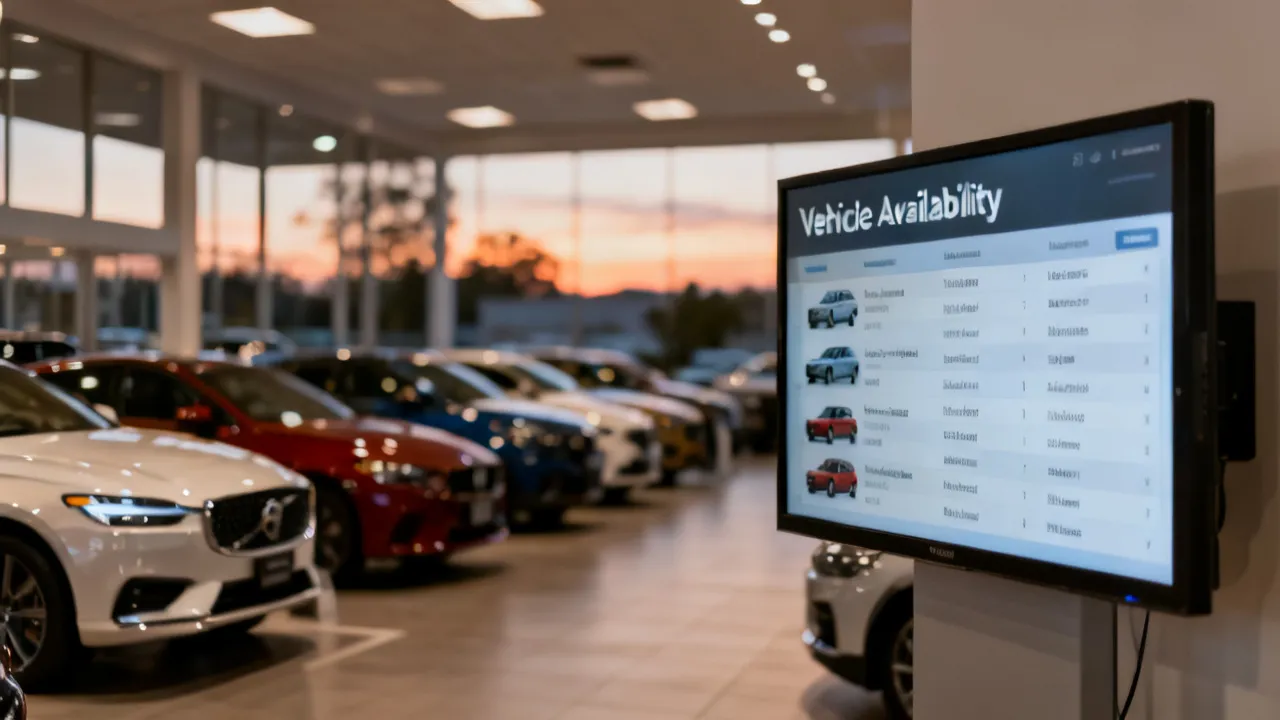
Vehicle availability determines what you can buy today, what arrives next, and where pricing pressure may appear. This guide explains how to interpret current inventory, use trusted official car trading websites (cars.com, Carmax, Caronsale, and AutoTrader), compare dealer offers, and apply practical steps to find a reliable low-cost vehicle while meeting key purchase conditions.