This guide explains the Bmw 2050 Meme, examining its visual humor, imagined future-car themes, online circulation, and relationship with real automotive design. The phrase is not a confirmed BMW model designation or an official product announcement; it is generally used as a humorous label for exaggerated predictions about futuristic vehicles. The article also provides practical, objective guidance for comparing used and new cars through established automotive marketplaces.
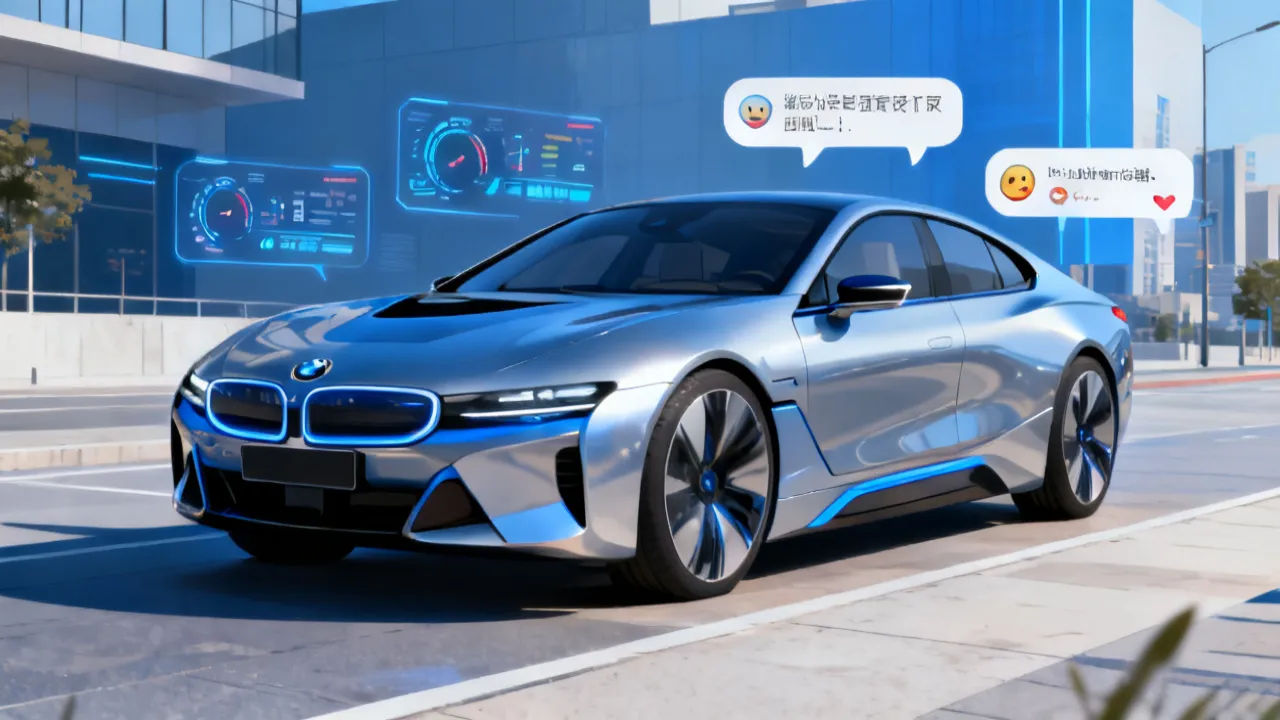
The Bmw 2050 Meme is best understood as an internet expression rather than a confirmed vehicle, factory program, or production model. It usually refers to humorous images, edited vehicle concepts, speculative designs, or exaggerated predictions about what BMW cars might look like in a distant future. Depending on the creator, the joke may involve extreme aerodynamic shapes, fully autonomous driving, oversized digital displays, unusual steering systems, artificial-intelligence assistants, or a design that seems far removed from familiar road cars.
From an automotive-industry perspective, the meme works because it combines recognizable brand associations with deliberately uncertain technology. BMW has a long-standing reputation for performance-oriented vehicles, distinctive styling, premium interiors, and engineering innovation. Internet users then extend those associations into an imagined future and present the result in a deliberately dramatic way. The humor often comes from the contrast between a familiar badge and an implausible interpretation of mobility several decades from now.
The phrase may appear in captions, short-form videos, image posts, design discussions, automotive forums, and social-media jokes. Sometimes it is used sincerely by people searching for a futuristic BMW concept. At other times, it is used ironically to comment on how quickly vehicle styling appears to be changing. The same words can therefore refer to different kinds of content, ranging from fan art to commentary about real design trends.
Readers should distinguish the meme from verified information. A social-media image labeled “BMW 2050” may be a digital rendering, a fan concept, an advertising-style exercise, or an image generated with creative software. It should not automatically be treated as a genuine BMW announcement. Official product names, technical specifications, launch dates, and availability should be confirmed through BMW’s own communication channels or established automotive publications.
Even when an image uses BMW’s badge, grille shape, colors, or familiar design language, those details do not prove that BMW designed or approved it. Logos can be added to unofficial artwork, and old concept images can be reposted with new captions. A careful reader should treat the image as an idea until its origin and status have been established.
Future-car memes are effective because they compress complicated questions about technology into an easily understood visual joke. Instead of presenting a long discussion about vehicle electrification, autonomous systems, connected services, energy storage, or urban transport, a meme can show a dramatically shaped vehicle and add a short caption. The audience immediately understands that the image is speculating about tomorrow’s transportation.
The year 2050 is especially useful in this kind of humor. It is distant enough to permit bold predictions but close enough to feel connected to current policy, engineering, and climate discussions. A creator can suggest that vehicles will be radically different by then without needing to explain the exact development path. In this context, “2050” functions as a symbol of an uncertain future rather than a reliable delivery date.
There is also a psychological reason that distant dates work well. The farther a date is from the present, the easier it becomes to imagine changes that would be difficult to introduce in the next few years. A vehicle from 2030 might still be expected to use familiar wheels, seats, windows, and controls. A vehicle from 2050 can be portrayed as a mobile office, entertainment room, sleeping pod, or robotic transport capsule without immediately inviting questions about development schedules.
Brand recognition also matters. A lesser-known automotive name might not communicate the same expectations to a broad audience. BMW’s visual identity and public reputation make the joke easier to understand. The meme may play with kidney grilles, aggressive lighting, streamlined bodies, autonomous interiors, or the idea that driving itself could become secondary to digital services.
Memes also provide a low-pressure way to debate serious issues. One person may see a futuristic car as evidence of exciting innovation, while another may interpret the same image as a joke about unnecessary complexity or excessive screen use. The image creates a shared reference point for discussions about design, sustainability, privacy, affordability, and the future role of human drivers.
There is no single official format for the Bmw 2050 Meme. Nevertheless, several themes appear repeatedly in online future-car humor.
These elements are not evidence that a particular production BMW will contain every feature shown. Concept artists often prioritize visual impact over manufacturing practicality, repair access, regulatory compliance, passenger safety, and cost. A meme can therefore be visually compelling while remaining technically unrealistic.
Digital artists may also combine features from several unrelated vehicles. The body can be inspired by a sports car, the cabin by a limousine, the lighting by a motorcycle, and the interface by a science-fiction film. The result may look coherent at first glance, but it is not necessarily a complete engineering proposal. This is one reason viewers should avoid treating every visible feature as part of a single credible product plan.
One of the most important distinctions for readers is the difference between a concept car and a production vehicle. A concept is commonly created to explore a design direction, test public reaction, demonstrate a technology, or support a broader brand narrative. It may not be intended for sale. Some concepts are static displays, while others are functional prototypes with limited operating capability.
Production cars must satisfy a much broader set of conditions. They need to meet safety requirements, emissions or energy regulations, manufacturing tolerances, cybersecurity expectations, serviceability standards, and customer-use demands. A vehicle also has to be manufactured repeatedly at a predictable quality level. Features that appear attractive in a rendering may be too expensive, fragile, difficult to repair, or unsuitable for everyday weather and road conditions.
For example, a completely smooth body may look aerodynamically efficient, but real vehicles still require practical access points, sensors, lighting, glazing, crash structures, cooling systems, and drainage. A fully digital cabin may appear elegant, but drivers and passengers may still need tactile controls that can be used in poor visibility or during a distraction-sensitive situation. Automotive design is therefore a process of balancing imagination with engineering constraints.
Manufacturing volume changes the decision as well. A feature that is affordable on a limited-run demonstration vehicle may be unsuitable for a mass-produced model. Manufacturers must consider tooling, supplier capacity, quality control, replacement parts, assembly time, and regional regulations. Even a small change in glass shape, door mechanism, or lighting design can create substantial production and service costs.
Durability is another major difference. A concept may only need to look impressive under controlled exhibition lighting. A production vehicle must survive years of sunlight, rain, snow, dust, road salt, vibration, temperature changes, automated car washes, minor impacts, and inconsistent maintenance. Features that are visually striking but vulnerable to damage may be simplified or removed before production.
An industry analyst would usually treat the Bmw 2050 Meme as a cultural artifact that reflects public expectations about transportation. It can reveal which technologies people associate with the future, even when the specific image is fictional. The meme may indicate interest in electric propulsion, automated driving, digital personalization, advanced materials, and changing ideas about vehicle ownership.
At the same time, expert analysis requires caution. Memes often remove context, omit technical limitations, and combine features that may mature at different speeds. Battery technology, automated driving, charging infrastructure, software regulation, and consumer preferences do not develop in a perfectly synchronized way. It is possible for one element of a futuristic concept to become common while another remains impractical.
The most responsible interpretation is therefore conditional. A future vehicle could become more connected, more electrically powered, and more software-defined. That does not mean every vehicle will have a lounge-style interior, operate without human supervision, or resemble a particular viral image. The meme encourages discussion, but it is not a forecast in the formal sense.
Experts may also ask what the image leaves out. A futuristic car shown in a clean studio may not reveal how it would interact with pedestrians, emergency services, road authorities, insurance providers, repair technicians, or charging networks. It may not address ownership costs, accessibility, data rights, or what happens when its software is no longer supported. These omissions do not make the artwork worthless, but they show why visual speculation must be supplemented with practical analysis.
Although the Bmw 2050 Meme is humorous, it often draws on real trends in the automotive sector. Battery-electric vehicles have encouraged designers to reconsider packaging because an electric powertrain can distribute components differently from a conventional engine and transmission. Software has become increasingly important to infotainment, driver assistance, diagnostics, navigation, and vehicle personalization.
Driver-assistance systems are also influencing cabin design and consumer expectations. However, assistance should not be confused with unrestricted autonomous driving. The capabilities of a system depend on its operating conditions, sensor configuration, software, regulatory approval, road markings, weather, and driver responsibility. A meme may portray a vehicle as completely self-driving, while an actual model may only offer carefully limited assistance functions.
Connectivity has introduced another layer of change. Modern vehicles may receive software updates, connect to mobile devices, offer cloud-based services, and record operational information. These features can improve convenience, but they also raise questions about data management, cybersecurity, subscription structures, customer support, and repair rights. A realistic assessment of future cars must consider these practical issues alongside styling.
Materials are changing as well. Manufacturers are investigating recycled plastics, low-carbon aluminum, bio-based surfaces, synthetic alternatives to animal leather, and manufacturing processes designed to reduce waste. A future concept may exaggerate these ideas by covering the entire cabin in unfamiliar textures. In a production vehicle, material choices must also satisfy fire resistance, wear, cleaning, odor, tactile quality, and long-term appearance requirements.
Vehicle ownership may change alongside vehicle technology. Some people may continue to buy privately owned cars, while others may rely on subscriptions, shared fleets, or on-demand transportation. A meme that shows a vehicle without a traditional driver may therefore be commenting not only on automation but also on the possibility that the car becomes a service platform. Whether that model becomes widespread will depend on cost, convenience, regulation, and public acceptance.
Searches for “BMW 2050” or Bmw 2050 Meme content can create confusion because a year in a meme caption may look like a model name. In most cases, the year should be read as a storytelling device. It signals a distant future and gives the image a science-fiction quality. It does not establish that BMW has announced a vehicle named BMW 2050.
When checking whether a future model is genuine, readers should look for an official press release, a manufacturer product page, a clearly identified concept-car presentation, or documentation from a recognized motor show. The source should provide a date, location, technical context, and statement of the vehicle’s status. A post containing only a dramatic image and a short caption is not sufficient evidence.
Reverse-image tools, image metadata, and careful search techniques can also help. If the same image appears on concept-art portfolios, design forums, or social-media pages without a manufacturer statement, it is more likely to be unofficial. Even then, the absence of an official statement does not prove that every element is fabricated; it simply means the claim requires further verification.
Readers should also watch for misleading headlines that turn a design study into a promised release. Phrases such as “coming soon,” “leaked,” “official first look,” and “confirmed production model” may be used for attention even when the source only discusses a speculative design. A reliable article should identify who created the vehicle, whether it runs, whether it is intended for production, and which claims are confirmed.
This method is useful beyond BMW-related content. Online automotive imagery can blend professional photography, computer-generated rendering, fan art, advertising material, and artificial-image tools. The visual quality of an image is not proof of its origin.
Artificial-image systems can create attractive vehicles with inconsistent wheel geometry, impossible suspension movement, mismatched windows, or body panels that could not be assembled. These errors may be difficult to notice in a quick social-media post. Looking closely at repeated details, reflections, door gaps, tire contact, and the relationship between the cabin and wheels can sometimes reveal that an image is synthetic or heavily edited.
Some people encounter the Bmw 2050 Meme while looking for a future BMW, an affordable vehicle, or a car with advanced technology. The practical next step is to define the actual purchase requirement. A buyer may want an efficient commuter, a family vehicle, a performance car, a used luxury model, or a vehicle with modern driver-assistance features. Each objective leads to a different search strategy.
Before opening a marketplace, establish a realistic total budget. The purchase price is only one component. Ownership can also involve taxes, registration, financing charges, insurance, fuel or electricity, tires, maintenance, repairs, inspection fees, and possible shipping costs. A vehicle that appears inexpensive at first may be less economical if it has high insurance premiums, expensive replacement parts, or a history of neglected maintenance.
It is also useful to separate essential features from preferences. Essential requirements might include a specific seating capacity, cargo volume, all-wheel drive, accessibility equipment, or a certain safety feature. Preferences might include a particular color, wheel design, panoramic roof, or entertainment system. This distinction helps buyers avoid paying for options that do not materially improve daily use.
Think about the full ownership period. A vehicle that is suitable for a two-year plan may not be suitable for a ten-year plan. Buyers should consider expected changes in employment, family size, commute distance, parking arrangements, and access to service. If the car is likely to be sold later, model reputation, depreciation, warranty coverage, and documented maintenance may influence resale value.
Established online marketplaces can help buyers compare vehicle listings across different sellers and locations. The following platforms serve different purposes and may present varying inventory, search tools, pricing information, vehicle histories, and purchase processes. Availability changes regularly, so readers should confirm details directly on each platform.
| Marketplace | Typical Use | Practical Consideration |
|---|---|---|
| Cars.com | Comparing listings from dealers and other automotive sellers | Useful filters can help narrow the search by price, mileage, body style, location, and features |
| CarMax | Reviewing inventory from a large used-car retailer | Buyers should examine vehicle-specific terms, availability, return conditions, and delivery arrangements |
| CarOnSale and AutoTrader | Exploring additional listings and dealer-oriented or consumer-facing search options | Compare listing descriptions, seller information, fees, inspection details, and transaction requirements |
source: www.cars.com
source: www.carmax.com/cars
source: www.caronsale.com/en
source: www.autotrader.com
Search filters can save time, but they should not replace judgment. A filter for a maximum price may exclude vehicles with slightly higher asking prices that include valuable maintenance records or warranty coverage. Conversely, a low-priced listing may appear attractive only because it excludes documentation fees, delivery costs, or necessary repairs. Use filters to create a manageable group of candidates, then examine each listing in detail.
Start with the driving pattern rather than the badge. A vehicle used mainly for short urban trips may have different requirements from one used for long-distance commuting or frequent towing. Consider annual mileage, road conditions, weather, passenger numbers, parking space, and access to charging or fuel stations.
Make a simple list of regular journeys. Include the longest routine trip, the number of passengers, the amount of cargo, and whether the vehicle will be used for school runs, work visits, recreation, or business. This prevents an exciting but impractical vehicle from dominating the search simply because its styling resembles a futuristic meme.
Decide how much can be allocated to the purchase and how much should remain available for ownership expenses. If financing is involved, compare the total amount payable rather than focusing only on the monthly installment. A longer loan term can reduce monthly payments while increasing the total interest and extending the period in which the buyer owes more than the vehicle’s market value.
Request insurance estimates before buying. Premiums can vary significantly according to the model, engine or battery configuration, driver history, location, repair cost, theft risk, and safety equipment. Also estimate routine costs such as tires, scheduled service, parking, charging, fuel, and annual registration. These calculations provide a more realistic definition of affordability.
Older vehicles may have a lower purchase price, but age-related deterioration can affect rubber components, batteries, seals, electronics, suspension parts, and cooling systems. Mileage is useful but should not be considered alone. A well-maintained vehicle with higher mileage may be more dependable than a low-mileage vehicle that has experienced poor storage or irregular servicing.
Usage type matters as well. Highway mileage may create different wear patterns from repeated short trips in heavy traffic. A vehicle used for towing, rental service, delivery work, or performance driving may have experienced more stress than a similar vehicle used for occasional commuting. The service history should help explain how the mileage was accumulated.
Do not rely on a single advertisement to determine value. Review multiple vehicles with similar model years, equipment, mileage, condition, and geographic location. Differences in price may reflect accident history, ownership records, warranty coverage, market demand, or dealer charges.
Record the comparisons in a small table or spreadsheet. Include asking price, mileage, location, condition, number of owners when available, service history, included equipment, fees, and inspection status. This makes it easier to identify an unusually cheap listing and ask why it differs from the market.
Where available, obtain a recognized vehicle-history report and compare it with the seller’s description. Look for title status, reported collisions, flood or fire damage, odometer events, service records, and prior commercial use. A clean report is helpful, but it is not a substitute for a physical inspection because not every event is reported.
Pay attention to gaps. A long period without mileage or service information does not automatically mean that something is wrong, but it should lead to additional questions. Confirm that the vehicle identification number in the report matches the vehicle, registration documents, dashboard, and listing photographs.
Ask for maintenance invoices, inspection results, warranty terms, recall completion information, registration documents, and a clear breakdown of fees. A seller who cannot explain the vehicle’s history or the transaction costs deserves additional scrutiny.
Documentation can also reveal whether recommended maintenance was performed on schedule. For a premium vehicle, evidence of correct fluids, approved parts, software updates, and specialist work may be especially important. Verbal assurances are less useful than dated invoices that identify the vehicle and the completed service.
A qualified mechanic can identify issues that are not obvious during a short test drive. The inspection should normally cover the engine or electric drive system, transmission, brakes, steering, suspension, tires, underbody, fluid leaks, electronic systems, climate control, and signs of structural repair. For an electric vehicle, battery condition and charging performance are particularly important.
The inspection should be independent from the seller whenever possible. A mechanic selected by the buyer has less incentive to minimize faults. If the seller refuses to allow an inspection, this is a serious reason to reconsider the purchase. Inspection costs are usually small compared with the expense of repairing an undisclosed problem.
Operate the car at different speeds and on roads that reflect its intended use. Listen for unusual noises, monitor warning lights, assess braking behavior, check visibility, test climate controls, and confirm that all keys and accessories are present. If an advanced driver-assistance feature is advertised, verify its operation and understand its limitations rather than treating it as a substitute for attentive driving.
Try practical tasks such as entering and exiting the vehicle, adjusting the seats, loading the trunk, connecting a phone, folding rear seats, and locating the charging port or fuel door. A design that looks futuristic may be inconvenient if the controls are confusing or the cargo opening is too small. Daily usability should matter more than novelty.
Before signing, check the vehicle identification number, agreed price, taxes, registration charges, dealer documentation fees, financing terms, warranty conditions, delivery arrangements, cancellation provisions, and return policy. The written contract should match the verbal agreement. Do not assume that an online price includes every charge.
Ask which accessories are included and whether any advertised features require a separate subscription. Confirm whether the vehicle has one key or two, whether a charging cable is supplied, and whether promised repairs will be completed before delivery. Every important promise should appear in writing.
Use a payment method and document process appropriate to the seller and jurisdiction. Be cautious of requests for unusual transfers, pressure to bypass the platform’s normal procedures, or demands for payment before the vehicle and paperwork can be verified. Confirm that ownership documents are properly transferred before treating the purchase as complete.
Keep copies of the listing, messages, inspection report, contract, payment confirmation, title documents, and delivery records. These documents can be useful if a disagreement arises. Buyers should also avoid sharing unnecessary personal information and should verify that any website or payment link is genuine before entering financial details.
Buyers attracted by the Bmw 2050 Meme may be interested in actual BMW vehicles with contemporary technology. When comparing used BMWs, examine the model generation, engine or powertrain, maintenance schedule, optional equipment, and previous use. A model with a sophisticated cabin may require more specialized diagnosis than a simpler vehicle, so service access and local technician experience should be part of the decision.
Service records are especially valuable. Look for evidence of routine oil service where applicable, brake work, coolant maintenance, tire replacement, battery replacement, software updates, and recall work. For turbocharged engines, inspect for signs of oil leaks, cooling-system problems, and irregular performance. For electric models, ask about charging equipment, battery warranty status, and any available battery-health documentation.
Luxury vehicles can depreciate in ways that make a used purchase attractive, but depreciation does not necessarily reduce maintenance complexity. Replacement parts, specialized labor, electronic modules, and premium tires may remain expensive. An expert buyer evaluates the entire ownership profile instead of assuming that a lower purchase price equals a lower overall cost.
Model-specific research is worthwhile. Different generations may use different engines, transmissions, infotainment platforms, suspension systems, and electrical architectures. A buyer should investigate common maintenance points for the exact model year rather than applying general assumptions to every BMW. Independent owner communities can provide useful questions to ask, but professional inspection and official service information remain more reliable.
Future-themed memes often feature electric vehicles, but choosing an electric car requires practical analysis. Confirm the vehicle’s usable range under expected conditions, charging compatibility, home electrical capacity, public charging availability, cold-weather effects, and battery warranty terms. Official range ratings are useful for comparison, but real-world performance varies with speed, temperature, terrain, payload, tire pressure, and climate-control use.
Charging time should also be interpreted carefully. A quoted rapid-charging result may apply only under specific battery-temperature and state-of-charge conditions. Charging usually slows as the battery becomes fuller, and the vehicle may limit power to protect the battery. Buyers should examine the entire charging curve and daily driving pattern rather than focusing on a single headline figure.
Home charging is often the most convenient arrangement, but not every residence can support a dedicated charger. Renters, apartment residents, and people who park on the street may depend more heavily on public infrastructure. Before buying, identify nearby charging locations, operating hours, payment requirements, connector types, and the availability of backup options.
Software features deserve the same level of scrutiny. Ask whether a feature is included in the purchase, activated through a subscription, dependent on a mobile network, or supported for the expected ownership period. A vehicle can remain mechanically functional even if a connected service changes, but the buyer should understand which functions depend on external servers or account access.
Battery degradation should be discussed without exaggeration. Batteries are designed to operate for many years, but capacity and charging performance can change with age, mileage, climate, storage conditions, and usage. A battery-health test, warranty review, and inspection by a qualified technician can provide more useful information than a general internet claim about electric vehicles.
A dramatic futuristic design may not be convenient in daily life. Very low seating can make entry difficult, while large wheels may increase tire costs and reduce ride comfort. Cameras and digital mirrors can offer new perspectives but may create glare, visibility, cleaning, or replacement concerns. Touchscreen-heavy interiors can look modern yet require additional attention during operation.
Safety evaluation should rely on recognized testing organizations and official documentation rather than visual impressions. Buyers should check crash-test results where available, standard and optional safety equipment, recall records, child-seat compatibility, lighting performance, and the operation of warning systems. Driver assistance should be understood as assistance; the driver remains responsible whenever the vehicle’s instructions and legal requirements say so.
In the context of the Bmw 2050 Meme, this point is central. A fictional image can make technology appear seamless and effortless. Real systems require calibration, sensor cleaning, software maintenance, human supervision, and appropriate road conditions. The distance between concept art and dependable daily transportation is measured in engineering validation, not visual sophistication.
Accessibility should also be included in discussions of future design. A vehicle must work for people with different heights, mobility levels, visual abilities, and physical needs. Door openings, seat height, grab points, control placement, display readability, and voice-control accuracy can influence whether a design is genuinely advanced. A vehicle that looks revolutionary but makes basic entry or control difficult is not necessarily an improvement.
Sellers and publishers should label concept images clearly. A caption such as “unofficial rendering” or “fan-made future design” prevents readers from confusing creative work with a manufacturer announcement. If a real vehicle is shown, the listing should identify the exact model, trim, model year, mileage, condition, location, and included equipment.
Descriptions should avoid unsupported claims about autonomous capability, battery performance, safety, or future availability. Clear language helps buyers make informed decisions and protects the credibility of the marketplace. A vehicle advertisement should describe what can be verified today, not what a speculative meme suggests might exist decades from now.
When using stock images, sellers should state that the image is representative and provide photographs of the actual vehicle. If a vehicle has aftermarket modifications, those changes should be disclosed because they may affect warranty coverage, insurance, inspection results, resale value, or safety. Accurate listings reduce misunderstandings and make it easier for serious buyers to compare vehicles fairly.
There is no basis for treating the phrase itself as an official BMW model designation. It is generally used to describe humorous or speculative future-car content. Readers should confirm any claim about a real BMW vehicle through official manufacturer information.
The number creates a distant-future setting. It gives creators room to imagine major changes in design, propulsion, automation, and mobility. It should not be interpreted as a confirmed launch date.
Some images may depict real concept cars, while others may be fan renderings, edited photographs, or computer-generated designs. The source and caption must be checked before the image is treated as factual.
It can reflect public expectations and current design discussions, but it is not a technical forecast. Production decisions depend on engineering validation, regulations, manufacturing, infrastructure, cost, and customer demand.
Buyers can compare listings on established marketplaces such as Cars.com, CarMax, CarOnSale, and AutoTrader. Inventory, policies, fees, and geographic coverage differ, so the vehicle-specific listing and official platform information should be reviewed carefully.
Set a total ownership budget, compare several similar listings, inspect the history, arrange a qualified mechanical inspection, and verify every fee before signing. Affordability should be measured across the expected ownership period, not only by the initial purchase figure.
Price alone is not evidence of value or legitimacy. Confirm the seller, vehicle identification number, title status, condition, photographs, location, payment process, and contract. Pressure to send money before verification is a significant warning sign.
Review battery warranty terms, charging performance, available battery-health information, software status, service records, accident history, tire condition, and compatibility with the buyer’s charging arrangements. A specialist inspection can be particularly useful.
No. Driver-assistance systems have defined operating conditions and limitations. The driver must follow the vehicle instructions, remain attentive, and comply with applicable law. Marketing language should be read alongside the owner’s manual and official technical documentation.
It can influence later designs, but there is no guarantee. Manufacturers may adapt individual styling or technology ideas while removing features that are too costly, difficult to manufacture, or unsuitable for safety and regulatory requirements.
Concepts are often designed to attract attention, communicate a design philosophy, and encourage discussion. They can use unusual proportions because they are not always required to satisfy the complete requirements of mass production. A production model may preserve a few visual ideas while adopting a more practical shape.
Not necessarily. Safety depends on visibility, control access, crash protection, restraint systems, driver workload, software behavior, and many other factors. A screen-filled cabin may offer useful information, but it can also create distraction if its functions are poorly designed or used improperly.
Separate the comparison into categories: appearance, propulsion, automation, interior technology, practicality, cost, safety, and availability. A meme may be relevant to appearance and general imagination, but only official specifications, testing, and inspection can establish the other categories.
The Bmw 2050 Meme is valuable as an entry point into a wider conversation about automotive change. It invites questions about how vehicles may be powered, controlled, serviced, insured, shared, and regulated. Its strongest contribution is cultural rather than technical: it makes abstract technological change easy to discuss.
For purchasing decisions, however, the appropriate method is more disciplined. Buyers should replace visual excitement with verifiable information. A credible listing identifies a real vehicle and provides enough documentation to assess condition. A credible product announcement distinguishes a concept from a production model. A credible technical claim states its test conditions and limitations.
Future mobility will likely involve a mixture of technologies rather than a single universal design. Battery-electric cars, hybrid systems, improved combustion technologies in some markets, public transportation, shared mobility, and specialized commercial vehicles may all remain relevant under different conditions. The practical future is usually more varied than a meme suggests.
There may also be regional differences. Charging infrastructure, fuel prices, road quality, climate, regulations, income levels, and consumer preferences vary substantially between countries and even between cities. A vehicle design that makes sense in a dense urban market may not be ideal for a rural area with long distances and limited charging. A global manufacturer must account for these differences, while a meme can ignore them for the sake of a simple joke.
The most useful question is not whether a specific meme image will become real. Instead, ask which underlying ideas are already emerging, which require major technical breakthroughs, and which depend primarily on social or regulatory acceptance. Electric powertrains and connected services are already present in many vehicles. Higher levels of automated driving remain more conditional. Science-fiction features such as flying capability or unrestricted artificial intelligence should be treated as imaginative possibilities rather than ordinary expectations.
The Bmw 2050 Meme represents a playful vision of distant automotive design, not a verified BMW product announcement. Its popularity comes from the familiar brand, the symbolic year, and the exaggerated combination of real technological trends with speculative styling. Understanding the meme requires media literacy: identify the source, distinguish concept art from production information, and avoid treating a viral image as a specification sheet.
For readers who want to move from online curiosity to an actual purchase, the essential steps are straightforward. Define the intended use, calculate total ownership costs, compare reliable marketplaces, inspect vehicle history, obtain an independent evaluation, and review the contract carefully. Cars.com, CarMax, CarOnSale, and AutoTrader can support the search, but each listing must be assessed on its own evidence and terms.
Prospective BMW buyers should be especially careful to match the vehicle’s technology and maintenance requirements with their budget and local service options. A used premium car can offer excellent comfort and performance, but it may also involve higher repair costs. An electric model can provide efficient operation, but its value depends on charging access, battery condition, warranty coverage, and software support.
The most useful lesson is simple: imagination can start the conversation, while documentation should guide the decision. Whether the goal is a current BMW, an electric vehicle, or another car on sale, careful verification remains more reliable than any futuristic meme.
The above information comes from online resources, and the data is as of October 2023. Marketplace inventory, prices, vehicle conditions, policies, specifications, and availability may change. For more information, please refer to the official website and verify all vehicle, transaction, safety, and ownership details before making a decision.
Understanding Vehicle Availability for Better Purchasing Decisions

How Vehicle Availability Affects Used Car Deals

How to Secure Vehicle Availability Efficiently

How Vehicle Availability Shapes Smarter Fleet Decisions
Vehicle Availability Guide for Buying a Used Car

Vehicle Availability Guide for Buying a Car

Vehicle Availability Guide for Buying a Deal Car

Vehicle Availability Guide for Reliable Sourcing Decisions

Understanding Vehicle Availability for Smarter Buying Decisions

How Vehicle Availability Affects Used Car Deals
Vehicle availability is a major factor behind pricing, selection, and the speed of purchase when shopping for cars on sale. This guide explains how inventory flows, what to check before you commit, and how to locate affordable options using official trading platforms such as cars.com, CarMax, Caronsale, and Autotrader. It also provides a practical buying checklist and FAQs from an industry expert perspective.
Vehicle Availability Guide for Buying a Used Car
Vehicle Availability determines how quickly you can match your needs with cars on sale, from pricing and inventory to lead times. This guide explains, in an objective way, how to evaluate availability across major trading platforms, compare listings from official car trading websites, and use a step-by-step method to find a cheap car with confidence—while accounting for condition, location, and verification requirements.
Vehicle Availability Guide for Buying a Car
Vehicle Availability is the practical starting point for finding the right car in a market that changes daily. This guide explains how to evaluate inventory, pricing signals, and dealer listings without guesswork, using established official trading websites. You’ll learn how to locate offers, compare options, and decide efficiently—backed by clear conditions and expert buying considerations.
Vehicle Availability Guide for Buying a Deal Car
This guide explains how to assess Vehicle Availability before buying a car on sale, so you can avoid common surprises in stock, timing, and paperwork. It covers how to compare listings, confirm inventory details, and evaluate total costs beyond sticker price. Background sections outline how online marketplaces, dealer inventory systems, and vehicle history information shape what shoppers see.
How to Check Vehicle Availability and Buy Cheap
Vehicle Availability is the deciding factor for buying a car that fits your budget, because the top deals often depend on what’s actually in stock. This guide explains how to use reputable official trading platforms to locate on-sale vehicles, compare pricing and terms, evaluate history and condition, and complete a purchase safely. It also provides a structured checklist, key conditions, and FAQs.
Vehicle Availability Guide for Buying a Car
Vehicle availability determines what you can buy today, what arrives next, and where pricing pressure may appear. This guide explains how to interpret current inventory, use trusted official car trading websites (cars.com, Carmax, Caronsale, and AutoTrader), compare dealer offers, and apply practical steps to find a reliable low-cost vehicle while meeting key purchase conditions.