This guide examines what Bugatti 2035 could represent, separating confirmed brand direction from informed industry analysis and speculation. Bugatti is known for combining extreme performance, handcrafted construction, engineering complexity, and limited production with a strong French design identity. The article considers possible powertrains, materials, digital systems, ownership costs, regulatory pressures, and the future collector-car market. It also explains how buyers can research vehicles, compare listings, verify condition, and purchase an affordable car through established online marketplaces.

Bugatti 2035 is best understood as a forward-looking search term rather than the confirmed name of a production vehicle. As of the information date requested for this guide, Bugatti had not published a complete, official specification sheet for a model specifically called “Bugatti 2035.” Any discussion of a 2035 vehicle must therefore distinguish between confirmed brand characteristics, broader automotive trends, and reasonable scenarios for the future.
The important practical conclusion is that a future Bugatti is likely to remain a highly exclusive performance automobile, but its technology, emissions strategy, and ownership model may differ substantially from the combustion-focused hypercars that established the marque’s modern identity. Regulations, battery development, synthetic fuels, software architecture, manufacturing methods, and customer expectations will all influence the final product.
For prospective buyers, the name alone should not be treated as evidence of availability, pricing, performance, or production status. A genuine purchase decision should rely on an official announcement, a verified vehicle identification number, written specifications, an authenticated seller, and documented ownership history. This discipline is particularly important in the high-value collector and hypercar market, where concept images, unofficial renderings, resale advertisements, and social-media claims can appear before a manufacturer confirms a product.
The word “2035” may refer to a predicted launch year, a design exercise, a regulatory milestone, or simply a search phrase used by people interested in the future of the brand. It should not automatically be interpreted as a model designation. Automotive manufacturers frequently develop products years before launch, and plans can change because of market conditions, technology costs, supply limitations, or new legislation.
Bugatti occupies an unusual position in the automotive industry. It is not simply a luxury car division competing on volume, nor is it only a racing heritage brand. Its vehicles are generally judged across several dimensions at once: acceleration, top-speed engineering, craftsmanship, design, materials, exclusivity, mechanical character, and collectability.
That combination makes the prospect of Bugatti 2035 especially interesting. By 2035, the definition of a hypercar may be broader than it is today. Performance could include rapid charging, sustained track capability, aerodynamic efficiency, intelligent torque management, low-noise urban operation, and seamless integration between the driver and the vehicle. A future Bugatti may preserve the drama expected by its customers while adopting technology designed for a more regulated and digitally connected market.
An industry analyst would approach the subject through several questions:
These questions are more useful than relying on a single predicted horsepower figure or an unconfirmed top-speed claim. The future of the brand will be shaped by engineering trade-offs, not by one headline specification. A car can be exceptionally fast in a controlled test and still be difficult to use, service, insure, or register in ordinary ownership conditions.
Bugatti’s history gives any future model a particularly demanding brief. The marque is associated with artistic design, precision engineering, exceptional performance, and a level of exclusivity that separates it from ordinary luxury vehicles. Its modern identity has also been shaped by record-setting speed, complex engines, distinctive bodywork, and highly personalized customer experiences.
A 2035 vehicle would therefore need to be more than technically advanced. It would need to communicate why it is a Bugatti rather than simply another expensive electric or hybrid performance car. Heritage cannot be preserved only through a grille shape or a badge. It must also appear in the way the car responds to its driver, the quality of its materials, the precision of its controls, the confidence of its high-speed behavior, and the care provided by the manufacturer.
Future technology may make this continuity more difficult. A large combustion engine provides obvious visual and emotional drama, while electric motors and battery packs are often less visible. Designers and engineers may need to create drama through sound design, lighting, aerodynamic movement, tactile controls, and carefully managed power delivery. The result should feel authentic rather than artificial.
For collectors, the transition itself may become historically significant. A final combustion-focused Bugatti, a first major hybrid model, and an eventual fully electric vehicle could each represent a distinct period in the brand’s development. That possibility does not guarantee future appreciation, but it may influence how enthusiasts classify and preserve different generations.
Any future Bugatti will probably need to balance continuity and change. The brand’s visual identity has been associated with a prominent central grille, a distinctive horseshoe outline, flowing bodywork, carefully integrated air channels, and an emphasis on proportion rather than visual excess. The challenge for a 2035 model would be to retain these cues while meeting new aerodynamic, pedestrian-safety, lighting, and packaging requirements.
Electric or hybrid technology can alter the shape of a high-performance vehicle. A battery pack requires substantial underfloor volume, while electric motors can be positioned closer to the axles than a conventional engine. This may permit a lower center of gravity, more flexible cabin placement, and advanced all-wheel-drive control. At the same time, battery mass and thermal management can influence ride height, body width, and cooling openings.
For Bugatti, the solution would likely involve careful sculpting rather than a simple transition to a generic aerodynamic form. The visual signature could be carried through:
In the luxury segment, design is also a form of product differentiation. Many electric vehicles share similar aerodynamic priorities, so a marque such as Bugatti would need to make efficiency appear intentional and emotionally compelling. The vehicle could be quiet in low-speed operation yet visually communicate mechanical purpose through its stance, surfaces, and details.
A future design may also use fewer conventional openings. A combustion engine typically requires substantial airflow for intake, cooling, and exhaust management. An electric vehicle may use smaller or differently shaped openings, although inverters, motors, brakes, battery cells, and cabin systems still generate heat. The front of the car could therefore become more sculptural, while the rear may play an increasingly important role in managing thermal energy and aerodynamic pressure.
There are three broad powertrain paths that could be considered for a future hypercar: an advanced internal-combustion system, a hybrid system, or a fully electric architecture. None should be presented as confirmed for Bugatti 2035 without an official announcement.
A combustion-powered future vehicle could use a highly developed engine with extensive electrification, alternative fuels, or a combination of both. This approach would appeal to customers who value sound, mechanical response, and the established character of a powerful engine. However, it would face increasingly complex compliance requirements across different markets. Fuel availability, testing standards, lifecycle emissions, and urban restrictions would also matter.
Combustion technology may remain relevant in specialized applications if low-carbon or synthetic fuels become more widely available. Such fuels could allow certain high-value vehicles to preserve an engine experience while reducing dependence on conventional petroleum. Nevertheless, their availability, production scale, price, and regulatory treatment cannot be assumed. A vehicle designed for a particular fuel would need dependable supply arrangements for owners in different countries.
An advanced combustion system might also be smaller and more heavily assisted by electric motors than previous Bugatti engines. That could allow engineers to reduce the size of the engine while maintaining strong system output. The sound and response of the engine would remain important, but the vehicle might rely on electric torque to eliminate hesitation and improve low-speed drivability.
A hybrid configuration may offer a compromise between emotional engine character and electric responsiveness. An electric motor could fill gaps in torque delivery, support all-wheel drive, permit limited low-speed electric operation, and recover energy under braking. The combustion engine could remain central to the driving experience while the electrical system improves response and efficiency.
From an engineering perspective, a hybrid system introduces additional mass, cooling requirements, control software, and service complexity. A high-voltage battery, inverter, electric motors, and high-performance braking system must work together under demanding thermal conditions. A sophisticated hybrid may be technically compelling, but the buyer should expect that specialized maintenance will remain expensive.
The value of hybridization would depend on how well the systems are integrated. If the electrical assistance feels abrupt, inconsistent, or overly complicated, it could reduce the sense of refinement expected from a luxury hypercar. If it is calibrated effectively, it could provide immediate response in town, strong acceleration on open roads, and a familiar high-speed character when the engine is operating at full load.
A battery-electric Bugatti could provide immediate torque, highly precise wheel control, quiet urban driving, and significant flexibility in motor placement. Multiple motors could adjust torque at each axle or wheel, improving traction and cornering behavior. Battery chemistry and cell design would determine range, weight, charging speed, and repeated-performance capability.
The central challenge is not simply acceleration. A luxury hypercar must also provide consistent performance, appropriate thermal control, predictable handling, refined high-speed stability, and a charging experience suitable for its owners. Repeated hard driving can create substantial heat, and battery systems must manage that heat without excessive mass or reduced output.
For this reason, a future Bugatti may prioritize usable performance over a single record attempt. An expert assessment would examine continuous power, cooling capacity, braking endurance, tire development, chassis calibration, and service infrastructure rather than focusing only on the quickest acceleration figure.
A fully electric vehicle could also change the meaning of luxury. Quietness, smoothness, and instant response may become central features rather than secondary benefits. The manufacturer could offer different driving modes that alter pedal response, steering weight, suspension behavior, regenerative braking, and active aerodynamics. The quality of these transitions would be as important as the underlying power figures.
Battery performance is often discussed in terms of range, but a hypercar requires a more complex evaluation. The cells must provide high discharge power, survive repeated acceleration events, remain stable under rapid charging, and operate within a carefully controlled temperature range. A battery with a large energy capacity may add unwanted weight, while a lighter pack may limit range or repeated performance.
Charging speed would also be influenced by the electrical infrastructure available to the owner. A vehicle capable of accepting very high charging power may require compatible hardware, appropriate circuit capacity, and a reliable cooling system. Public charging stations may not always deliver their advertised maximum output, particularly when several vehicles share the same installation or when temperatures are extreme.
Owners should ask whether charging equipment is included, whether installation is supported, and how the manufacturer handles battery warranties. Battery warranties generally contain conditions related to time, mileage, state of health, charging behavior, and use. A future buyer should read these conditions rather than assuming that every high-voltage component has unlimited coverage.
Long periods of storage also require planning. The recommended state of charge, storage temperature, charging interval, and software status may differ from those of an ordinary vehicle. A specialist dealer should provide written instructions for seasonal storage, transport, and recovery after extended inactivity.
Low-volume hypercars permit manufacturing methods that would be difficult to apply to mass-market vehicles. Carbon-fiber structures, carefully finished metal components, individually tailored interiors, and extensive quality inspection can all support a premium ownership experience. By 2035, additive manufacturing and digital production tools may expand the range of parts that can be customized or optimized.
However, advanced materials do not automatically reduce ownership risk. Carbon-fiber repairs require specialist knowledge, and a visually minor impact can affect structural components, aerodynamic surfaces, suspension mounting points, or sensor calibration. A buyer considering any high-value performance car should request an inspection by technicians familiar with the specific model and its construction methods.
Interior craftsmanship may remain a major differentiator. Future customers could expect a combination of hand-finished leather or alternative premium materials, precision-machined controls, sustainable sourcing, and advanced personalization. The successful design will likely avoid allowing screens to dominate the cabin. In an expensive performance vehicle, tactile controls, clear information, and good material durability may be more valuable than visual novelty.
Software will also become part of craftsmanship. Power delivery, steering assistance, suspension behavior, active aerodynamics, thermal systems, and charging functions may be updated digitally. Buyers should ask how updates are delivered, which functions depend on connectivity, whether features can be transferred between owners, and how the manufacturer supports the vehicle after production ends.
Customization can affect both desirability and future service. A unique paint finish, special interior material, or bespoke trim package may make a car highly appealing to its original owner, but future buyers may prefer more conventional specifications. Special components can also be more difficult to replace. Collectors should preserve build records, option codes, material certificates, and photographs of the original configuration.
Performance claims are easy to repeat and difficult to interpret without context. A quoted acceleration time may depend on tire temperature, surface condition, battery state of charge, launch settings, weather, and measurement methodology. A top-speed figure may require a particular aerodynamic configuration, specialized tires, a closed circuit, or manufacturer supervision.
For Bugatti 2035, a balanced evaluation would include:
| Area | Questions for Evaluation |
|---|---|
| Power and response | How is output delivered, and does performance remain consistent during repeated use? |
| Chassis and handling | How do suspension, steering, tires, brakes, and torque management work together? |
| Thermal control | Can the vehicle maintain intended performance in demanding road or track conditions? |
| Usability | Does the car provide reasonable comfort, visibility, charging or refueling access, and luggage capacity? |
| Ownership support | Are trained technicians, parts, software support, and inspection services available? |
| Safety systems | How do braking, stability control, sensors, driver assistance, and emergency systems operate? |
This framework is especially important because future powertrains may deliver extraordinary short-duration output. The more relevant issue for many owners will be whether the vehicle behaves consistently and predictably across real journeys, not only whether it can produce a dramatic number under controlled conditions.
Tires deserve particular attention. A hypercar’s tires may be developed specifically for its weight, power, suspension geometry, and speed capability. Replacement availability, age limits, storage requirements, and approved fitments can affect both safety and usability. Owners should not assume that a visually similar tire from another vehicle is an appropriate substitute.
Braking performance must be considered alongside regenerative braking. Electric and hybrid vehicles can recover energy through the motors, but friction brakes remain essential during emergency stops, low-grip conditions, and high-temperature use. The interaction between regenerative and mechanical braking should feel consistent, especially when the battery is full or too hot to accept additional energy.
Regulation will be one of the strongest influences on any 2035 automobile. Requirements can affect emissions, noise, cybersecurity, battery safety, crash performance, pedestrian protection, data handling, charging standards, and driver-assistance systems. Rules differ by jurisdiction, and a vehicle offered in one market may not be legally identical to a vehicle sold elsewhere.
A manufacturer producing a small number of highly complex cars must consider the cost of certification. A powertrain that is technically possible may not be commercially sensible if it requires separate engineering and compliance programs for many regions. This encourages manufacturers to design flexible architectures or limit availability to selected markets.
Customers should also consider import and registration requirements. A vehicle advertised internationally may need modifications before local registration. Taxes, duties, transport insurance, inspection fees, environmental charges, and specialist compliance work can materially change the final ownership cost. These costs should be calculated before a deposit is placed.
Industry reports and official regulatory publications remain the appropriate sources for claims about future rules. Commentary from forums or social media can identify topics for further research, but it should not be treated as legal or technical confirmation.
Urban access may become an additional concern. Some cities may introduce restricted-emission areas, noise limits, congestion charges, or special registration requirements. Even a vehicle capable of exceptional speed could spend much of its time in environments where quiet operation, low-speed efficiency, visibility, and maneuverability matter more than maximum output.
No reliable retail price should be assigned to Bugatti 2035 without an official announcement. A future vehicle’s price would depend on engineering investment, production volume, materials, customization, market positioning, taxes, delivery location, and the equipment included in each specification. A dealer’s estimate, a speculative online listing, or a reservation advertisement is not the same as a manufacturer-confirmed price.
In the hypercar market, the purchase price is only one component of financial planning. Other expenses may include:
Residual value should never be guaranteed. Limited production can support collectability, but rarity alone does not ensure appreciation. Market preferences change, regulatory access can narrow, and future buyers may value different powertrain characteristics. A car should be purchased because its ownership experience is suitable, not solely because a resale increase is expected.
Affordability should also be considered in relation to liquidity. A rare car can take time to sell, particularly if its maintenance history is incomplete or its market is changing. Owners may need to accept a lower price for a rapid transaction. A valuation should therefore distinguish between an optimistic asking price, a realistic private-sale price, and the amount a specialist dealer may offer for immediate purchase.
Most people searching for a reasonably priced vehicle will not be shopping for a new Bugatti. Nevertheless, the research principles used in the high-end market also apply to ordinary used cars. The best approach is to define the total budget, compare multiple listings, verify the vehicle’s condition, and avoid making a decision based only on the lowest advertised price.
Begin with the amount available for the purchase, then add registration, taxes, insurance, inspection, immediate maintenance, and fuel or charging costs. If financing is involved, compare the total repayment amount rather than only the monthly installment. A low monthly payment can result from a long loan term and a higher overall cost.
Set aside a repair reserve. Older vehicles may require tires, brakes, batteries, belts, suspension components, or cooling-system work soon after purchase. A realistic reserve helps prevent a low listing price from becoming an unaffordable ownership burden.
Also consider the cost of everyday use. A large performance vehicle may consume more fuel or electricity, require specialized tires, and incur higher insurance premiums than a compact vehicle. Parking dimensions, tolls, road taxes, and access to home charging can all affect the practical budget.
Use established marketplaces to filter by price, mileage, model year, location, drivetrain, body style, and title status. Avoid narrowing the search so aggressively that only a few vehicles remain. A broader search can reveal better-maintained cars with slightly higher mileage or different equipment.
Compare similar vehicles rather than unrelated bargains. For example, a compact car with a complete service history may be a better purchase than a larger vehicle with a low price but uncertain maintenance. Consider reliability information from reputable automotive organizations, manufacturer service schedules, and independent inspections.
Read the description for inconsistencies. Check whether the mileage shown in photographs matches the written listing, whether the title status is clearly described, and whether the seller identifies known damage. Review the date of the photographs and look for signs that images may have been reused.
Ask for the vehicle identification number before arranging payment. The VIN can support a history check, recall search, insurance inquiry, and registration review. A seller who refuses to provide essential vehicle information should be treated cautiously.
Check whether the listing states “dealer price,” “cash price,” “plus fees,” or “as-is.” These phrases can significantly change the transaction total. If the advertisement does not clearly explain its fees or warranty terms, ask for a written purchase estimate before traveling to inspect the car.
An independent pre-purchase inspection is one of the most valuable steps in buying a used car. The inspection should cover the engine or electric drive system, transmission, suspension, brakes, tires, underbody, body repairs, glass, lighting, air-conditioning, safety systems, and diagnostic codes. For an electric vehicle, battery condition and charging behavior deserve particular attention.
Do not rely exclusively on a seller’s inspection report. A second opinion can identify omissions and provide a more neutral assessment. If the car is located far away, ask whether a recognized inspection service can examine it on your behalf.
Take the vehicle for a test drive when legally and safely possible. Listen for unusual noises during cold start, acceleration, braking, cornering, and reversing. Check warning lights, climate control, windows, locks, cameras, navigation, driver-assistance functions, and charging or refueling equipment. A test drive cannot replace a mechanical inspection, but it can reveal problems that are not obvious in photographs.
Check that the seller’s identity matches the title, registration, invoice, and payment account. Confirm whether the vehicle has outstanding finance, a salvage history, flood exposure, or an unresolved recall. Written terms should state the purchase price, taxes, fees, delivery arrangements, warranty coverage, return conditions, and responsibility for repairs.
Use a payment method that creates a clear record and follow the marketplace’s recommended process. Be cautious if a seller demands urgent payment, requests a transfer to an unrelated account, or offers a price substantially below comparable listings without a convincing explanation.
Before delivery, photograph the vehicle and documents, confirm the odometer reading, and check that accessories promised in the listing are present. At handover, inspect the car for transport damage. Keep copies of the purchase agreement, inspection, payment record, title documents, and correspondence.
These procedures are relevant even when a car is inexpensive. A careful process reduces the likelihood of buying a vehicle with hidden mechanical, legal, or ownership problems.
Several established online platforms can help shoppers compare vehicles, research pricing, and identify cars that fit a defined budget. Their services differ, so buyers should read the listing terms, inspection policies, delivery rules, and warranty conditions before relying on any advertisement.
| Website | Primary Use | What Buyers Should Check |
|---|---|---|
| Cars.com | Vehicle search, dealer listings, pricing research, and comparison | Dealer identity, listing accuracy, vehicle history, fees, and inspection options |
| CarMax | Inventory search through a large used-vehicle retailer | Vehicle-specific terms, limited warranty details, return conditions, and transfer costs |
| CarOnSale | Automotive marketplace and vehicle sourcing services | Eligibility, seller terms, inspection documentation, delivery, and transaction conditions |
| AutoTrader | Broad marketplace for dealer and private-party vehicle listings | Seller verification, title status, history report, pricing, and payment security |
Source: www.cars.com
Source: www.carmax.com/cars
Source: www.caronsale.com/en
Source: www.autotrader.com
Cars.com can be useful for comparing dealer inventory, regional pricing, and vehicle specifications. Its search tools may help buyers identify differences in mileage, equipment, and location. The listing itself should still be verified with the dealer because availability and advertised terms can change.
CarMax provides a retail-oriented way to search used vehicles. Buyers should review the specific vehicle’s warranty, return policy, transport arrangements, and any applicable fees. Policies can change and may vary by location or transaction type, so the current terms should be confirmed directly with the company.
CarOnSale can serve buyers interested in automotive marketplace and sourcing activity. Because transaction structures may differ from a conventional retail purchase, users should establish whether they are eligible to buy, what documentation is provided, and who is responsible for inspection, transportation, and post-sale issues.
AutoTrader offers a broad range of dealer and private-party listings. Its size can be helpful for price comparison, but a large marketplace also requires careful filtering. Buyers should verify the identity of the seller, confirm the title status, and avoid sending payment outside an appropriately documented transaction process.
Online marketplaces can provide useful context for older Bugatti models, comparable luxury vehicles, and ordinary cars, but a listing is not proof of a vehicle’s authenticity or value. High-performance vehicles deserve additional verification because modifications, accident repairs, mileage discrepancies, and incomplete service records can have serious financial consequences.
For a Bugatti or another rare car, request:
It is also important to distinguish between a dealer asking price and a completed transaction price. Advertised prices may remain unchanged for long periods, may exclude fees, or may reflect a seller’s expectation rather than what the market has actually paid. Independent auction results and specialist valuation services can add perspective, although they should be interpreted in relation to mileage, specification, provenance, and condition.
Vehicle history reports are useful but imperfect. A report may not include private repairs, minor accidents, imported registration events, or work completed without an insurance claim. A clean report should therefore be treated as one piece of evidence, not a guarantee of excellent condition.
A 2035 hypercar will require more than a suitable garage. If it uses a high-voltage system, owners may need access to qualified technicians, approved diagnostic equipment, safe charging equipment, and battery inspection procedures. If it retains an advanced combustion engine or hybrid system, specialized fluids, cooling circuits, and software calibration may be equally important.
Owners should consider the location of authorized service facilities before purchasing. A vehicle that must travel several hours for routine work may be inconvenient and expensive to maintain. Ask whether roadside assistance covers high-voltage faults, tire damage, software failure, and transport to an approved workshop.
Storage conditions matter as well. Extreme temperature, humidity, ultraviolet exposure, and long periods of inactivity can affect tires, batteries, seals, leather, paint, and electronics. A storage plan should include appropriate ventilation, battery maintenance, security, and periodic inspection. The manufacturer’s instructions should take precedence over generic advice.
Insurance can be more complicated for rare vehicles. Insurers may require an agreed value, proof of secure storage, mileage limits, professional appraisal, or specialist repair arrangements. The policy should clarify whether imported parts, carbon-fiber components, battery damage, and diminished value are covered.
Owners should also plan for transportation. A low-clearance vehicle may need a specialist enclosed transporter with suitable ramps and restraints. Poor loading practices can damage front splitters, underbody panels, wheels, or suspension components. Transport documentation and insurance should be confirmed before the car leaves its storage location.
Sustainability in the hypercar sector should be considered carefully rather than reduced to the presence or absence of an electric motor. Relevant factors include the vehicle’s production volume, material sourcing, energy use during manufacturing, battery composition, repairability, service life, transport, and end-of-life recycling.
A low-volume vehicle may have a different environmental profile from a mass-market car because its production process is more specialized and its annual mileage may be limited. That does not make environmental questions irrelevant. Manufacturers and customers will increasingly be expected to examine material traceability, responsible sourcing, energy management, and the durability of components.
Future synthetic fuels, renewable electricity, battery recycling, and lower-carbon manufacturing could influence the role of high-performance vehicles. However, claims about environmental benefits should be supported by transparent lifecycle methodology. A single tailpipe figure does not describe the entire impact of a vehicle.
Repairability may become increasingly important. If a minor collision requires replacement of an entire composite panel, sensor array, or integrated electronic module, the environmental and financial cost can be high. Modular components, repairable battery sections, recycled materials, and long-term parts support could help reduce waste while improving ownership confidence.
Bugatti 2035 may depend on software for functions that are currently handled through mechanical or hydraulic systems. This can improve adaptability but also creates new ownership questions. A buyer should understand which services require an internet connection, how personal data is used, and what happens if a connected service is discontinued.
Important questions include:
These concerns extend beyond Bugatti. Anyone purchasing a modern vehicle should review privacy notices, connected-service agreements, and warranty exclusions. A vehicle’s value may depend partly on whether its electronic systems remain serviceable many years after production ends.
Driver-assistance technology also requires careful interpretation. Systems that assist with lane position, braking, parking, or traffic monitoring do not remove the driver’s legal and practical responsibility. Buyers should learn the operating limitations of each system and understand whether sensors can be affected by dirt, weather, body repairs, or modified wheels and tires.
Interest in a future model can create pressure to commit early. Reservations may involve deposits, expressions of interest, allocation agreements, or customized purchase contracts. These documents should be read carefully and reviewed by an appropriate legal or financial adviser when the amount is significant.
Before placing a deposit, confirm:
A credible seller should be able to provide clear written information without relying on urgency or secrecy. Buyers should be particularly cautious about unofficial images presented as factory photographs, claims of guaranteed appreciation, and requests for payment before contractual terms are available.
Never assume that a reservation guarantees delivery of a particular specification. Manufacturers may alter equipment, software, performance targets, or production timing before launch. A buyer should know whether the agreement permits cancellation if material changes occur.
From an industry perspective, the most defensible description of Bugatti 2035 is a potential next-generation expression of ultra-luxury performance, not a confirmed specification. The brand’s future direction will likely be determined by its parent-company strategy, technical partnerships, regulatory developments, customer demand, and the economics of low-volume manufacturing.
Several outcomes are plausible. Bugatti could use hybridization to retain a distinctive engine character while meeting more demanding efficiency requirements. It could introduce a battery-electric model designed around exceptional control and refinement. It could also offer different powertrain solutions across a portfolio rather than selecting one technology for every vehicle.
The final product may be less defined by a single mechanical component than previous generations. Software, thermal management, torque distribution, active aerodynamics, cabin personalization, and service support could become equally important. Nevertheless, the brand’s reputation will depend on whether these technologies feel integrated and purposeful rather than merely added for marketing effect.
For buyers, the sensible position is to remain interested but evidence-led. Monitor official announcements, published technical documents, recognized automotive reporting, regulatory information, and verified dealer communications. Avoid treating rumors as specifications or online asking prices as established market values.
Analysts should also account for the possibility that the name, launch timing, or body style may change. Automotive programs are often revised before they reach production. A forecast made several years in advance may correctly identify a general direction while being wrong about the final name, number of motors, engine layout, battery capacity, or delivery schedule.
| Stage | Recommended Action |
|---|---|
| Budget | Calculate purchase, tax, insurance, maintenance, financing, and delivery costs. |
| Research | Compare several listings and consult reliable specifications and ownership information. |
| Verification | Check the VIN, title, service history, recalls, mileage, and seller identity. |
| Inspection | Arrange an independent inspection before completing the transaction. |
| Contract | Confirm price, fees, warranty, delivery, return terms, and payment instructions in writing. |
| Ownership | Plan insurance, storage, service access, parts availability, and future resale responsibly. |
| Technology | Understand charging, software updates, connectivity, battery coverage, and diagnostic support. |
The term should not be treated as the confirmed name of a production vehicle unless Bugatti publishes an official announcement. Public discussions may refer to future design studies, expected technology, or a general vision of the brand’s 2035 direction. Buyers should seek factory documentation and authorized dealer confirmation.
There is no reliable basis for stating a final powertrain without official technical information. A future Bugatti could use advanced combustion, hybrid, battery-electric, or multiple technologies across different models. The choice will depend on regulation, performance objectives, battery development, customer expectations, and manufacturing strategy.
No dependable retail price can be provided without an official launch specification and market information. The eventual cost would vary according to production volume, customization, taxes, equipment, delivery location, and contract conditions. Online estimates should be treated as speculative until confirmed.
Access to a limited-production hypercar may depend on market eligibility, allocation policies, financial qualification, prior customer relationships, and availability. Interested buyers should contact an authorized channel and request written details about deposits, delivery, warranty, service, and registration.
Some listings may be legitimate, while others may be outdated, speculative, or misleading. Verify the VIN, seller identity, title, service history, photographs, and transaction terms. A listing should never replace an independent inspection and documented contract.
Cars.com, CarMax, CarOnSale, and AutoTrader are examples of online platforms that can assist with vehicle research and listings. Each website has its own policies, inventory, fees, eligibility requirements, and verification procedures. Buyers should review the current terms directly on the relevant platform.
Set a total ownership budget, compare several vehicles, consider age and mileage together, inspect the car independently, verify the title and history, and calculate likely repairs. The lowest advertised price is not necessarily the lowest total cost.
Resale value is uncertain, even for rare and prestigious vehicles. It is more responsible to purchase a car that fits the buyer’s budget, usage, storage, insurance, and service needs. Any future market gain should be considered uncertain rather than guaranteed.
The inspection should be comprehensive, but structural condition, service history, drivetrain health, electronics, brakes, tires, and signs of accident or flood damage are especially important. Rare materials and specialized systems require technicians with relevant experience.
Electric propulsion can reduce some routine maintenance tasks, such as oil and certain engine-related services, but it does not make a hypercar inexpensive to maintain. Tires, brakes, suspension, cooling systems, software, high-voltage components, bodywork, and specialized inspections may remain costly.
Importation may be possible, but it depends on local laws, emissions and safety compliance, taxes, registration procedures, insurance, and the vehicle’s documentation. Before purchasing, consult the relevant government authority and an experienced importer. A car that is legal in one market may not be immediately registrable in another.
Bugatti 2035 represents a compelling subject because it brings together heritage, technology, regulation, craftsmanship, and the changing definition of automotive performance. The future vehicle may combine familiar design signals with a more advanced electrical architecture, sophisticated software, and new approaches to materials and sustainability. Yet the exact model, price, output, production volume, and powertrain should not be presented as established facts without official confirmation.
The same principle applies to buying any car. Use recognized marketplaces for comparison, but verify every important detail independently. Calculate the complete ownership cost, arrange a professional inspection, confirm the legal documents, and read the purchase terms carefully. Whether the goal is researching a future hypercar or finding a dependable used vehicle at a lower price, disciplined evidence-based shopping is the strongest protection against avoidable financial and technical problems.
A future Bugatti will ultimately be judged by how successfully it combines innovation with identity. Exceptional acceleration alone will not be enough. Customers will expect quality, reliability, usability, privacy, service continuity, and a sense of occasion worthy of the badge. If the manufacturer can deliver those qualities while responding responsibly to regulation and sustainability concerns, a 2035 model could become an important chapter in the history of the hypercar.
The above information comes from online resources, and the data is as of October 2023. Future Bugatti products, specifications, availability, regulations, prices, marketplace inventory, and transaction policies may change.
For more information, please refer to the official website. Buyers should verify current specifications, pricing, legal requirements, availability, warranty conditions, and seller information directly with the relevant manufacturer, dealer, marketplace, or government authority.
Understanding Vehicle Availability for Better Purchasing Decisions

How Vehicle Availability Affects Used Car Deals

How to Secure Vehicle Availability Efficiently

How Vehicle Availability Shapes Smarter Fleet Decisions

Vehicle Availability Guide for Buying a Used Car

Vehicle Availability Guide for Buying a Car

Vehicle Availability Guide for Buying a Deal Car

Vehicle Availability Guide for Reliable Sourcing Decisions

Understanding Vehicle Availability for Smarter Buying Decisions

How Vehicle Availability Affects Used Car Deals
Vehicle availability is a major factor behind pricing, selection, and the speed of purchase when shopping for cars on sale. This guide explains how inventory flows, what to check before you commit, and how to locate affordable options using official trading platforms such as cars.com, CarMax, Caronsale, and Autotrader. It also provides a practical buying checklist and FAQs from an industry expert perspective.
Vehicle Availability Guide for Buying a Used Car
Vehicle Availability determines how quickly you can match your needs with cars on sale, from pricing and inventory to lead times. This guide explains, in an objective way, how to evaluate availability across major trading platforms, compare listings from official car trading websites, and use a step-by-step method to find a cheap car with confidence—while accounting for condition, location, and verification requirements.
Vehicle Availability Guide for Buying a Car
Vehicle Availability is the practical starting point for finding the right car in a market that changes daily. This guide explains how to evaluate inventory, pricing signals, and dealer listings without guesswork, using established official trading websites. You’ll learn how to locate offers, compare options, and decide efficiently—backed by clear conditions and expert buying considerations.
Vehicle Availability Guide for Buying a Deal Car
This guide explains how to assess Vehicle Availability before buying a car on sale, so you can avoid common surprises in stock, timing, and paperwork. It covers how to compare listings, confirm inventory details, and evaluate total costs beyond sticker price. Background sections outline how online marketplaces, dealer inventory systems, and vehicle history information shape what shoppers see.

How to Check Vehicle Availability and Buy Cheap
Vehicle Availability is the deciding factor for buying a car that fits your budget, because the top deals often depend on what’s actually in stock. This guide explains how to use reputable official trading platforms to locate on-sale vehicles, compare pricing and terms, evaluate history and condition, and complete a purchase safely. It also provides a structured checklist, key conditions, and FAQs.
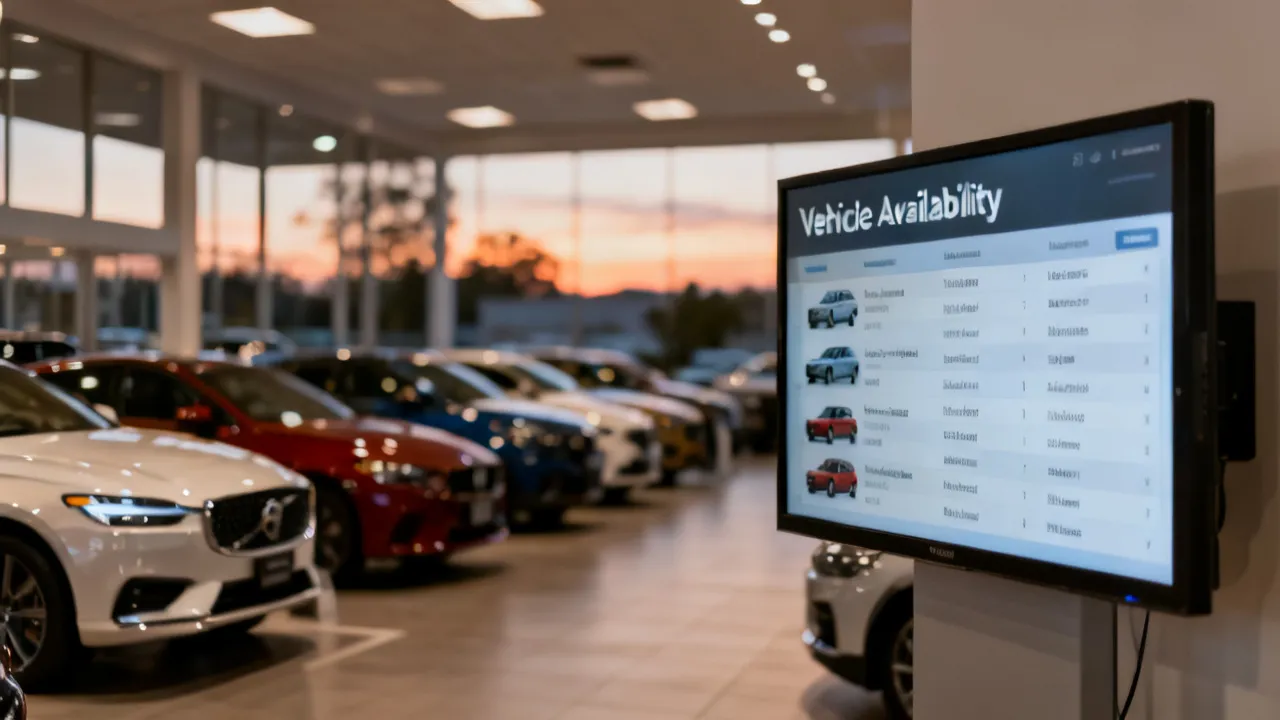
Vehicle Availability Guide for Buying a Car
Vehicle availability determines what you can buy today, what arrives next, and where pricing pressure may appear. This guide explains how to interpret current inventory, use trusted official car trading websites (cars.com, Carmax, Caronsale, and AutoTrader), compare dealer offers, and apply practical steps to find a reliable low-cost vehicle while meeting key purchase conditions.