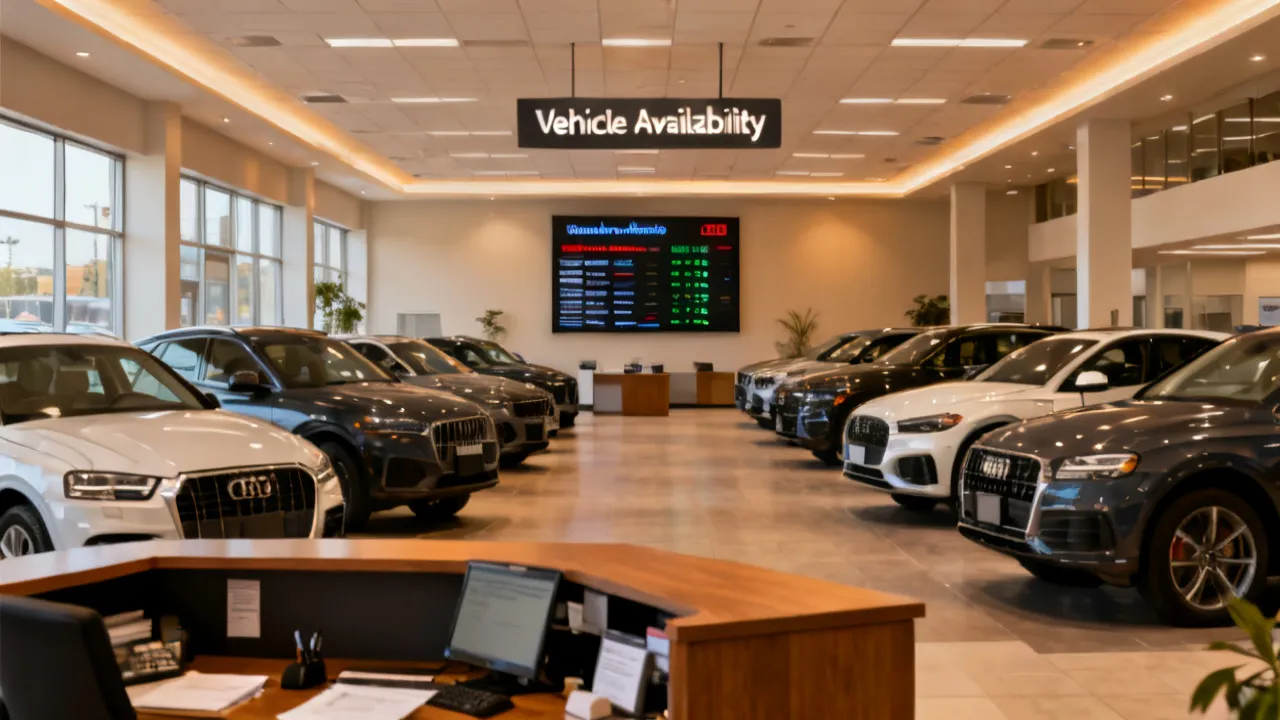
Vehicle Availability determines how quickly shoppers can view, test, and purchase the right car for their needs. This guide explains what “available” typically means on major online listings and how inventory updates affect pricing and selection. It also compares official car marketplace resources, then walks you through a practical, step-by-step process for finding a cheap car that is currently on sale—without relying on guesswork.

When shoppers search for Vehicle Availability, they’re usually trying to answer one question: “Can I actually get this car soon, and is it priced as an on-sale listing?” In the real world, inventory moves by the hour—vehicles can sell, details can change, and listings may get updated or removed. A smart buying approach treats availability as a dynamic filter rather than a fixed promise.
Below, you’ll find an expert-style roadmap for understanding what “available” means across major platforms and how to act efficiently when cars are on sale. The goal is not to chase hype, but to reduce uncertainty during the buying process.
From an industry perspective, Vehicle Availability typically refers to one or more of the following:
Because inventory can be updated continuously, you’ll get the very reliable results by verifying the listing’s live status (often via dealer contact) rather than assuming the listing is current.
Many listings don’t explicitly state “in stock” or “sold,” but they still provide signals. Understanding these signals helps you interpret Vehicle Availability more accurately:
The key point: availability isn’t only about whether a vehicle exists—it’s also about whether the seller is currently able to sell it under the terms implied by the listing.
“On sale” can reflect different pricing mechanisms. For example, a car might be discounted due to seasonal promotions, model-year transitions, high-demand model availability changes, or dealer pricing strategies. A professional approach is to treat “on sale” as a starting point and then validate the deal using comparable pricing logic:
Rather than asking only “Is it on sale?” ask “Does the sale price make sense compared to nearby alternatives that have similar condition and features?” When availability is uncertain, this comparison becomes even more important.
In many markets, the “on sale” label is connected to how easily a unit is expected to move. If a dealer expects quick turns, they may promote the listing more aggressively. Conversely, if a unit is difficult to sell due to trim rarity, color demand, or repair history, the “on sale” price may be adjusted—but not always in your favor.
When you factor in Vehicle Availability, price becomes part of the same puzzle. A buyer who moves quickly can often secure:
A buyer who delays risks losing the unit and then ends up bargaining for a different car with different condition—sometimes at the same “on sale” headline price but worse overall value.
The sections below introduce official or major marketplace websites that commonly publish inventory listings. Use them to cross-check Vehicle Availability and locate cars that are currently advertised for sale.
| Resource | What it’s useful for |
|---|---|
| cars.com | Broad searchable inventory with filters that help you narrow by availability signals and vehicle specs. |
| Carmax | Dealer-style listings that emphasize ready-to-buy inventory browsing and standardized presentation. |
| Caronsale | Marketplace-style browsing focused on advertised vehicles that may be positioned as current deals. |
| autotrader.com | Inventory discovery across sellers, commonly used to compare listed pricing and availability windows. |
Source of information: These resources are referenced for the official website information used to describe where inventory listings are typically found. (Source websites are listed at the end of the article.)
Finding a “cheap” car is less about luck and more about process discipline. Here is a method used by experienced buyers and advisors to manage Vehicle Availability risk while targeting real discounts.
Start with a short list of constraints—because inventory is limited and time-sensitive. For instance:
Adding even one or two “must-have” options reduces the number of vehicles you need to verify. That matters because availability is perishable—if you waste time comparing too many irrelevant cars, you end up verifying fewer units and missing better-priced matches.
Consider also adding “selection constraints” that protect you from the most common disappointment:
Listings may look similar, but availability can differ. Use filters and then confirm in the following order:
This approach reduces the common frustration of traveling to view a vehicle that was already sold.
To make this even more effective, adopt a simple internal rule: assume the listing could be wrong until confirmed. For example, if you find a bargain at 7 p.m., it might not be there by noon the next day. Your goal isn’t to be paranoid—it’s to align your effort with how fast inventory changes.
You can also use listing freshness as a heuristic. If the dealer posts a photo set that looks “fully updated” and the vehicle has appointment scheduling enabled, availability is often higher. But heuristics are never confirmation.
Because each marketplace updates at different speeds, you’ll often see pricing and availability changes. A professional tactic is to:
When multiple sources show different pricing or different “availability” cues, that’s a signal to inquire directly and ask what’s driving the difference.
In practice, this means you’re building a “deal map.” For each candidate, you capture what each platform claims:
Small discrepancies can signal configuration differences that affect pricing value significantly. For example, one listing might include a convenience package or upgraded wheels; another might not. If you don’t catch that early, you might “compare apples to oranges” and misjudge how truly cheap the deal is.
A “cheap car” is only cheap if the final cost fits your plan. Confirm:
For accuracy, ask the seller to provide a breakdown before you commit.
Many buyers focus on the price shown on the platform. But platform pricing can be a simplified representation, sometimes excluding dealership-specific add-ons or taxes. If you want the fastest path to a true bargain, request:
When the seller provides these details quickly, it usually indicates that the vehicle is truly ready for purchase. In that sense, verifying total cost is also another form of availability confirmation.
Even an advertised bargain can become expensive if you miss red flags. During the test drive:
If possible, arrange a pre-purchase inspection. Availability may change quickly, so schedule promptly.
To expand your inspection approach without turning it into an overly long checklist, use a “divide and conquer” structure:
If you’re buying used, consider also asking for a recent service record summary. That matters because it can explain why a unit is discounted even if it’s “still available.”
Negotiation works top when you bring comparable data. Examples of evidence-based negotiation points:
Approach the negotiation calmly and anchor on the total value, not a single number.
If the dealer says “This is our on-sale price,” your job is to evaluate whether it’s genuinely supported by the market. You don’t need to accuse anyone—you just need to ask:
Negotiation becomes easier when you treat the process like a value comparison rather than a confrontation.
To make Vehicle Availability work for you, the process should include clear conditions. Use the following comparison table as a decision framework.
| Buying condition | Why it matters | How to satisfy it |
|---|---|---|
| Active availability confirmation | Prevents wasted time if the car is already sold or reserved | Ask the seller to confirm status and appointment availability |
| Total out-the-door pricing clarity | Headline price can differ from final cost due to fees and taxes | Request a written breakdown before negotiations |
| Comparable matching | Ensures “on sale” claims align with market reality | Compare trim, mileage, and condition across listings |
| Vehicle condition verification | Protects against hidden issues that can erase the discount | Schedule a test drive and consider an inspection |
| Financing and warranty alignment | Monthly payment and coverage can change the value | Confirm loan terms and warranty conditions in writing |
Source of information: Buyer-process and verification steps are based on general top practices commonly used in retail automotive purchasing. Marketplace websites referenced below are used to identify official platforms where vehicle listings are published.
Many buyers lose time because their first message is vague. A fast process requires concise questions that force a clear yes/no response about Vehicle Availability. Use a communication script approach.
For example, when you contact a seller, ask:
Why this works: it prompts the seller to resolve the exact uncertainties that usually delay deals—availability, pricing certainty, and configuration accuracy. A seller who answers quickly is often more prepared, which typically correlates with the unit being easier to purchase immediately.
If you’re contacting multiple listings, keep your messages consistent. Consistency makes it easier to compare responses and identify which seller is most reliable and responsive.
Across major online marketplaces—such as cars.com, Carmax, Caronsale, and autotrader.com—on-sale inventory often includes combinations like the following (availability varies by region and time):
Rather than assuming a specific make or model will always appear, focus on filtering for your criteria and verifying the live status of Vehicle Availability immediately.
It can also help to understand typical “on sale” categories and how they tend to behave:
In modern automotive retail, online marketplaces act as the front door to dealer inventory and auction/secondary supply. That means:
From an advisor standpoint, the very consistent bargains often come from disciplined search behavior: targeted filters, fast verification, and clear documentation before you commit.
Another important aspect is how inventory data is synchronized. Sometimes a car can be sold, but a third-party listing can lag by hours. In that time window, a buyer may drive to the dealer under the assumption that the unit is still available. That’s why confirmation beats intuition. The goal is to align with the dealer’s internal inventory status, not only the marketplace’s website.
Use this checklist to prepare so your first conversation is efficient:
This also helps you compare opportunities across different marketplace listings while keeping Vehicle Availability uncertainty low.
If you want to get even more efficient, prepare your “information pack” before you message anyone:
Dealers and sales reps respond faster when you make their job easier—especially when availability is tight and they’re juggling multiple leads.
Once you contact the seller, use the following checklist to confirm Vehicle Availability quickly and reduce the chance of surprises later.
After the call, send a short follow-up text/email that restates the key points. This creates a simple paper trail. If pricing or availability changes, you’ll have reference points.
Buying fast is good—being fooled by misleading signals is not. Here are common traps related to Vehicle Availability and how to avoid them.
Solution: confirm with a direct question about current availability and schedule. If you can, ask for the VIN to ensure it’s the correct unit.
Solution: ask whether the car is under sale pending status, reserved, or previously promised. Many sellers can clarify instantly.
Solution: request a written breakdown before negotiating heavily. If they refuse, treat it as a risk indicator.
Solution: confirm the features you care about (driver assistance, infotainment connectivity, heated seats). A cheaper listing can be cheaper because it’s missing the features that matter to you.
Solution: do basic verification first—at least a test drive and a discussion of any known issues. If the seller is vague about condition, slow down.
Solution: cross-check with multiple resources. If one platform shows a lower price but “contact dealer for availability,” compare it to a second source for consistency.
If you truly want to buy the right car faster, you need a timeline. Inventory doesn’t wait, but you also can’t rush into paperwork without clarity. The best approach is to create a structured sequence.
Here’s a practical timeline for a typical used or certified pre-owned vehicle purchase:
If you need a longer timeline due to work schedules, create “appointment holds.” Ask the seller to reserve the car while you coordinate. Even a 24–48 hour hold can be the difference between you winning the deal and someone else getting it.
For new vehicles or highly in-demand models, your timeline might need to include deposit planning. Availability may not be immediate, so the definition of Vehicle Availability changes from “on the lot today” to “arrival window.” In that scenario, confirm the ETA, and request whether the deal price is locked or subject to change by delivery date.
Not all “available” vehicles behave the same. Two dealerships can list the same model with similar prices but differ in readiness.
When you inquire, pay attention to the seller’s operational behavior:
This is why availability verification is not only about whether the car exists—it’s also about whether you can complete the purchase without excessive friction.
Headline price is only one piece of the value equation. To ensure that your discount is real, use additional value checks. These checks help you avoid cheap cars that turn into expensive problems.
Even if a car is “on sale,” you should estimate what it will cost to keep it running. Consider:
Sometimes a car with a slightly higher sale price is cheaper long-term because it has better fuel economy or a more reliable service record.
Ask why it’s priced lower:
If the seller provides straightforward explanations and documentation, you can feel more confident that the “on sale” pricing aligns with reality.
Two cars with the same mileage can have different wear levels depending on driving patterns and maintenance schedules. Ask about:
Cheap deals often exist because of legitimate wear or because they’re being cleared. The goal is to understand which category you’re in.
When a car is truly available and easy to process, your negotiation strategy should be sharper but still respectful. Availability helps you because a ready-to-close unit provides leverage: the dealer wants to complete the sale.
Use strategies that combine urgency with professionalism:
One effective approach is to present a decision framework:
This reduces back-and-forth and respects the dealer’s process—often speeding up the outcome.
It usually indicates whether the vehicle is currently considered accessible for viewing and purchase—often reflecting whether the listing is live and whether the seller still has the car in an active inventory status. Because vehicles can sell quickly, you should confirm status directly.
Compare total price context (not only the headline figure), match trim and mileage to comparable listings, and ask for a written out-the-door breakdown. Also verify the car’s condition and confirm live availability before you travel or schedule time.
Generally, no. Different platforms update at different times and may show different pricing or inventory details. Cross-checking across cars.com, Carmax, Caronsale, and autotrader.com can help you identify the top combination of price and availability.
Move quickly: confirm availability, schedule a test drive promptly, and gather financing/warranty details in writing. Deals disappear as inventory changes, so preparation before contacting sellers matters.
Not always. “On sale” can reflect different incentives and pricing strategies. The top way to judge value is to compare comparable vehicles by trim, mileage, condition, and any included warranty or services.
If you see “contact dealer for availability,” ask whether the unit is currently reserved, on the lot, or pending sale. Also ask about appointment scheduling and whether pricing is locked to that exact unit.
Yes. A VIN helps you confirm the exact configuration and reduce the chance of mismatch. If the dealer provides the VIN and history details promptly, it’s often a positive sign for both availability and transparency.
Many dealers can hold a unit briefly, but policies differ. Ask for a time-limited hold agreement and clarify whether a deposit is required and whether the on-sale price remains valid during the hold period.
The links below correspond to official website resources referenced in this guide. They provide the marketplace context used to describe where vehicle listings are commonly found and cross-checked.
Reference links (sources of information):
Disclaimer:
All links that appear in the article:
How Vehicle Availability Helps You Buy Smart

Understanding Vehicle Availability for Smarter Buying Decisions
Vehicle Availability Guide for Buying a Deal
Vehicle Availability: How to Find a Deal Faster

Vehicle Availability Guide for Buying a Car Cheap
Understanding Vehicle Availability for Smarter Buying
How to Evaluate Vehicle Availability Before You Buy
Vehicle Availability Guide for Buying a Cheap Car

Navigating Vehicle Availability to Buy a Cheap Car

How Vehicle Availability Helps You Buy Smart
This guide explains how to interpret Vehicle Availability signals—inventory status, listings, and dealer stock—to buy a car on sale with better timing. It provides an objective overview of what “availability” means in online listings, why it matters for pricing and selection, and how to compare options across major official car marketplaces. It also outlines a practical buying checklist and FAQs to reduce risk.
Vehicle Availability Guide for Buying a Deal
Vehicle Availability determines how quickly shoppers can view, test, and purchase the right car for their needs. This guide explains what “available” typically means on major online listings and how inventory updates affect pricing and selection. It also compares official car marketplace resources, then walks you through a practical, step-by-step process for finding a cheap car that is currently on sale—without relying on guesswork.
Vehicle Availability: How to Find a Deal Faster
Vehicle Availability directly affects how quickly buyers can match needs with pricing, since stock levels and listing freshness determine what’s truly on sale. This guide explains how to use reputable car marketplace websites, compare inventory, and apply practical negotiation and inspection steps. It also outlines purchase requirements and conditions so you can shop with clarity while avoiding common inventory traps. Background context is provided objectively.
Vehicle Availability Guide for Buying a Car Cheap
This guide explains how to use Vehicle Availability signals to find a car on sale and buy smarter—without guesswork. It covers what “availability” usually means for listings, where to compare inventory, and how to evaluate the real total cost beyond sticker price. Background context explains how inventory cycles, listing practices, and pricing strategies affect the cars you actually find.
Vehicle Availability Guide for Buying a Cheap Car
Vehicle Availability determines how quickly you can find, compare, and secure a suitable car on sale. This guide explains what “inventory” really means, where to check listings, and how to evaluate total costs (not just advertised prices). It then compares major official trading sites and provides a step-by-step buying checklist, so you can make practical decisions with fewer surprises.
Navigating Vehicle Availability to Buy a Cheap Car
This guide explains how to track **Vehicle Availability** and find a **cheap car/car on sale** efficiently. It reviews how inventory systems work, why availability changes by dealership and region, and what to verify before purchasing. It then compares major official car trading websites and offers a step-by-step buying workflow, including checks for price accuracy, condition, and paperwork.