This guide explains how an Ageism Questionnaire can support fairer hiring, evaluation, and service design. It outlines objective background on what ageism is, why questionnaires help capture perceptions, and how organizations can interpret results responsibly. You’ll also find a practical comparison table, a step-by-step implementation guide, and readiness conditions to reduce bias in decision-making.
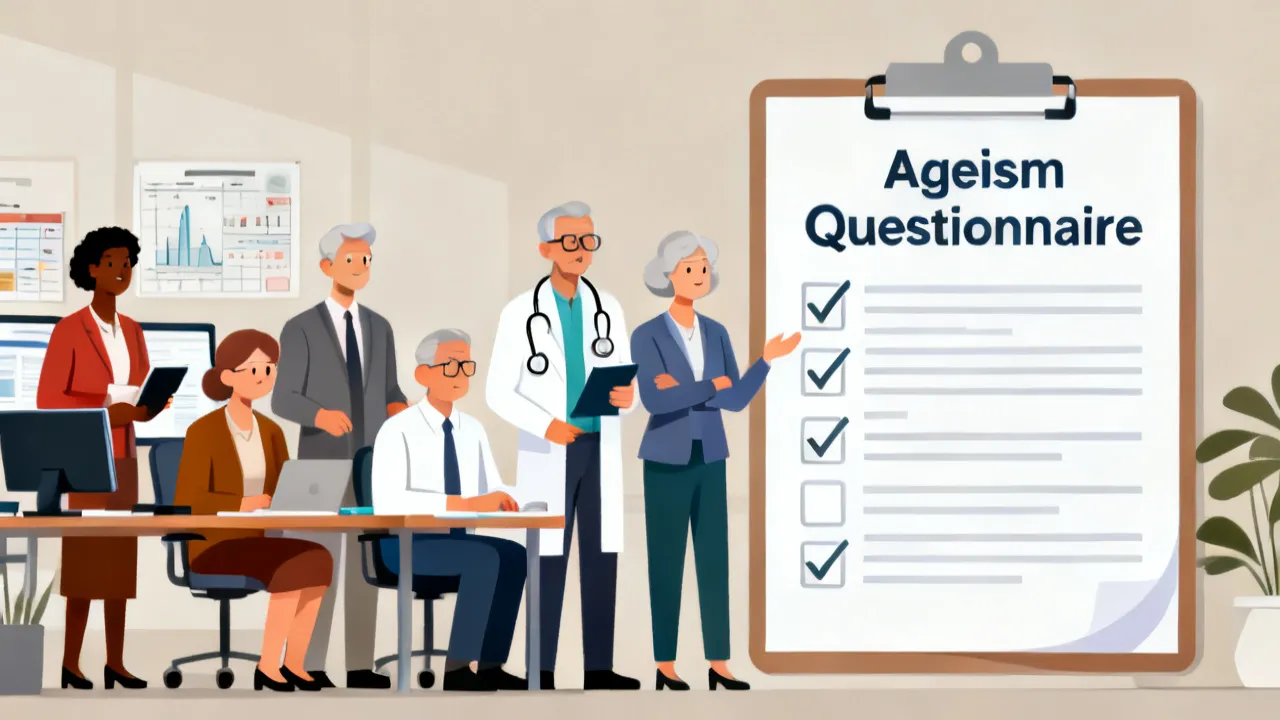
An Ageism Questionnaire helps organizations identify age-related bias in attitudes, communication, and workplace or service practices—before it becomes a pattern that harms recruitment, retention, onboarding, or patient/customer experiences. When used properly, the instrument functions as a structured way to collect consistent perceptions, compare themes across groups, and guide targeted training or process improvements. Importantly, it should be treated as a diagnostic and learning tool—not a final judgment of any individual.
Ageism can be subtle. It may not appear as an explicit statement like “older workers are less capable.” Instead, it often shows up in everyday decision-making: the assumptions built into interview questions, the tone of performance feedback, the types of learning opportunities that are offered, or the “helpful” adjustments that unintentionally limit autonomy. A questionnaire can make these patterns visible by capturing what people think is “normal” in how others are treated across different ages, experience levels, and roles.
In a practical sense, organizations often need a repeatable way to understand culture and risk. Without a consistent instrument, bias discussions can become anecdotal (“It feels like…”), inconsistent (“One team says yes; another says no”), or hard to act on (“So what do we change?”). An Ageism Questionnaire offers a structured lens that supports evidence-based governance: it can provide measurable indicators, highlight themes, and create a baseline for improvement.
However, effectiveness depends on how the questionnaire is designed, communicated, and used. A responsible approach includes ethics and privacy protections, careful interpretation, triangulation with behavioral or process evidence, and—most importantly—follow-through. Measurement without action can damage trust, increase cynicism, and lead people to view bias initiatives as public-relations exercises rather than real inclusion efforts.
From an industry expert perspective, the value of an Ageism Questionnaire lies in its ability to surface “where bias shows up” (language, assumptions, expectations, or differential treatment). However, an assessment cannot measure every form of discrimination, nor can it replace legal review, incident analysis, or qualitative follow-up interviews. Results should be interpreted in context—considering job type, organizational culture, and the specific environment where responses were gathered.
To clarify expectations, it helps to define the instrument’s role precisely:
When organizations treat the questionnaire as a component of a broader fairness system—rather than a stand-alone “bias detector”—they get more reliable insights and build a sustainable path toward inclusive practice.
Ageism refers to stereotypes, prejudice, or discrimination based on age. It may show up as hiring managers assuming performance differences, colleagues expecting less adaptability, or service providers offering reduced options. Research across psychology, organizational behavior, and human rights fields consistently indicates that age-related stereotypes can influence judgments even when decision-makers believe they are acting fairly.
It is important to distinguish between several related but not identical phenomena:
Ageism often appears because individuals rely on cognitive shortcuts—mental shortcuts that reduce effort when making decisions. In workplaces, these shortcuts might be triggered by limited time, high workload, or ambiguity (e.g., “How do we judge leadership potential?”). When ambiguity exists, bias can fill the gap. A well-designed questionnaire can help identify where ambiguity intersects with assumptions.
To ground practice in established evidence, many organizations align anti-discrimination and bias efforts with widely recognized frameworks and guidance from bodies such as the OECD (work and aging policy), WHO (ageism concept and public-health perspective), and human rights standards used in employment and service contexts. These sources emphasize that reducing ageism requires both measurement and behavioral change—training, policy adjustments, and accountability mechanisms—not measurement alone.
In addition, evidence-informed practice recognizes that ageism can involve both overt and subtle effects. Subtle effects include:
Because these subtle effects are difficult to detect with only traditional metrics like performance outcomes, a perception-focused questionnaire can serve as an early warning system, guiding deeper process review and corrective action.
When deployed responsibly, an Ageism Questionnaire becomes one component of a broader governance model that includes:
This approach is especially relevant when organizations conduct internal mobility programs, workforce planning, leadership development, or customer-facing service training. In these contexts, age-related assumptions can affect who receives mentoring, who is considered “high potential,” and how communication support is structured for different needs.
Governance also implies accountability. For example, organizations can establish:
In other words, governance makes measurement meaningful. Without it, organizations can accumulate data without converting it into operational inclusion.
Age bias rarely appears in only one moment. It can surface repeatedly across steps such as:
An Ageism Questionnaire helps identify patterns in the “human side” of these processes—attitudes and perceptions that may guide decisions.
To make this practical, consider how age-related bias can infiltrate each stage:
When organizations map these decision points and align questionnaire items to them, the instrument becomes more than a generic survey—it becomes a diagnostic tool tied to specific operational steps.
In mature HR and compliance programs, practitioners treat the Ageism Questionnaire as a “structured lens” rather than a diagnostic verdict. The design and interpretation steps matter as much as the questions themselves.
The most important principle is that the questionnaire measures constructs such as perceived fairness, language norms, and attitudes—not absolute truth about whether discrimination is occurring in a deterministic way. A questionnaire is a probabilistic indicator that guides further inquiry and improvement.
Questions should reflect the environment you want to improve. If your primary goal is to evaluate workplace culture, items should address workplace interactions, feedback styles, training access, and perceptions of capability. If your goal is service fairness, items should address communication clarity, respect, and availability of options.
Construct validity means the questionnaire actually measures what you think it measures. For example, if an item asks about “respect,” organizations should define what “respect” looks like in the workplace: do people mean being listened to, being treated as competent, being given choices, or being offered accommodations? Without clear conceptual alignment, results can be ambiguous.
Organizations also need to match item language to the audience. A questionnaire for frontline service representatives should use practical scenarios and service behaviors; a questionnaire for executives might focus on decision-making criteria, workforce planning assumptions, and sponsorship practices.
Using questionnaire results for punishment can reduce honesty and discourage participation. Better practice is to focus on systemic improvement: training topics, managerial coaching, and process changes.
When people fear punishment, they respond strategically rather than honestly. That can create inaccurate data and undermine the instrument’s learning value. Even if leadership wants accountability, accountability should be oriented toward processes and leadership practices, not individual scapegoating based on self-report.
A responsible alternative is to treat questionnaire results as evidence for:
In addition, if an organization identifies serious risks, it should follow established escalation and investigation procedures rather than relying solely on survey scores.
Quantitative responses can highlight trends; follow-up interviews or open-text responses can clarify why certain patterns appear. This prevents oversimplification, which is a frequent risk in bias measurement initiatives.
Mixed methods add depth in several ways:
Importantly, qualitative data still requires responsible handling. Organizations should anonymize quotes in reporting, avoid identifying details that could expose respondents, and interpret themes with caution.
When sharing outcomes, organizations should avoid singling out individuals. Reporting should emphasize themes and opportunities for improvement, including what actions will be taken.
A responsible reporting plan also includes:
This reporting approach supports transparency without creating reputational harm or mistrust.
Bias-reduction efforts require iterative learning. A single measurement rarely captures change. A later re-administration can show whether attitudes or practices have improved.
Reassessment should be planned with a practical timeline. Training can influence perceptions, but process changes often take longer to impact behaviors. For example:
Therefore, reassessment timing should reflect the nature of the intervention and the operational cycles of the organization.
Below is a comparison of common approaches that organizations use alongside an Ageism Questionnaire. This table is designed to help you choose a balanced, evidence-informed toolkit. (No external links are included.)
| Approach | Primary Purpose | What It Reveals | Strengths | Limitations | Typical Conditions |
|---|---|---|---|---|---|
| Ageism Questionnaire (Attitude/Perception) | Capture perceptions and potential bias patterns | Self-reported attitudes, perceived norms, and language tendencies | Comparable data across teams; scalable; actionable themes | Self-report bias; may not capture actual behavior | Clear purpose; voluntary/ethical participation practices; privacy safeguards |
| Structured Interviews (Recruitment/Promotion) | Standardize evaluation | Consistency of judgment across candidates | Reduces reliance on impressions; improves comparability | Does not measure attitudes directly | Competency framework; interviewer training; scoring calibration |
| Policy and Process Audit | Identify systemic risk points | Where procedures enable unequal treatment | Directly addresses root causes in workflows | May miss individual perception drivers | Document review; timeline tracking; decision-path transparency |
| Observation or Case Review (Qualitative) | Understand real-world behavior | Examples of communication patterns and differential treatment | Provides concrete context and explanations | Can be time-intensive; subject to observer interpretation | Standardized coding; trained reviewers; clear sampling rules |
| Training + Coaching Programs | Reduce bias through learning and practice | Improved decision habits | Targets behavior and managerial practices | Training alone can fade without reinforcement | Skill-building modules; managerial accountability; post-training follow-up |
The following step-by-step guide is written as a practical readiness pathway. It assumes you want to improve fairness while maintaining ethical and data-responsible conduct.
Specify what you want to change: hiring interviews, performance evaluation language, training access, or service interactions. The scope determines question wording and reporting categories.
When organizations define scope well, they avoid “survey sprawl,” where a questionnaire tries to cover too many issues at once. For example, a broad survey that mixes recruitment, healthcare communication, and leadership succession may create unclear results. Better practice is to start with one or two high-risk decision areas, then expand after learning.
Decide whether the Ageism Questionnaire will be completed by managers, HR staff, peer evaluators, or customer-facing teams. Align the audience with the decisions you want to improve.
Also consider the difference between “actors” and “observers.” Managers may observe team dynamics; candidates may observe interview experiences; service users may observe communication and respect. You can include multiple respondent groups if your reporting plan can ethically handle differences in sample sizes and interpretation.
Use secure storage, define who can access results, and establish that individual-level outputs are not used to retaliate. Provide clear information about what participation means.
Ethics includes more than storage. It also includes how leadership frames participation. A credible invitation emphasizes confidentiality, learning, and non-retaliation. If respondents believe they will be named, the instrument becomes less reliable.
Where possible, align the questions with your organizational context and language norms. Validate internally through pilot testing to ensure clarity, neutrality, and interpretability.
Validation can include cognitive testing—asking a small group what they think each item means, then adjusting wording if interpretations differ. It can also include internal consistency checks and review by subject-matter experts (HR, legal/compliance, and training design).
Offer a consistent format (timing, instructions, and anonymity options). Consider multiple reminders and an accessible design for diverse participants.
Accessibility matters. Consider screen-reader compatibility, mobile-friendly formats, and language simplicity. Also consider whether respondents have adequate time to complete the questionnaire during work hours.
To support interpretation, gather non-sensitive context such as department, role type, or interaction frequency with candidates/customers—only if it does not risk identifying individuals.
Context improves fairness analysis. For instance, a team that regularly serves older customers might rate service fairness differently because their interactions involve different accessibility needs. Context helps prevent misreading these differences as bias.
Look for themes (e.g., assumptions about adaptability) rather than focusing on single items. Use subgroup views responsibly—avoid drawing conclusions that are not supported by sample size.
Structured analysis can include:
Combine questionnaire themes with review of decisions: interview scoring consistency, promotion patterns, training assignment records, or case notes coded for communication fairness.
Triangulation reduces false positives and false negatives. A questionnaire might indicate perceived unfairness, while process data might show decisions were standardized. Alternatively, questionnaire results might be subtle, but process audits could reveal unequal access to development opportunities. The goal is not to “pick the data you like,” but to understand the full picture.
Translate themes into concrete interventions. Examples: revise question guides in interviews, update evaluation rubrics, and run targeted coaching on feedback language.
Action plans should include operational details. For example, if a theme involves mentoring access, the organization should define how mentoring is assigned, whether criteria are transparent, how sponsorship decisions are documented, and how mentoring match decisions are monitored for consistency.
Re-administer after training and process changes. Track whether themes reduce and whether behaviors improve in practice.
Reassessment should be compared to baseline and interpreted using the same conceptual domains. It should also include a change narrative: what interventions occurred, what was changed in policies or procedures, and what outcomes are expected by when.
To keep an Ageism Questionnaire credible and useful, organizations typically meet several baseline requirements:
Additional requirements that often separate successful implementations from ineffective ones include:
An Ageism Questionnaire is a structured set of questions designed to capture perceptions, beliefs, and potential bias indicators related to age. It may be used to understand cultural attitudes in workplaces or fairness dynamics in service contexts. Its purpose is typically diagnostic: to identify where bias may be present and to inform improvement actions.
Depending on the organization, the questionnaire may include multiple domains such as respectful communication, opportunity allocation fairness, perceived flexibility expectations, decision-making consistency, and accessibility support. Some organizations add scenario-based items to reduce ambiguity—asking respondents what they think should happen in common workplace moments.
Common audiences include hiring managers, interviewers, HR teams, supervisors involved in performance evaluations, and teams that make customer or client decisions. The key is alignment: the respondents should be involved in the decisions or interactions you want to improve.
In some settings, you may also include direct stakeholders who experience those decisions. For example, employees can provide insight into onboarding respect and development access; applicants can provide insight into interview fairness; service recipients can provide insight into communication clarity. If you include multiple groups, ensure the reporting plan is clear and privacy is safeguarded.
No. An Ageism Questionnaire should not replace case-specific investigations, legal review, or analysis of incidents. It complements those activities by providing broader insight into patterns and perceptions across a population.
A good analogy is that the questionnaire functions like an early warning indicator or a “cultural thermometer,” while investigations function like “incident resolution.” Both can be necessary, but they serve different purposes and require different evidence standards.
Ethically, organizations should clarify confidentiality and anonymity options. Where anonymity is offered, it should be meaningful—so respondents cannot be identified through combinations of role and context. Where anonymity is not possible, access controls and reporting standards become even more important.
Organizations should consider scenarios where true anonymity is difficult—for example, a small department with only a few members. In those cases, reporting should be at a higher aggregation level to prevent re-identification.
High scores should trigger improvement planning: targeted training, review of decision processes, and coaching. The organization should also reassess after interventions to verify change. Avoid punitive interpretations of self-report data; focus on system-level improvements.
A useful way to respond is to identify domains with the highest risk themes and then map them to operational levers. For example:
Then, communicate openly about what changes will happen. Transparency reduces fear and increases participation in follow-up efforts.
Self-report data can indicate perceived norms and attitudes, but it can also be affected by social desirability bias. For reliability, many organizations triangulate with behavioral evidence (case reviews), process audit findings, and qualitative follow-up.
Reliability also depends on questionnaire design. Neutral wording, clear instructions, and scenario-based items can improve reliability compared with generic agreement statements. Additionally, repeated administration can show stability of themes over time or changes after interventions.
There is no universal schedule, but a typical approach is to run a baseline measurement, implement interventions, and re-administer after a reasonable period for training and process changes to take effect. The exact timing should be tailored to organizational cycles and intervention scope.
Some organizations run annual assessments to track trends. Others run baseline and then quarterly pulses for teams where rapid change occurs. The key is to avoid constant survey fatigue while maintaining enough measurement frequency to guide improvements.
Fair reporting usually includes: aggregate findings, identified themes, planned actions, and progress milestones. It should avoid individual targeting and explain limitations—especially when subgroup results are based on limited responses.
A strong reporting plan also includes:
No. Ageism can appear in healthcare, financial services, customer interactions, and community services. An Ageism Questionnaire can be adapted to these settings by focusing items on relevant interaction behaviors, service standards, and communication practices.
For instance, in healthcare settings, questionnaire domains might address shared decision-making respect, clarity of explanations, assumptions about adherence or symptom reporting, and availability of supportive accommodations. In financial services, it might address explaining options without patronizing language and ensuring accessibility across varying needs.
Ideally, yes. Validation ensures that items measure intended constructs and are understandable to the target population. If you adopt an existing questionnaire, review documentation or conduct internal pilot testing with careful attention to clarity and response interpretation.
Expert validation can include compliance review, psychometric review, and cultural/language review—especially if the organization serves multiple regions or communities. The goal is consistency in meaning so that comparisons across groups are meaningful.
Use neutral language and framing. The questionnaire should emphasize fairness, learning, and process improvement. Avoid wording that suggests certain ages are “less capable.” Provide context that participation supports inclusive practice.
Stigma can arise if respondents interpret the survey as an accusation. That risk is reduced by communicating the questionnaire’s purpose as a system improvement initiative and by ensuring results are reported responsibly.
If your organization operates across regions or communities labeled as “nearby” in your internal keyword usage, treat localization as a practical adaptation step. Review whether local workplace norms, communication styles, and administrative processes affect how items are understood. The goal is consistent measurement—not cultural stereotyping.
Localization should focus on clarity and relevance of items. It should not imply that certain regions are “more biased.” Instead, localization ensures that the questionnaire measures the same constructs in a culturally appropriate way.
When organizations mention ageism-related research or outcomes, they should cite reputable sources. Commonly used references include:
If you plan to make claims about effectiveness, base them on peer-reviewed research or well-documented evaluations of bias intervention programs. Avoid exaggerated statements or numbers without credible methodology.
Evidence-based governance also requires transparency about methodology. For example, if an organization reports that “bias decreased by X%,” it should clarify whether that change is based on survey domains, behavioral indicators, or both, and whether the sample size changed between baseline and follow-up.
You may encounter commercial providers offering Ageism Questionnaire tools, platforms, translation packages, or consulting services. In procurement practice, decision-makers should evaluate not only the cost but also the evidence quality behind the instrument, data-handling policies, implementation support, and documentation of reliability/validity work.
Because you requested narrative incorporation of price and supplier details, it’s important to note: specific price information and supplier details were not provided in your prompt. For a compliant and objective approach, organizations typically request a formal quote or proposal and compare items such as data security terms, licensing scope, implementation timeline, training deliverables, and reporting capabilities. If you share vendor names, unit costs, or locations, the article can be revised to include those particulars in a procurement-ready, SEO-friendly manner.
Even without specific vendor names, procurement best practices can guide organizations to choose responsibly:
Procurement also includes total cost of ownership. The “lowest price” may become expensive if internal teams must do all analysis, translation, and governance work without supplier support. Conversely, higher-cost solutions may be justified if they come with validated tools, strong privacy, and implementation guidance.
Below are objective use cases showing how an Ageism Questionnaire fits across common business functions. (These examples are conceptual; organizations should adapt based on their legal and cultural context.)
Use the questionnaire to detect where assumptions enter interviews: competence language, perceived “flexibility,” or beliefs about training responsiveness. Pair results with structured interview guides and calibrated scoring rubrics.
Practical implementation could include:
The goal is not to eliminate judgment but to structure judgment so it focuses on evidence of competencies.
Assess whether evaluation feedback contains age-linked assumptions. Then revise performance templates to anchor ratings to observable behaviors and competencies.
Performance review processes often include open-ended commentary. Those narratives are where subtle stereotypes can hide. An Ageism Questionnaire can help evaluate perceived fairness of feedback language, such as whether feedback is described as respectful, objective, and consistent across experience levels.
After results, organizations can implement concrete improvements:
Measure whether access to mentoring, sponsorship, leadership tracks, or upskilling is implicitly uneven. Follow with transparent criteria for opportunity allocation.
Learning access can be affected by informal networks. A questionnaire can highlight whether participants feel opportunities are distributed fairly. It can also identify whether certain groups feel overlooked due to assumptions about readiness or time-to-retire considerations.
Then, organizations can implement:
Evaluate communication respect and availability of options. Training can focus on clarity, autonomy support, and avoiding patronizing language.
In customer-facing settings, ageism often presents as differences in how choices are offered. For example, staff may shorten explanations or assume a customer is not interested in advanced options. A questionnaire can measure perceptions of respect, clarity, and autonomy support.
Following results, organizations can introduce:
Use aggregate results to set measurable goals. For instance: increase consistency in interview criteria use; reduce differential access to leadership development; improve feedback quality. Then remeasure to confirm progress.
Leadership governance is crucial because bias often becomes “policy by default.” For example, if leadership expects certain “types” of leadership behaviors to be present, that can shape promotion decisions and succession planning. An Ageism Questionnaire can capture perceptions about whether leadership selection processes respect diverse experience and competence styles across age groups.
Governance can translate findings into measurable commitments such as:
Even well-designed tools can be misused. Typical pitfalls include:
Beyond these, organizations should also guard against:
A strong risk-managed approach includes a communication plan, an ethics charter for survey use, and a governance mechanism for action planning.
If you need a fast internal readiness check before rolling out an Ageism Questionnaire:
If you can answer “yes” to each item, your organization is more likely to use the questionnaire effectively and ethically. If any item is “no,” it doesn’t mean the questionnaire cannot be used; it means you should address the gap first so that the tool is supportive rather than disruptive.
An Ageism Questionnaire is very effective when treated as a structured starting point for fairness improvements. By combining responsible measurement, evidence-informed interpretation, and concrete process changes, organizations can reduce age-related bias and support more consistent decision-making. The top outcomes come from a governance approach: measure perceptions, examine practices, take action, and reassess—so inclusion becomes operational rather than aspirational.
When organizations execute this cycle thoughtfully, the questionnaire becomes more than a tool—it becomes a mechanism for continuous improvement. It can help teams move from vague concerns to actionable insights, from isolated incidents to systemic prevention, and from training as a one-time event to training as part of an ongoing fairness system.
Q: What is the main purpose of an Ageism Questionnaire?
A: To identify patterns in age-related attitudes and perceptions that may influence decisions, guiding organizational improvements.
Q: Can we use it for disciplinary actions?
A: Top practice is to avoid punitive use of questionnaire results; focus on system-level learning and process changes.
Q: How do we improve trust in the results?
A: Use privacy safeguards, neutral wording, transparent reporting, and triangulate with process evidence.
Q: What should we do after receiving results?
A: Create targeted interventions (training, revised criteria, coaching), then re-administer to check whether themes and practices improve.
Navigating Owner Operator Land for Trucking Success

Owner Operator Land: Practical Guide for Independent Truckers

Owner Operator Land: A Practical Guide for Drivers

Owner Operator Land: A Practical Guide for Buyers

A Practical Guide to Owner Operator Land

Owner Operator Land: Practical Guide for Fleet Decisions

Owner Operator Land: A Practical Guide for Shippers

Owner Operator Land: A Practical Guide for Operators

How Owner Operator Land Shapes Fleet Owner Decisions

Using an Ageism Questionnaire for Fairer Decisions
This guide explains how an Ageism Questionnaire can support fairer hiring, evaluation, and service design. It outlines objective background on what ageism is, why questionnaires help capture perceptions, and how organizations can interpret results responsibly. You’ll also find a practical comparison table, a step-by-step implementation guide, and readiness conditions to reduce bias in decision-making.
Using an Ageism Questionnaire for Fair Workplace Culture
This guide explains how to use an Ageism Questionnaire to assess workplace bias, strengthen HR decisions, and improve inclusion across employee age groups. Objectively, “ageism” describes unfair treatment based on age, and questionnaires help measure perceptions, exposure, and organizational climate. Used carefully, results support training, policy updates, and fairer hiring, development, and evaluation practices.

Using an Ageism Questionnaire for Fairer Workplaces
This guide explains how an Ageism Questionnaire helps organizations assess and reduce unfair treatment related to age. It reviews the background of ageism as a workplace and service issue, outlines how questionnaires are designed and interpreted, and provides practical steps for ethical use, including conditions for implementation and common questions readers ask.

Rose Rocket: Industry Guidance for Smart Selection
Rose Rocket can be a practical choice when shoppers compare design, performance, and supplier reliability. This guide explains the background of the “Rose Rocket” concept, what consumers typically evaluate, and how to assess vendors objectively. The focus stays on transparent criteria, responsible sourcing, and clear conditions—so buying decisions remain well-supported.