Vehicle availability determines how quickly you can locate a car that fits your budget, timeline, and preferred features. This guide explains how to interpret listings, compare stock across major official trading platforms, and use practical screening steps to improve outcomes when buying a car on sale. It also outlines requirements to streamline purchase decisions and reduces common mismatches between search results and real inventory.

When shoppers say they want a “deal,” the underlying variable is usually not the price tag—it’s vehicle availability. Inventory levels decide whether a listing is genuinely purchasable today, how quickly paperwork can be completed, and how likely you are to find the exact trim, mileage band, and condition you want. In practice, two buyers searching the same model can get different outcomes simply because stock moves differently across platforms and dealers.
Availability is also what makes the difference between a “great find” and a frustrating experience. A buyer who acts fast on a truly in-stock vehicle often gets access to the best appointment windows, the best inspection slots, and the strongest leverage in negotiation. Meanwhile, someone who relies on wishful thinking—assuming the car will still be there tomorrow or assuming the dealer will “figure it out”—may run into delays, substitutions, or sudden status changes. When the vehicle is not actually available, every other strategy (coupon codes, financing promos, aggressive searching) becomes secondary because the deal can’t complete.
From an industry perspective, I recommend treating vehicle availability as a first-class filter alongside price, financing, and driving needs. A lower advertised price with limited availability can become more expensive once you factor in travel, re-inspection, or the opportunity cost of delays. For example, if a car is posted at a bargain price but is already pending in the dealer system, you may waste time negotiating a number that the seller can’t honor. You also risk missing alternative inventory that would have been a better fit.
To think clearly about availability, imagine the buying process as a chain. Search is only the beginning; availability determines whether you can complete the chain. The most common “deal-breakers” happen after discovery: the car is held for another buyer, the reconditioning takes longer than expected, or paperwork processing pushes you past your preferred timeline. If you start with availability, you prevent those breaks from occurring—or at least you see the risk sooner.
One way to reframe your approach is to stop asking “Is this car cheap?” and start asking “Is this car purchasable at the price it’s advertised, in the timeframe I need?” That second question naturally forces you to focus on availability, readiness status, and documentation readiness—not just listing price.
Vehicle availability generally refers to whether a specific vehicle (or close match) is currently in stock and eligible for sale. In online car trading environments, availability can shift due to dealer updates, wholesaler transfers, reconditioning schedules, purchase reservations, or even internal hold policies. That’s why a listing may show “available now” at one moment and become “pending” a few days later.
For buyers, the key is to interpret availability as a timing signal—a practical indicator of how fast you can move from browsing to test drive. When inventory is truly ready, dealers can schedule test drives quickly, provide required documentation, and accept deposits or orders without extended waits. When inventory is not ready, the listing might still show attractive pricing, but you may encounter delays that frustrate your budget plans.
For sellers and platforms, it’s a dynamic inventory-management problem: vehicles have physical presence, inspection status, and documentation readiness that can’t always keep pace with consumer search behavior. A dealer may acquire a vehicle and list it quickly to attract attention, but the car may not yet be inspected thoroughly or may not yet have photos, service records, or a confirmed vehicle identification number for all channels. That mismatch between listing creation speed and readiness can create confusion.
Availability has several practical dimensions:
When you understand that availability has multiple dimensions, you can ask smarter questions. Instead of simply asking “Is it available?” you can ask “Is it available for a test drive today or tomorrow?” or “Is it ready to take deposits?” Those questions better align with the operational reality behind “available” labels.
Availability also differs by location. A vehicle might be available in a dealer’s system but might require transport or reconditioning at another facility. If you’re traveling or arranging inspection logistics, the difference between “available” and “available within three days” can be critical.
Finally, availability is strongly affected by demand patterns. Promotions and seasonal changes can create bursts of interest. A listing for a discounted model may trigger multiple inquiries within hours, causing the dealer to move quickly to lock in the best offers. The same vehicle might appear available for most of the day, then change status after a buyer deposits.
Because availability and pricing can vary by platform, it helps to consult multiple major, widely used official trading sites. Below is a comparison table focused on how each source supports discovery of cars on sale and how you can use it to verify vehicle availability.
| Platform | How to use it for availability checks |
|---|---|
| cars.com | Use advanced filters (price, mileage, year, condition) and review listing status indicators; confirm “in stock” timing by contacting the dealer shown on the listing. |
| Carmax | Search by budget and preferred vehicle type; verify whether the car is ready for purchase and confirm pickup or delivery options directly with the inventory team. |
| Caronsale | Browse for cars on sale categories and compare similar trims across listings; prioritize vehicles that show consistent availability windows and complete listing details. |
| autotrader.com | Cross-check stock across multiple dealers; use listing recency and dealer responsiveness as a proxy for how reliably the inventory matches current vehicle availability. |
Source of the information: The platforms listed above are the official websites used for the reference information provided.
Links (source): www.cars.com; www.carmax.com/cars; www.caronsale.com/en; www.autotrader.com
To make these platforms more than just browsing tools, treat them like an “availability radar.” Your objective isn’t to find one listing—it’s to find multiple comparable options and determine which ones are actually purchasable within your timeline. If you only rely on one site, you increase the odds of discovering a great price on a vehicle that is already pending or that requires delays.
One helpful tactic is to note the listing “last updated” or “listed on” information when available. While this isn’t a perfect guarantee, listings that are refreshed more recently often correlate with better synchronization between dealer systems and the platform. If you see a bargain price but the listing hasn’t been refreshed in a long time, the risk of stale information increases. That doesn’t mean the car is unavailable, but it means you should verify more aggressively.
Another tactic is to compare identical car details across platforms. If the same VIN or the same exact mileage and trim appear across multiple sources, you may be dealing with a vehicle that is actively being shopped and tracked. Conversely, a listing that seems unique to one platform with incomplete details can indicate a vehicle that hasn’t been properly processed for sale yet.
Finding a cheap car is less about luck and more about process. The very reliable approach is to combine (1) availability verification, (2) total cost thinking, and (3) evidence-based inspection. Here’s a step-by-step guide that aligns with how dealerships and inventory teams typically operate.
In real buyer-dealer workflows, speed matters. The following requirements reduce the friction that often causes deals to slip away:
To add another layer of practicality, treat availability verification as a “fast proof” rather than a vague inquiry. When you contact a dealer, ask a few targeted questions in one message:
This approach produces a clearer answer faster and helps you identify which cars are truly on sale because they’re ready to be sold—rather than on sale because the listing price is temporarily displayed.
From an industry expert’s angle, the top deals are often the ones that are both cheap and verifiably “ready.” Below is a structured checklist you can use while browsing cars on sale.
Experts tend to treat the inspection as part of the availability process. If a car is priced aggressively, the inspection becomes a high-priority risk reduction tool. Even if vehicle availability is strong (meaning the car is on the lot and ready), the mechanical availability still needs to be confirmed. A car can be “available for sale” but not truly “available for trouble-free ownership.”
During inspection planning, consider what you need documented before you decide. Depending on your situation, you might request:
If you’re buying remotely, the verification stage becomes even more important. In that case, vehicle availability might be real, but you may not be able to quickly inspect. You’ll want more robust proof: detailed photos, diagnostic scan reports (OBD), and a reputable third-party inspection option.
“Cheaper” doesn’t always mean “worse.” In many markets, cars on sale are priced with a rationale tied to demand and inventory strategy. Common drivers include:
Because these factors influence how vehicle availability behaves, buyers should confirm readiness and condition rather than relying on price alone. A low price can be a legitimate opportunity—but only when the vehicle is available and the risks are verified.
One reason buyers get burned is they treat promotional pricing as a guarantee. Deals happen because inventory management meets consumer timing. If the dealer is discounting but the car becomes pending quickly, you may arrive late. Conversely, if a car has been discounted for a long time, it may suggest there are unresolved issues. Sometimes that “stale discount” indicates a problem; sometimes it just indicates slow demand. Either way, you need verification.
Another nuance is that “cars on sale” can include different types of offers: direct dealer discounts, manufacturer incentives (less common on used cars but possible in certified programs), and financing promotions. Your negotiation should account for which discount is real and whether the advertised “sale price” depends on taking certain financing terms.
Large listing networks can feel like a maze. A disciplined comparison method prevents repeated mistakes:
To avoid information overload, you can use a simple scoring mindset. For each car, score (1) availability strength (how quickly you can test drive), (2) condition clarity (how detailed the listing and disclosures are), and (3) total cost friendliness (estimated out-the-door and likely maintenance risk). This gives you a rational ranking rather than an emotional reaction to the lowest sticker price.
Also, keep your comparison apples-to-apples. Two cars may look similar in the title but differ in drivetrain (FWD vs AWD), brake type (standard vs upgraded packages), or known historical issues. Those differences can matter more than the price difference you see on a leaderboard view.
Even if a listing appears convenient, practical travel planning still matters. In a typical shopping journey, scheduling a test drive, arranging an inspection, and completing paperwork are time-dependent. If a vehicle matches your requirements and vehicle availability looks stable, confirm appointment feasibility quickly—especially for cars on sale, where interest can rise rapidly after posting updates.
Think like a logistics planner: ensure you can get there on time, bring required documents, and coordinate inspection windows. When availability is strong, speed protects your negotiation position and reduces the chance another buyer steps in first.
Localization isn’t only about distance; it’s about time zones, dealer hours, and the availability of third-party inspectors. Many buyers focus on “Is it within 50 miles?” but ignore the reality that a dealer might be closed on weekends or might not respond until the next business day. When you plan for the realities of the calendar, you reduce the chance you lose the vehicle to someone who can buy immediately.
Consider these timeline checkpoints:
For remote buyers, use vehicle availability to determine whether remote purchase is realistic. If a car is physically on-site and ready for sale immediately, remote purchase can be smoother (with inspections and documented proofs). But if the car is still being reconditioned or requires transport, remote buying risk increases. You may be forced into compromises or into paying for delays.
Look for listing status clarity (available vs. pending), check the recency of updates, and confirm directly with the dealer or inventory team. If details are incomplete or communication takes too long, treat it as a risk indicator. A practical technique is to ask a scheduling question—if you ask “Can I test drive tomorrow?” and the dealer gives immediate options, availability is more likely real.
Prioritize total cost and verifiable condition. A low sticker price can be misleading if it comes with high near-term maintenance needs or unfavorable financing terms. Include taxes, fees, and likely repairs in your decision, not just the advertised sale price.
Not necessarily. Major platforms aggregate inventory and can help you discover competitive offers, but the final price depends on dealer pricing strategy, vehicle condition, and financing terms. The main benefit is discovery and comparison, not an automatic price guarantee.
Negotiation should be evidence-based in any case. For cars on sale, use inspection findings, comparable listings, and readiness documentation to justify your offer rather than relying solely on the promotion signal. If the car is truly ready and priced aggressively, your negotiation might focus on aligning the price with any verified issues, not just “discounting further.”
For cars on sale, inspections are often the top way to avoid hidden issues that contradict the listing description. If the vehicle is a strong match, inspection costs can be far smaller than unexpected repairs. Even if the listing looks great, inspection reduces the risk of “unknown unknowns.”
You can compare, but only if you align criteria (trim, mileage band, condition notes, and listing status). Vehicle availability may differ across dealers even when vehicles appear similar online. Additionally, confirm whether warranties, certifications, or return policies differ between platforms.
Ask: (1) whether the vehicle is available for a test drive on a specific day, (2) whether it is pending/held/reserved, (3) what stage the reconditioning/inspection is in, (4) whether the VIN can be provided now, and (5) how quickly you can complete paperwork if you decide to buy.
Typically, “pending” means another buyer is in the process, often with a deposit or financing approval step. However, “pending” can sometimes change if the deal falls through. If the listing is pending, you can still ask whether there’s any chance of backup status, but you should not assume it will become available again.
Financing promotions can lower the effective cost for qualified buyers, but they may depend on credit tier or lender relationships. Sometimes a dealer price is “good” only if you finance through them. Always calculate total cost with the financing you’re likely to qualify for.
Move quickly and verify availability immediately. If you decide the car is a match, schedule the test drive and inspection without delay. Ask about deposit timing and reservation policies so you know whether acting fast will protect the deal.
Affordable car shopping is rarely a single “hack.” It’s a disciplined blend of vehicle availability awareness, multi-platform comparison, and verification through documentation and inspection. By using official car trading sites to locate cars on sale—and then validating readiness and condition—you reduce the gap between what you see online and what you actually buy.
When you treat availability as real, you protect your time and your budget. You also become a stronger negotiator because your decisions are grounded in what the seller can do now, not what a listing suggests. The cheapest price is only meaningful if the vehicle can be purchased under the conditions you need, within the timeline you can manage, and with the confidence that the car’s condition matches the listing.
In the end, affordability is not simply about finding a low number—it’s about achieving the right combination of price, readiness, and verified condition. When you choose that method, “cars on sale” become less of a gamble and more of a predictable shopping strategy.
1) The above information comes from online resources, and the data is as of October 2023.
2) For more information, please refer to the official website.
Reference links (all links that appear in the article):
Navigating Vehicle Availability for Smart Car Deals

Vehicle Availability Guide for Affordable Car Shopping
Understanding Vehicle Availability for Buying a Cheap Car

How Vehicle Availability Helps You Buy Smart

Understanding Vehicle Availability for Smarter Buying Decisions

Vehicle Availability Guide for Buying a Deal

Vehicle Availability: How to Find a Deal Faster

Vehicle Availability Guide for Buying a Car Cheap

Understanding Vehicle Availability for Smarter Buying
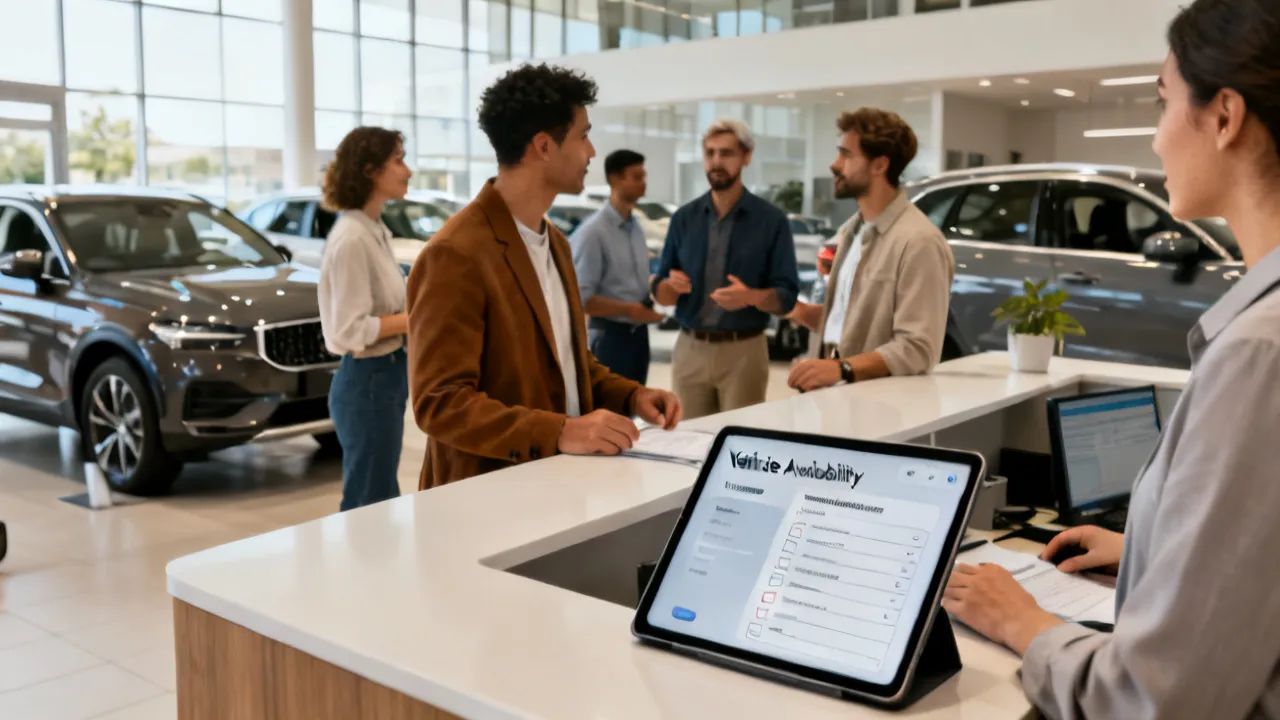
Navigating Vehicle Availability for Smart Car Deals
This guide explains how to assess vehicle availability and buy a car on sale with confidence. It reviews what “vehicle availability” means in real listings, why inventory fluctuates by dealer and region, and how to verify listings, pricing, and eligibility requirements. You’ll also find practical steps for tracking inventory, comparing offers, and avoiding common buying pitfalls.
Vehicle Availability Guide for Affordable Car Shopping
Vehicle availability determines how quickly you can locate a car that fits your budget, timeline, and preferred features. This guide explains how to interpret listings, compare stock across major official trading platforms, and use practical screening steps to improve outcomes when buying a car on sale. It also outlines requirements to streamline purchase decisions and reduces common mismatches between search results and real inventory.
Understanding Vehicle Availability for Buying a Cheap Car
This guide explains how to assess vehicle availability when shopping for a cheap car, helping you locate in-stock options, compare inventory patterns, and avoid delays. Vehicle availability is influenced by trade-ins, regional demand, listing refresh cycles, and dealer replenishment schedules—factors that affect what you can actually buy today versus what’s merely advertised.
How Vehicle Availability Helps You Buy Smart
This guide explains how to interpret Vehicle Availability signals—inventory status, listings, and dealer stock—to buy a car on sale with better timing. It provides an objective overview of what “availability” means in online listings, why it matters for pricing and selection, and how to compare options across major official car marketplaces. It also outlines a practical buying checklist and FAQs to reduce risk.
Vehicle Availability Guide for Buying a Deal
Vehicle Availability determines how quickly shoppers can view, test, and purchase the right car for their needs. This guide explains what “available” typically means on major online listings and how inventory updates affect pricing and selection. It also compares official car marketplace resources, then walks you through a practical, step-by-step process for finding a cheap car that is currently on sale—without relying on guesswork.
Vehicle Availability: How to Find a Deal Faster
Vehicle Availability directly affects how quickly buyers can match needs with pricing, since stock levels and listing freshness determine what’s truly on sale. This guide explains how to use reputable car marketplace websites, compare inventory, and apply practical negotiation and inspection steps. It also outlines purchase requirements and conditions so you can shop with clarity while avoiding common inventory traps. Background context is provided objectively.