This guide explains how Vehicle Availability affects sourcing, pricing, and delivery timelines across dealerships and supplier networks. It provides objective background on how inventory moves, why stock visibility matters, and what “available” typically means in practice. You’ll also find decision criteria, conditions to verify, and FAQs to reduce uncertainty before signing.

Vehicle Availability is the practical bridge between customer intent and real-world inventory—especially when demand, production schedules, and logistics all move at different speeds. If you’re planning to purchase a vehicle, the very important step is to verify what “available” truly means: whether the unit is physically on-site, reserved, in transit, or subject to reallocation through a supplier network. This guide focuses on the decision points that matter very for avoiding surprises in lead times, documentation, and next-step confirmations.
From an industry perspective, “vehicle availability” isn’t a single number. It’s a set of operational facts—location status, system updates, pricing validity windows, and allocation rules—that determine what you can realistically drive away with and when. When these facts are unclear, shoppers often experience the same friction: a listing looks promising, but confirmation reveals that stock has shifted or a delivery condition has changed.
In other words, “availability” is not merely an inventory concept—it’s a timeline concept. And for most buyers, a timeline is what matters. You might be ready to buy today, but the vehicle might only be available in the sense that it exists somewhere in the network and could become yours under certain conditions. If you don’t understand those conditions, you risk planning your purchase around something that isn’t yet guaranteed.
It’s also worth noting that the phrase “Vehicle Availability” can appear in different formats across dealership websites, dealer management systems, lead tracking tools, and marketplace listings. A car can be tagged as available even when it’s “available to be allocated.” That subtle difference is the source of a lot of misunderstandings—particularly for shoppers who are comparing multiple dealers, or who are working under a time constraint like a lease end date, move date, or financing expiration.
To make smarter buying decisions, treat Vehicle Availability as a checklist rather than a marketing label. The very reliable evaluations usually come from matching multiple indicators—inventory system status, build or transit stage, and supplier confirmation—rather than relying on a single page or verbal statement.
When you verify a vehicle’s availability, you’re really confirming five broad categories of facts:
Many buyers focus on the location and ignore the paperwork or quote validity parts. Yet those are precisely the areas where “available” can become “available later,” or “available with updated terms.”
With that in mind, here are the factors that are typically most useful—and that are easiest to verify when you ask the right questions:
To reduce uncertainty even further, you can ask for a written confirmation of the vehicle’s current status and the expected next milestones. Even a short message that includes the VIN, current location category, and an ETA baseline can prevent misunderstandings later.
Another practical point: if you’re comparing offers, you’ll want to know whether the dealer is quoting the same vehicle you’re viewing. Sometimes a listing may show one configuration or stock image, but the dealer’s internal system might tie the customer conversation to a different unit that “matches” your preferences. Vehicle Availability verification should include a VIN-specific match, not just “it’s the same model.”
Even in stable market conditions, Vehicle Availability can change quickly. Dealership inventory is influenced by supply lead times, regional demand patterns, and distribution strategies. Additionally, manufacturers may adjust production runs based on component availability and order mix—meaning a specific color or trim can become scarce while adjacent configurations remain obtainable.
In the broader automotive industry, inventory volatility has been widely discussed following recent supply chain disruptions. For objective background, reputable sources such as the Federal Reserve’s monitoring of manufacturing conditions and supply constraints, and reports from major industry analysts (e.g., J.D. Power, S&P Global Mobility) have emphasized that logistics, production scheduling, and component lead times can materially affect vehicle readiness and dealer stock levels. For example, J.D. Power has historically tracked inventory availability and retail pricing trends, while S&P Global Mobility has published vehicle supply and inventory insights through its mobility and forecasting services.
Practical takeaway: when you’re evaluating Vehicle Availability, you’re not just checking stock—you’re assessing the operational timeline from “inventory exists” to “you can complete purchase and take delivery.”
It also matters that dealership inventory systems are not always updated at the same frequency as website listings. Sometimes a website lags behind internal inventory updates. Sometimes the update is correct but the pricing incentive or availability note changes. For buyers, the best approach is to treat online status as a starting indicator rather than a contract-like guarantee.
One more industry nuance: even when vehicles are physically moving through the system, availability can change because a unit may be held for inspection, reconditioning, or accessory installation. A car can be “available” in the sense that it exists in the channel, but “not available for sale” until it passes readiness steps. This is why “availability” should always be interpreted through the lens of readiness and transfer completion, not only through existence.
Dealerships and automotive groups often operate with multiple inventory channels. Understanding the common categories can reduce misunderstandings:
From an expert viewpoint, the main risk for buyers is assuming a listing equals a guaranteed delivery. Operationally, dealers are managing inventory across systems; real-time updates can lag, and a vehicle can be “available” at the system level but effectively unavailable due to hold policies.
To understand this better, it helps to see how dealerships typically treat inventory like a living process rather than a static asset. A unit may start in a pipeline stage (like in-transit), then move to a hub, then become available for purchase once it clears inspection and documentation steps. If someone places a deposit too early, the deposit may not be tied to a firm hold in every case. In some systems, the dealer might be able to prioritize the unit. In others, the system may already have assigned the unit to a different order.
That’s why it’s helpful to ask: “Is this vehicle available for my transaction specifically, or is it merely available to the dealership inventory pool?” This single question often reveals whether the dealer is speaking in transactional terms (meaning they can sell it to you) or in inventory terms (meaning it exists but might not be assigned to your sale yet).
When buyers compare prices, they often focus on the number while ignoring the assumptions behind that number. Vehicle Availability is one of the assumptions. A unit that’s on-site usually supports faster completion and more predictable fees, while an in-transit or supplier-located vehicle may involve additional steps that influence your final out-the-door total.
To avoid mismatched comparisons, ask these pricing-related questions:
Objective note on market behavior: pricing and availability can be affected by macroeconomic conditions and retail demand. For reliability, refer to published automotive pricing and incentive analyses from recognized industry research organizations rather than relying on anecdotal claims.
Another important pricing factor is the difference between a “quote” and a “contracted price.” Many dealerships can quote a payment estimate quickly. However, payment calculations depend on variables that often change between quote and signing—APR, down payment structure, trade-in payoff timing, and even the exact add-ons that are bundled into a delivery package.
If the vehicle is not currently on-site, the contract might also include a set of delivery conditions. For example, it might specify “price subject to manufacturer incentive availability at time of retail sale” or include language that changes certain fees based on readiness. You should request to see the wording of any such conditions.
Also consider whether your quote assumes particular trim features or option packages. Sometimes the listing image or model description is close, but not identical. If an option difference affects eligibility for an incentive (for example, packages or model-year constraints), the quote could change after VIN verification.
Vehicle Availability is often mediated through supplier networks and logistics partners. Even when a dealer has access to inventory, the actual lead time depends on transfer coordination and verification steps such as inspections, title processing, and readiness for handoff.
As an industry expert would frame it: the “availability chain” has choke points. Common choke points include:
The more you know about your vehicle’s position in that chain, the less likely you’ll encounter delays that feel “unexpected.”
To make this more concrete, consider a typical buying journey for a vehicle that is not yet on-lot. The process often goes like this:
Any delay in Steps 3–5 can affect your ability to take delivery when you expected. That is why it’s so important to understand not just “is it available,” but “what stage is it in and what are the likely next milestones.”
It’s also why buyers benefit from asking: “What is the earliest realistic delivery date, and what are the top two reasons it could be later?” A good dealership team can usually provide a reasoned answer—like pending transfer approval, a shipping milestone that sometimes shifts, or dealer prep capacity constraints.
To make the evaluation concrete, here is a supplement section that helps you compare scenarios objectively—without relying on marketing language.
| Scenario | What “Vehicle Availability” usually implies | What you should verify | Common requirement/condition |
|---|---|---|---|
| On-lot unit | Vehicle is physically at the dealership or immediate inventory location. | VIN match, trim/options confirmation, inspection status, and readiness timeline. | Dealer prep completion and documentation finalization before delivery. |
| In-transit unit | Vehicle exists but delivery depends on shipping milestones. | Estimated arrival date, VIN, and whether your order can be prioritized. | Deposit and reservation confirmation; schedule updates may affect ETA. |
| Supplier-located unit | Vehicle is available through a supplier, but transfer to your dealer is pending. | Transfer approval process, total timeline, and confirmation of exact configuration. | Transfer request acceptance and any compliance steps for handoff. |
| Reallocated inventory | The system may show availability, but the unit can shift quickly. | Reservation status, hold duration, and written confirmation of the unit. | Time-limited allocation; availability may change if priority rules update. |
When you compare listings, the most productive approach is to treat each unit like a separate project with its own risk profile. An on-lot unit has a different risk level than a supplier-located unit. A “reallocated” label can signal that you’re competing with other buyers, other deposits, or internal inventory priorities.
Additionally, buyers sometimes assume that “in transit” means a guaranteed delivery by a certain date. But shipping milestone systems often update based on scan events. If there’s a routing change, customs clearance step, or carrier delay, the ETA can slip. Ask whether you’ll receive milestone updates and how often the dealer checks the status.
If you want a disciplined process, use the following workflow. It’s designed for real-world dealership operations and the way suppliers update inventory systems.
To make this even more reliable, you can set your own internal criteria. For example:
Another practical workflow refinement is to ask for proof of current status. That could include a screenshot of the VIN status in the dealer management system, or an internal build confirmation reference number (where applicable). Policies vary, but the dealer may be able to provide documentation if you request it respectfully.
It’s also helpful to know what constitutes “commitment.” In many sales workflows, a buyer can express interest, submit paperwork, place a deposit, or sign a contract. Each step has different implications. Vehicle Availability verification should align with your commitment level—meaning the more committed you are, the more concrete and written your availability confirmation should be.
Not all dealership communication uses the same terminology. Some sellers speak in internal inventory language; others speak in customer-facing delivery language. Being able to interpret the difference can save time and prevent confusion.
Here are common language patterns and what they may imply:
As a buyer, your goal is to convert verbal phrasing into operational facts: the VIN, the location category, the expected timeline, and the stability of pricing/incentive terms.
Note: Always treat supplier and dealer confirmations as the very current operational truth, even when industry reports offer a useful macro baseline.
It can also be useful to remember that macro sources explain “why” the environment is shifting, but they don’t tell you “what” is happening to a specific VIN today. Your buyer outcome is determined at the VIN level, not at the market level.
Once you understand how Vehicle Availability works, you can decide not just what vehicle to buy—but when to act. A common buying pattern is to wait for the “perfect” configuration. However, if availability is constrained, waiting can convert a stable opportunity into a moving target.
From an industry standpoint, the “right time to act” often depends on:
In other words, Vehicle Availability should influence your decision pace. If a unit is on-site and priced with transparent terms, delaying may not improve outcomes. If a unit is in transit and your order can be reserved, waiting could be reasonable—provided you have written confirmation.
One way to make the “when to act” decision more structured is to define your “acceptable risk.” For example:
You can also reduce regret risk by having a clear “escape plan.” For instance, if you place a deposit on an in-transit vehicle, know what triggers your decision to walk away. Is it a missed milestone? A changed ETA beyond your threshold? A price change outside a quoted validity window? If you have these criteria upfront, the buying process stays rational rather than emotional.
Another misconception that appears less often—but can be equally problematic—is the belief that “availability” is purely a dealer problem rather than a VIN problem. In reality, many factors are tied to that specific VIN: manufacturing allocations, shipping routes, documentation progress, and readiness. Two vehicles can both appear on a listing as “available,” but one may be ready tomorrow and the other might be scheduled for transfer next month.
Also, some buyers misunderstand “substitution.” If you’re open to substitutions (like alternate color or a slightly different option package), ask exactly what can be substituted and what cannot. For example, some substitution flexibility might be acceptable—while the drivetrain configuration or safety package may be non-negotiable. Vehicle Availability verification should include your non-negotiable list.
Even with a good-faith dealer conversation, the following scenarios are common in automotive sales workflows. They illustrate why verifying availability matters and what “surprises” often stem from.
Example 1: The on-lot listing that wasn’t actually sale-ready. A buyer sees a car “available” and schedules a visit. The dealer later confirms that the unit is physically on-site but not yet ready for sale due to reconditioning or documentation processing. The buyer’s timeline is pushed, and the quote may need updates. In this scenario, “available” was technically true in an inventory sense, but sale readiness was still pending.
Example 2: The in-transit unit with a moving ETA. A buyer is told the car will arrive “around” a certain date. After signing, the buyer learns the shipping milestones update and the actual arrival shifts by several days. If the buyer didn’t confirm the reservation/hold terms and contract delivery conditions, the delay can create appointment conflicts or incentive expiry concerns.
Example 3: Incentives tied to timing and eligibility. The listing price appears favorable due to a promotional incentive. The buyer waits to sign until later, assuming the price will remain the same. However, incentives have a validity window or depend on financing structure. When the vehicle’s status updates or the sale date shifts, the buyer’s “out-the-door” cost changes.
Example 4: Option mismatch due to substitution assumptions. A buyer agrees to accept “similar” options but assumes the dealer will keep key features identical. Later, it turns out the dealer substituted a different package that changes value and potentially warranty terms. Without VIN-specific confirmation and a written substitution agreement, “available” becomes ambiguous.
These examples aren’t meant to suggest bad intent—most of the time, they’re simply the result of operational complexity. The solution is to make the operational timeline explicit and to align it with your contract and pricing assumptions.
Vehicle Availability refers to whether a vehicle can be obtained through current inventory channels and operational status. It may mean the vehicle is on-lot, in transit, or located through a supplier network—each with different lead times and reservation rules.
Online status can be useful, but it’s not the final word. Always request VIN-specific confirmation and status details (on-lot vs. in-transit vs. supplier-located) before making commitments.
Ask for a breakdown tied to the VIN and exact configuration, including incentives, taxes, registration, dealer fees, and any add-ons. Also confirm the pricing validity window.
Request the estimated arrival date, shipping milestone updates if available, the VIN, and whether your order can be reserved. Also ask what happens if the ETA changes and how that affects your contract timing.
Supplier-located inventory indicates the vehicle exists but is not currently at your dealership. Delivery typically involves transfer approvals and additional processing steps, which can affect timing and readiness.
Yes. Allocation rules, reservations, and reassignments can change status quickly. Written confirmation of reservation conditions helps reduce uncertainty.
Deposits can help secure a unit, but you must confirm the conditions: hold duration, refundability terms, and what occurs if the vehicle’s status changes. Review the agreement carefully.
If substitutions are possible, ask for what can change (color, packages, equipment) and whether the contract price and warranty terms remain consistent. VIN-specific confirmation is the top way to avoid mismatches.
Use reputable industry research and economic sources such as Federal Reserve publications for supply chain context, and automotive research organizations like J.D. Power or S&P Global Mobility for inventory and pricing observations. Always treat dealer/supplier confirmations as the very current operational reference.
Compare VIN-specific details, total out-the-door pricing, incentive eligibility, and readiness status. Avoid comparing “starting at” prices or non-VIN listings as if they represent the same vehicle.
Beyond the baseline VIN and status questions, there are several deeper checks that often reveal whether the timeline and price are truly stable. These questions are especially useful if you’re traveling to see the vehicle, if you have limited time to sign paperwork, or if your purchase depends on a trade-in payoff or insurance schedule.
These questions may feel extensive, but they can be answered quickly by a well-organized dealer team. The key benefit is that they convert availability from a vague promise into a set of operational deliverables.
One of the most emotionally charged aspects of Vehicle Availability is the deposit and reservation concept. Buyers often use the word “secured” as if it is binary: either the vehicle is secured or it is not. In reality, there are degrees of security depending on the inventory channel.
Here are common reservation patterns and what to confirm:
When you place a deposit, you should confirm three things in plain language:
If the dealer cannot provide clear answers, treat that as an availability risk. In a stressful buying environment, unclear deposit terms often lead to misunderstandings at the worst possible moment.
Vehicle Availability doesn’t end when the car is physically present. Many buyers underestimate the time required for documentation and compliance steps, which can add a surprising delay even for on-lot units.
Depending on your location and the inventory channel, documentation readiness can include:
If you want to reduce timeline friction, ask what paperwork is already completed now and what is still pending. If the dealer says “everything is ready,” request clarification of what “everything” includes. For example: are they ready to complete registration today, or is delivery scheduled for another day due to administrative steps?
This is particularly important when you’re managing a trade-in and need to coordinate payoff timing. If paperwork delays occur, your old vehicle may remain on your hands longer than planned. That can create additional costs (like insurance coverage on both vehicles) if you don’t plan for it.
Trim and options are often the biggest source of perceived “bait-and-switch” concerns, even when no one intends wrongdoing. The reality is that in complex supply environments, dealers sometimes propose substitutions—especially when the exact configuration is not ready or when another unit becomes available that better matches the dealer’s inventory channel.
To keep Vehicle Availability meaningful, define configuration stability. Ask:
From a buyer strategy standpoint, if you can accept substitutions, treat it like an agreed set of constraints rather than a vague openness. That approach preserves pricing accuracy and reduces disappointment at delivery time.
Out-the-door price is where many buyers feel the biggest pain when availability and timing assumptions change. Because of how incentives, fees, and delivery readiness interact, it’s possible to have a “good deal” on paper that becomes less good when the timeline shifts.
To keep out-the-door numbers consistent, confirm:
A helpful practice is to request the out-the-door breakdown in writing—preferably with line items and an expiration date for the quote. If the dealer can’t provide a written breakdown, you can still ask them to confirm the major components verbally, but written clarity is better because it reduces misunderstandings across emails and phone calls.
Availability can shift even when you’ve done everything “right.” The key is knowing how to respond if a dealer updates status after you’ve shown interest or even placed a deposit. The goal is to ensure that changes are handled through transparent renegotiation rather than vague apologies.
If you receive an availability update that affects your expected timeline or price, ask:
In general, your best outcome comes from treating availability changes as renegotiation inputs. If the dealer cannot address these items clearly, that’s a sign you may need to adjust your decision strategy (like exploring alternative vehicles that are already on-lot and sale-ready).
Vehicle Availability is top understood as a chain of operational facts—status, readiness, pricing terms, and allocation rules—rather than a single label. When you approach inventory with a structured verification process, you reduce the risk of mismatched expectations and can make confident decisions even when supply conditions shift.
If you want the highest assurance, prioritize VIN-specific confirmation, clarify reservation and pricing validity windows, and get a written baseline for timelines. That disciplined approach turns availability into something measurable—helping you move from “looking” to “purchasing” with substantially less friction.
Vehicle Availability Guide for Smarter Vehicle Sourcing
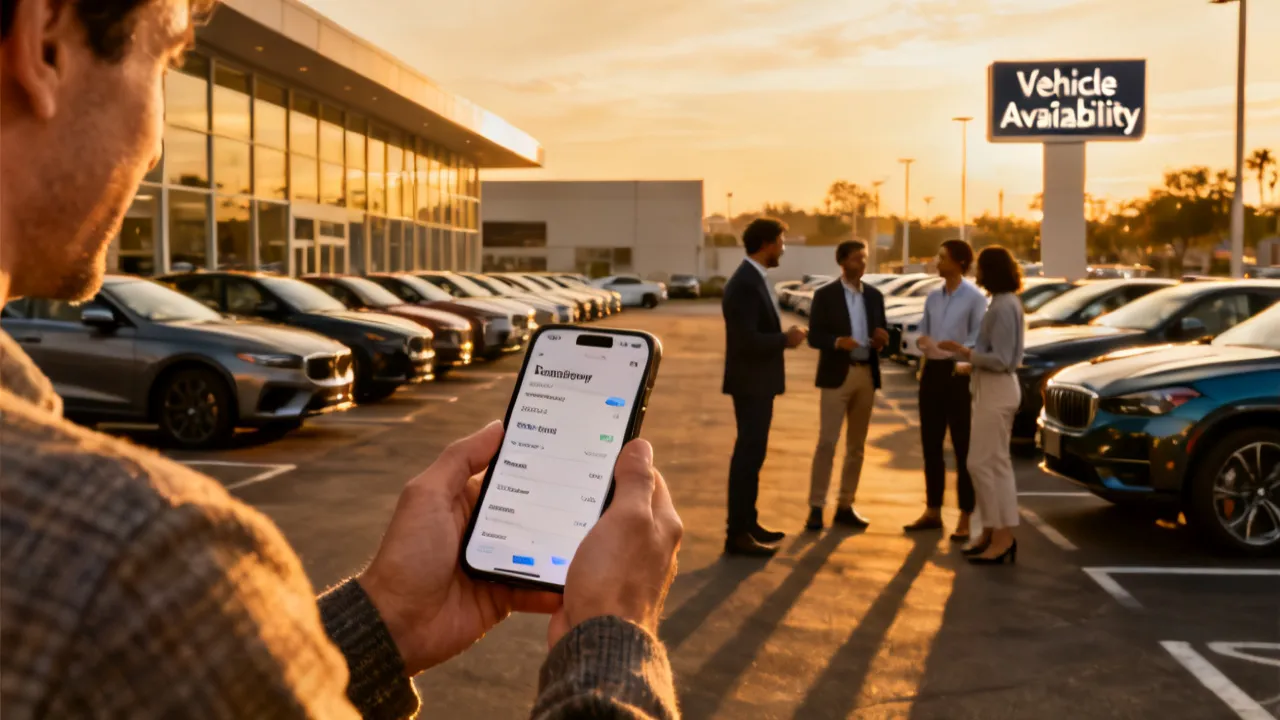
Understanding Vehicle Availability for Smarter Buying Decisions
Vehicle Availability Guide for Buying a Cheap Car
Understanding Vehicle Availability for Smarter Buying Decisions

Vehicle Availability Guide to Buying a Cheap Car

Understanding Vehicle Availability for Smart Purchases
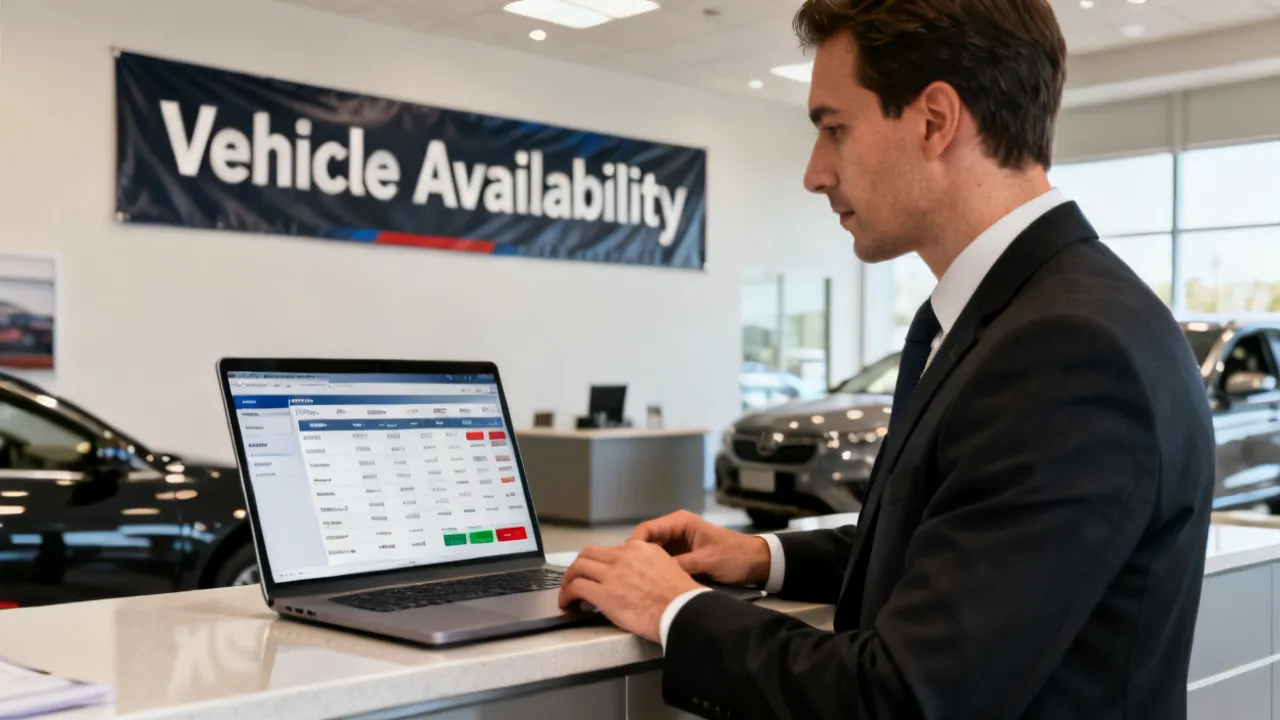
Vehicle Availability Strategies for Smarter Decisions

Vehicle Availability and Smart Buying Guide
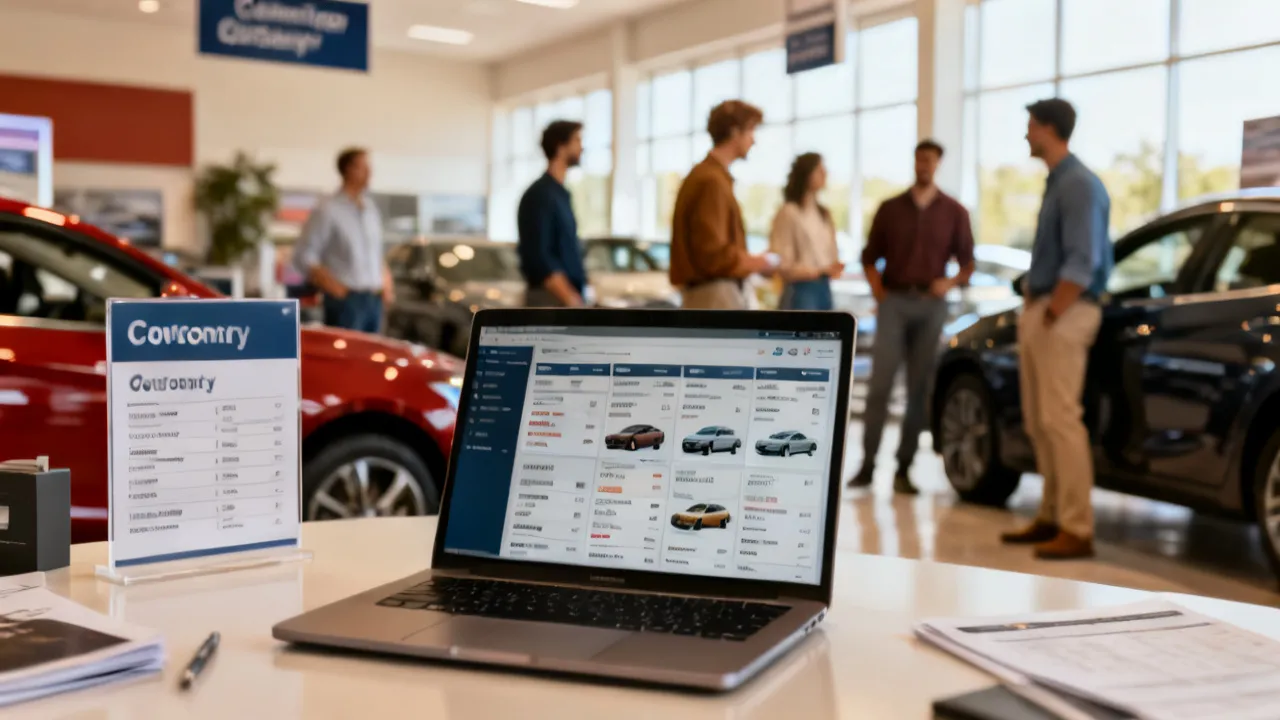
How to Use Vehicle Availability to Find Deals
Vehicle Availability Guide for Smarter Vehicle Sourcing
This guide explains how to evaluate Vehicle Availability so you can plan purchases with confidence. You’ll find objective background on how inventory visibility, lead times, and supplier operations affect what’s actually available, when, and where. It also outlines practical evaluation criteria, requirements, and FAQs to support better decisions across dealerships and fleet sourcing channels.
Understanding Vehicle Availability for Smarter Buying Decisions
This guide explains how Vehicle Availability affects sourcing, pricing, and delivery timelines across dealerships and supplier networks. It provides objective background on how inventory moves, why stock visibility matters, and what “available” typically means in practice. You’ll also find decision criteria, conditions to verify, and FAQs to reduce uncertainty before signing.
Understanding Vehicle Availability for Smarter Buying Decisions
This guide explains how to evaluate Vehicle Availability before you commit to a purchase. It outlines how inventory timing, supplier reliability, trim or specification constraints, and lead times shape what you can actually buy. You’ll also find an objective checklist, practical conditions, and FAQs that clarify common misunderstandings around inventory status and sourcing.
Understanding Vehicle Availability for Smart Purchases
This guide explains how Vehicle Availability affects your purchase timeline, options, and total decision quality. Objectively, it covers what “availability” means across inventory systems, distribution channels, and dealer networks, and why supply cycles influence lead times. You’ll also learn practical ways to verify stock, compare suppliers, and set requirements before committing.
Vehicle Availability Strategies for Smarter Decisions
This guide explains how to manage Vehicle Availability with practical procurement and reservation practices, so buyers reduce delays and avoid mismatched inventory. Objectively, Vehicle Availability refers to how reliably a supplier can provide cars within the requested timeframe, trim, and condition. It is shaped by fleet turnover, logistics lead times, documentation checks, and regional demand patterns.
Mastering Vehicle Availability for Smarter Rentals
This guide explains how to evaluate Vehicle Availability before booking, so you can reduce delays, align timing, and control costs. Objectively, vehicle availability is shaped by fleet size, demand cycles, maintenance schedules, and booking channels. You’ll learn how to check stock status, interpret lead times, and set practical requirements with a supplier-focused approach.